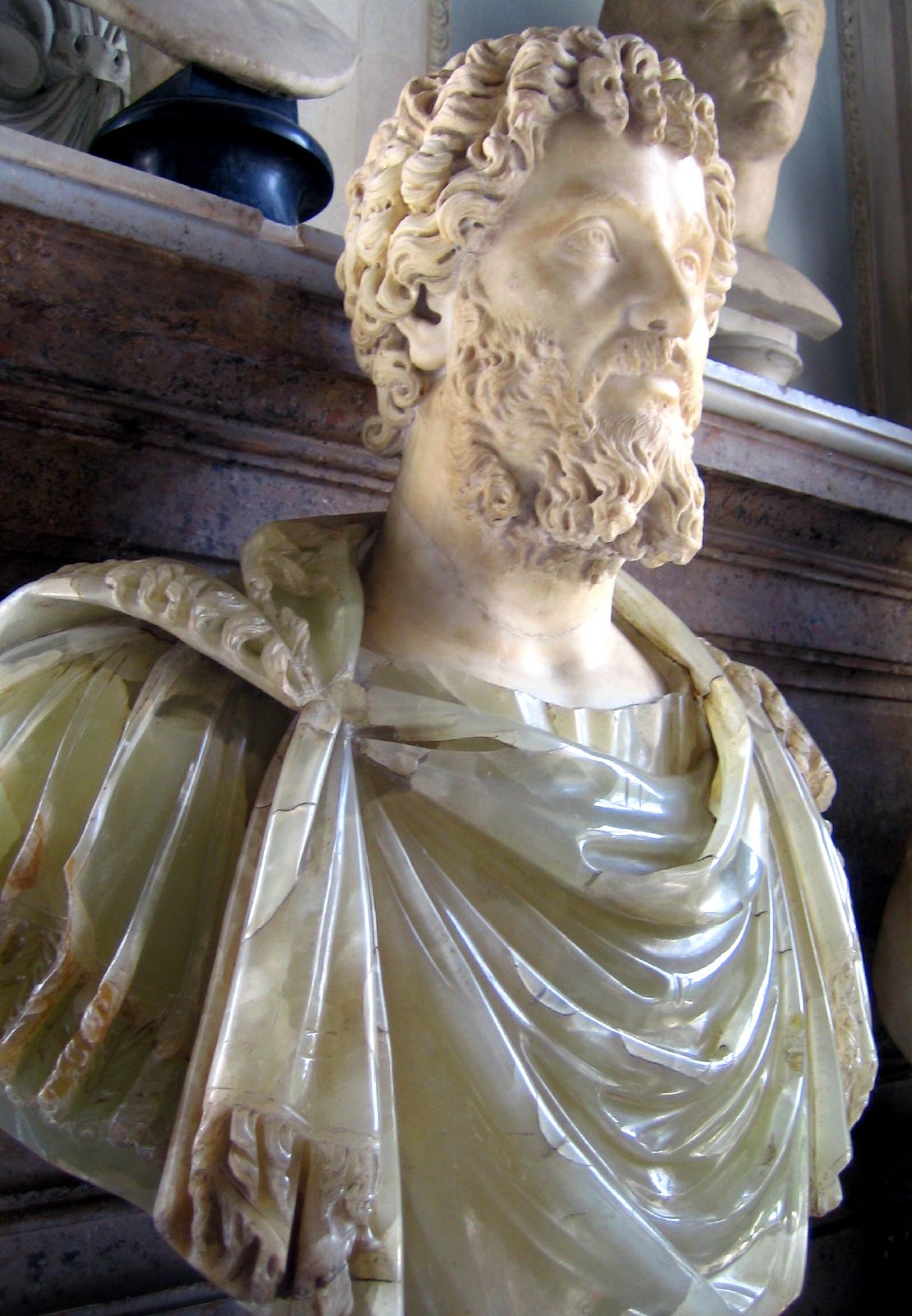
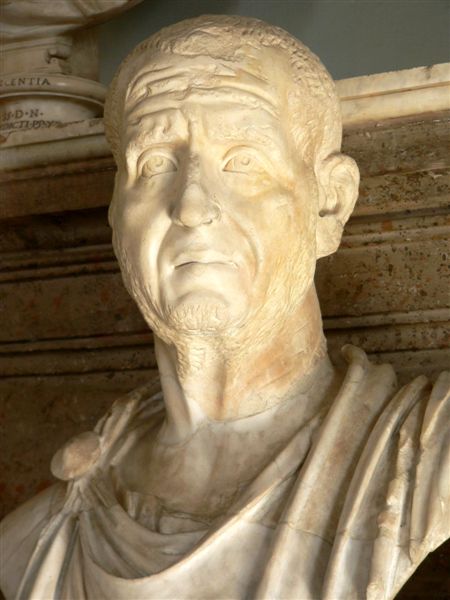
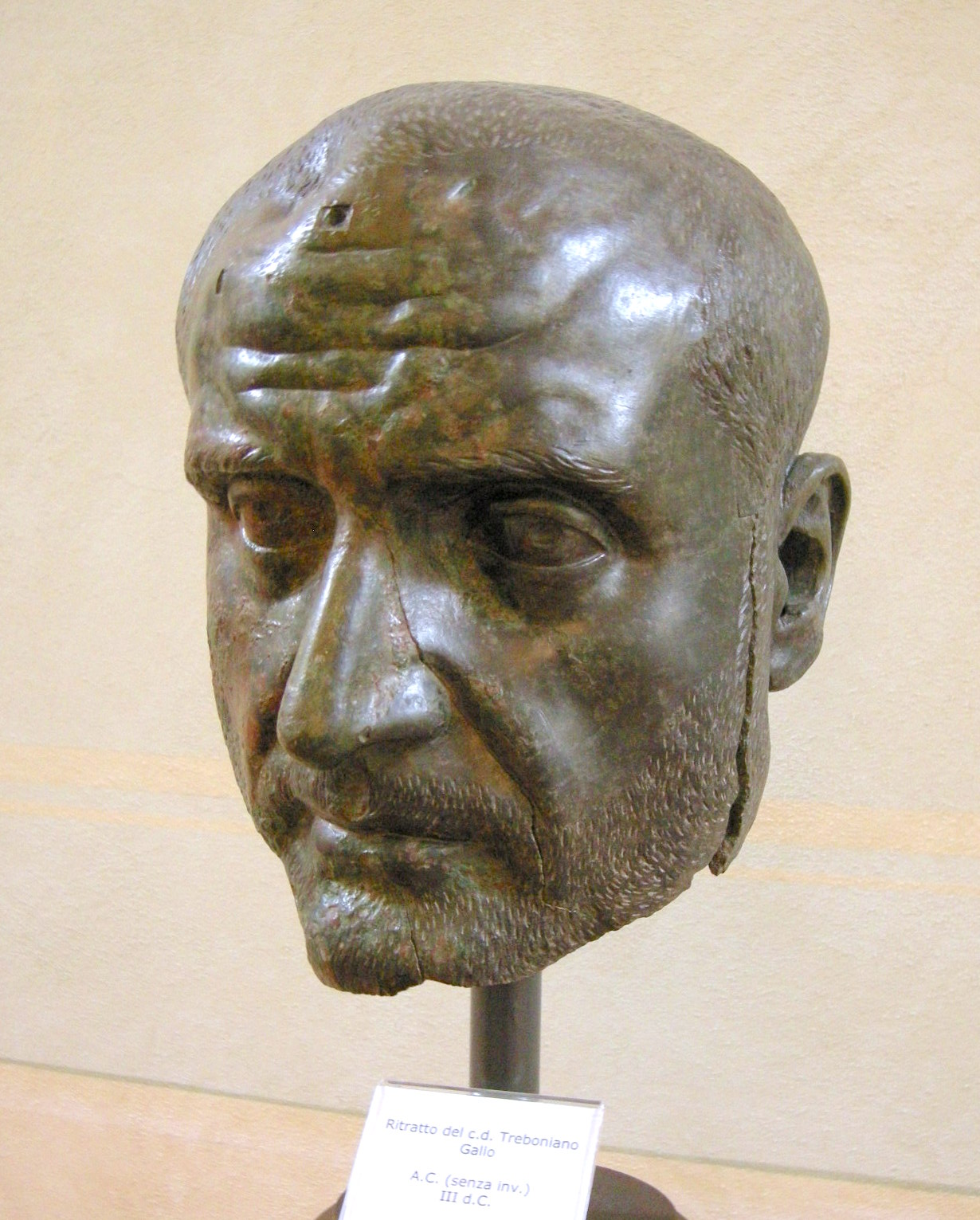
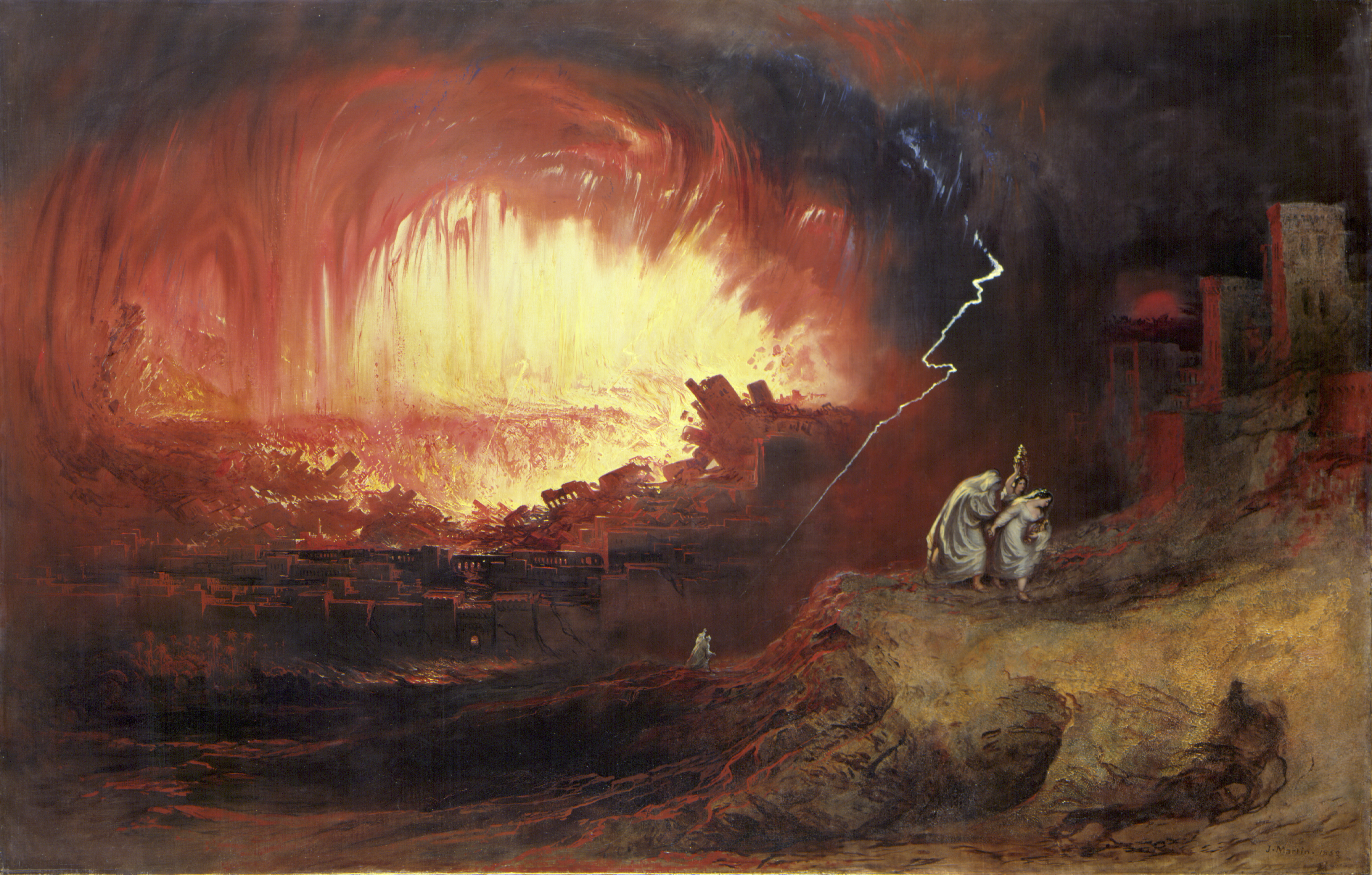
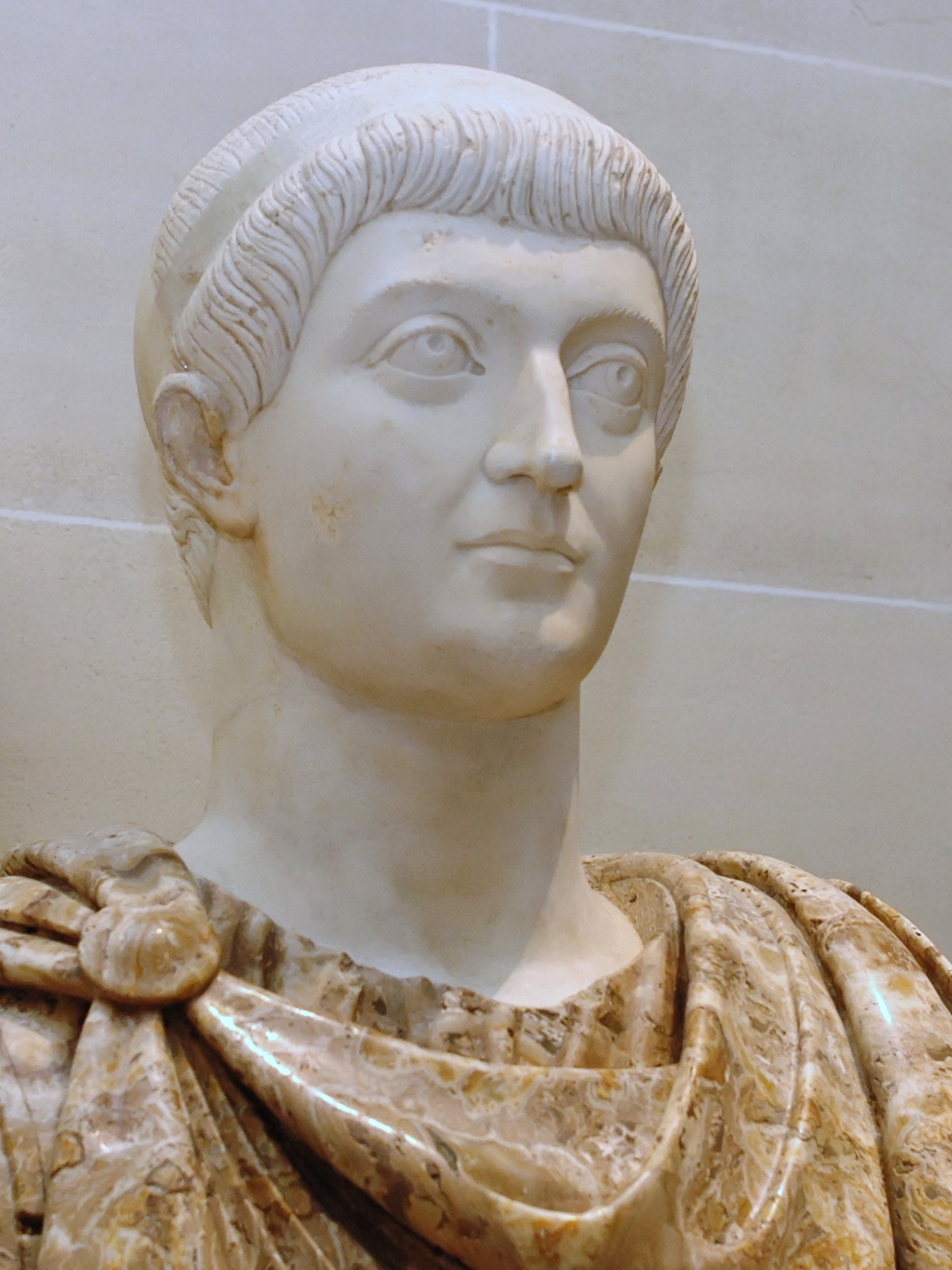
The Valentinian dynasty had four emperors overlapping in power over nearly three decades—Theodosius married a Valentinian princess (like Gratian married a Constantian princess), but his sons were from an earlier marriage. Like Diocletian, Valentinian I divided power with his brother Valens at the beginning of his reign, rather than just leave it for his children to share, as Constantine (and later Theodosius) did. I was troubled by Zosimus' explanation for Valentinian choosing his brother: "whom he thought most likely to prove faithful to him" (Book 4, p. 66). After two and a half decades of fighting and squabbles among the sons and nephews of Constantine I, all of which Zosimus had just been writing about, I should have no expectation of imperial fraternal affection. Yet, even despite their religious differences, Valentinian proved corrected enough in his choice.
Valentinian I died of apoplexy (Ammianus Marcellinus XXX.6 is the best source), which I take to be a natural cause even if there might be environmental and emotional factors of significance.
When Valens died at the battle of Adrianople, Gratian appointed Theodosius to become emperor of the East, and he had some quick success in battle against the Goths, securing his borders, and most importantly Constantinople, against the Goths (Orosius VII.34, Zosimus p. 76-81, Jordanes 27). Theodosius followed this up with some well executed diplomacy with the Gothic king Athanaric (Orosius VII.34, Zosimus p. 81, Jordanes 28).
When Gratian was killed by the usurper Maximus (and Valentinian II exiled), Theodosius mustered his forces to—eventually—fight back to remove Maximus from power and restore Valentinian II.
When Valentinian II was killed by Arbogastes and Eugenius came to power, Theodosius again prepared for war and crossed the Alps to fight against illegitimate power. In the battle, Eugenius was taken and killed, while Arbogastes fled to the mountain wilderness in fear and committed suicide. Theodosius marched in triumph to Rome, and died soon after in his journey back to Constantinople according to Zosimus, or while in Milan according to Orosius.
From the death of Valentinian in a de jure sense, and from Eugenius' death in a de facto sense, Theodosius held dominion over the entire Roman Empire. He was the last. He died almost exactly 400 years after the mid-point of Augustus' principate, and it is surprising how well Theodosius's power compares to Augustus':
- The borders of the empire were nearly identical. The Rhine, Danube, and Mesopotamia were fluid. Theodosius' claim on southern Britain (now England and Wales) was much stronger. Certainly the fighting with the Germanic peoples was more defensive for Theodosius than Augustus, but he is hard to call less successful.
- Both gained power over the whole empire following multiple civil wars. Theodosius' wars were smaller, which I suppose could just mean that all the Roman armies were weaker in the fourth century than in Augustus' (then Octavian) time, but they were also less destructive.
- Augustus was very concerned with succession, and often disappointed as his favorites died (having no sons himself), until he was finally left with his step-son Tiberius. Theodosius had two sons to whom he left the empire.
Of course, the time of Augustus was similar to the previous generation or three, that I commented on from Orosius. Rome was much more dangerous to itself in those days; by Theodosius' time, its external enemies were much stronger (or maybe just more motivated by fear of a third entity like the Huns). On the other hand, provinces like Gaul, Syria, and Egypt were probably much better integrated after another 400 years-again like Orosius commented.
I will write more about the religious developments of the time period in my next post.
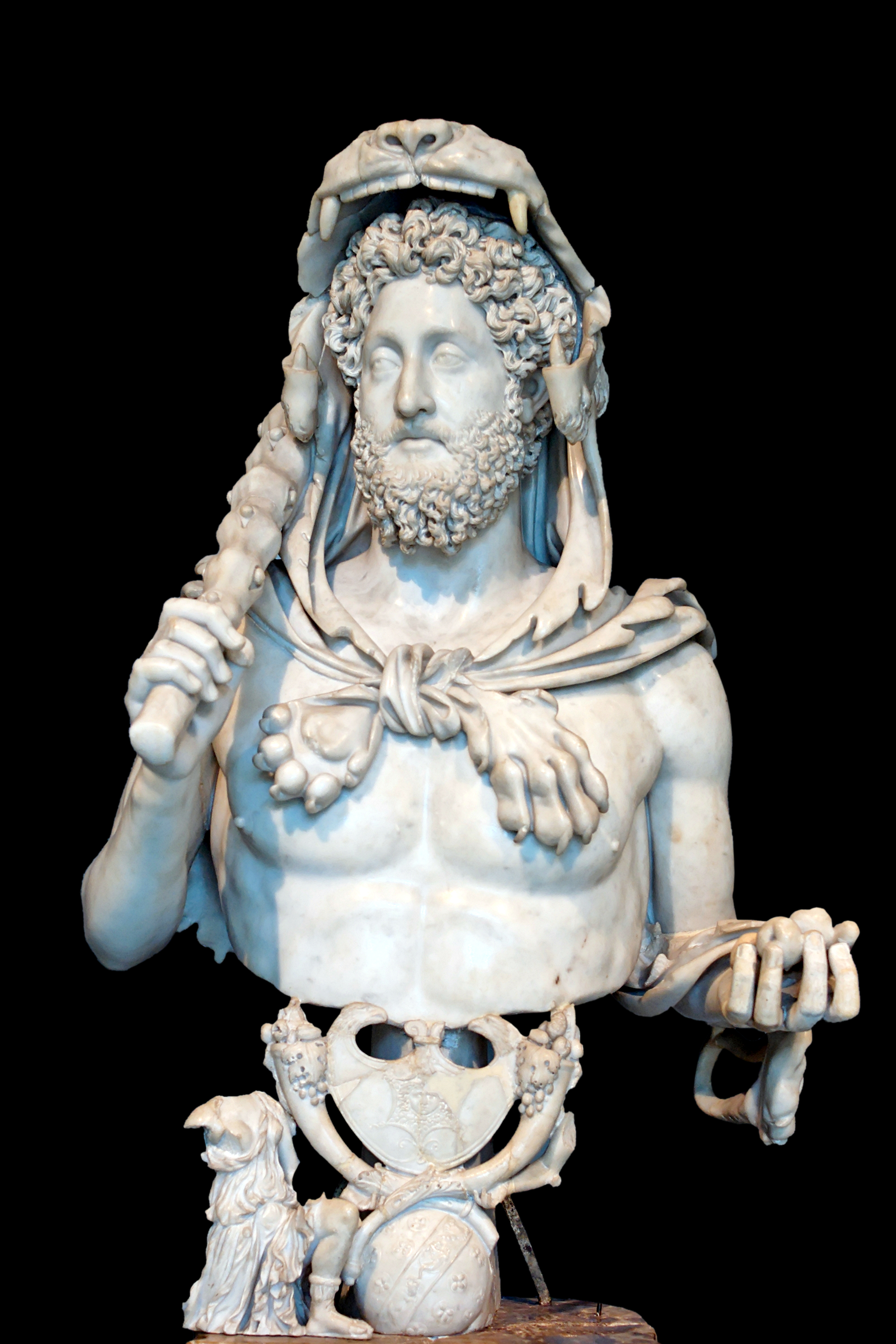
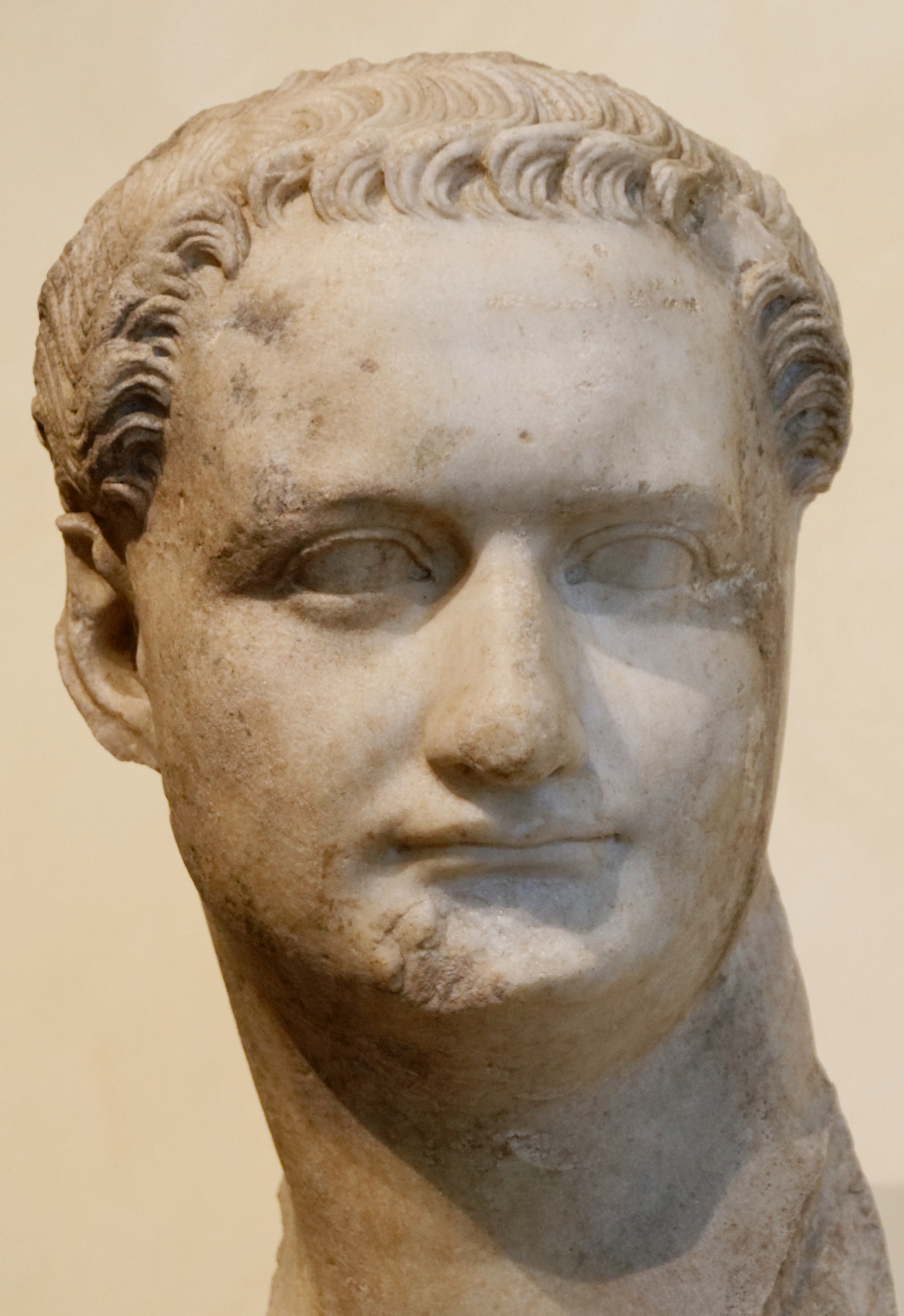
Valentinian II was one of the very few Roman emperors who were born the son of a Roman emperor; as far as I can tell Commodus and the sons of Constantine were his only predecessors. One might also compare him to Domitian or Geta, who also succeeded their fathers and succeeded or shared power with their older brother (Constantius might be looked at like this, too). Among four centuries and over fifty men legitimately called "Augustus," this shows how rare Valentinian's situation was. He was also someone who didn't give others a great reason to like him. While young—and he was very young when his father died—he was brought up in the Arianism of his mother, Justina, who attempted to use her influence to further that heresy in Italy. After his restoration, he deferred in religion to the orthodox Theodosius—the latter also greatly weakened the pagan cause at this time. Thus, he was a hero to no faith.
Valentinian was also, obviously, very weak as an emperor. He was always junior to his brother Gratian or his brother-in-law Theodosius. The usurper Maximus forced him into exile. Four years after his return to Italy, Arbogastes—the general of Theodosius who had led the forces against Maximus—made a coup and killed Valentinian in Gaul. Being a Frank, Arbogastes installed the sophist Eugenius in power; there having been non-Italians (to speak broadly of literal non-Romans) as emperor since the end of the first century and many if not most of the emperors since the end of the second century had been from the fringes of the empire, so I don't exactly understand why Arbogastes felt himself ethnically unqualified.
And yet, opinion of Valentinian II is rather positive. I have the sense that if he had attained the purple at age 34 or 44 instead of just 4, he actually could have been quite effective. Sozomen (7.22) says, "It is said that the boy was noble in person, and excellent in royal manners; and that, had he lived to the age of manhood, he would have shown himself worthy of holding the reins of empire, and would have surpassed his father in magnanimity and justice." Some, such as Philostorgius (11.1), suggest that he was prone to anger that despite being emperor his life was very controlled and he felt little freedom of action, and that this contributed to his death. Even were this accusation true, it would seem a consequence of youth.
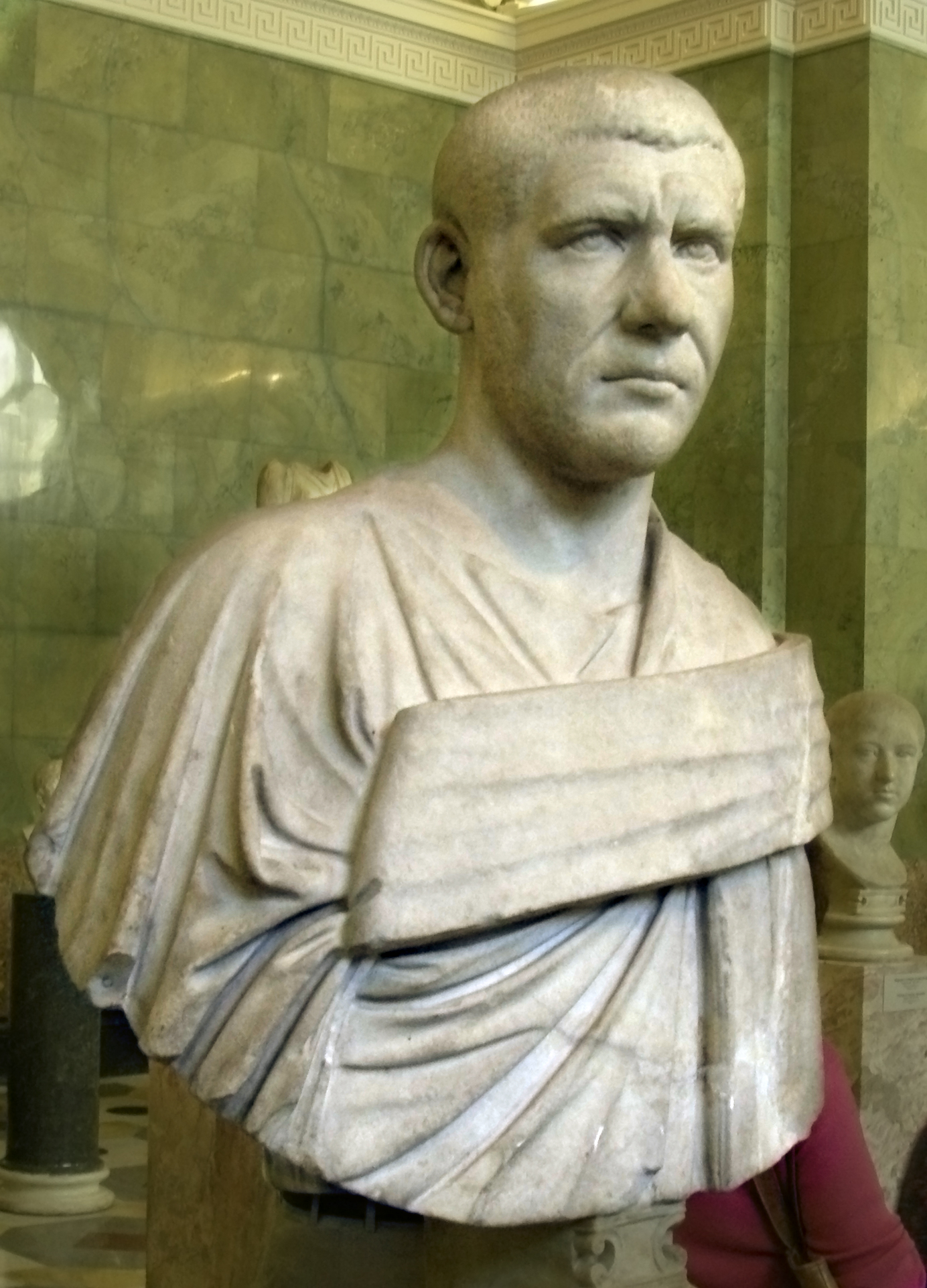
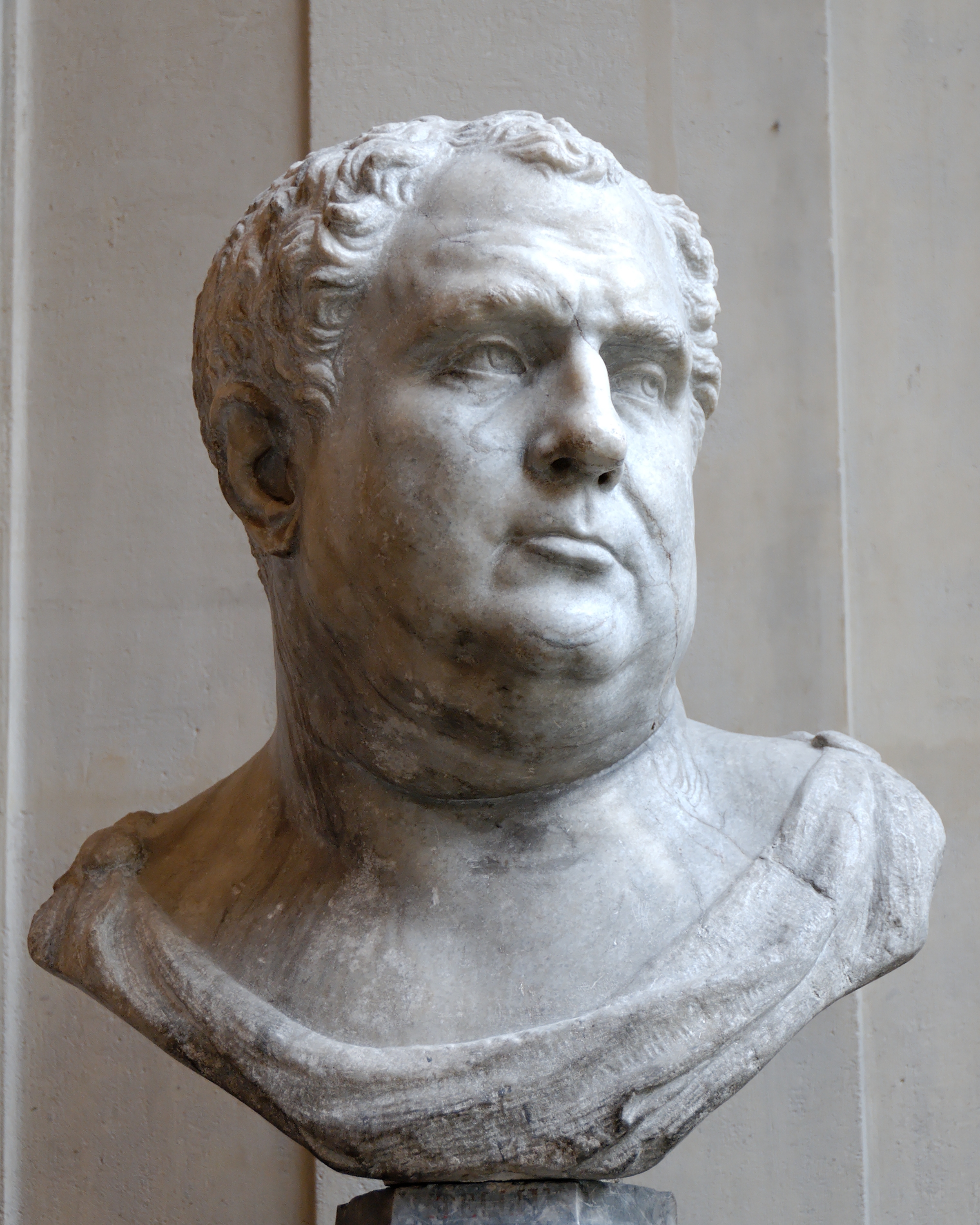
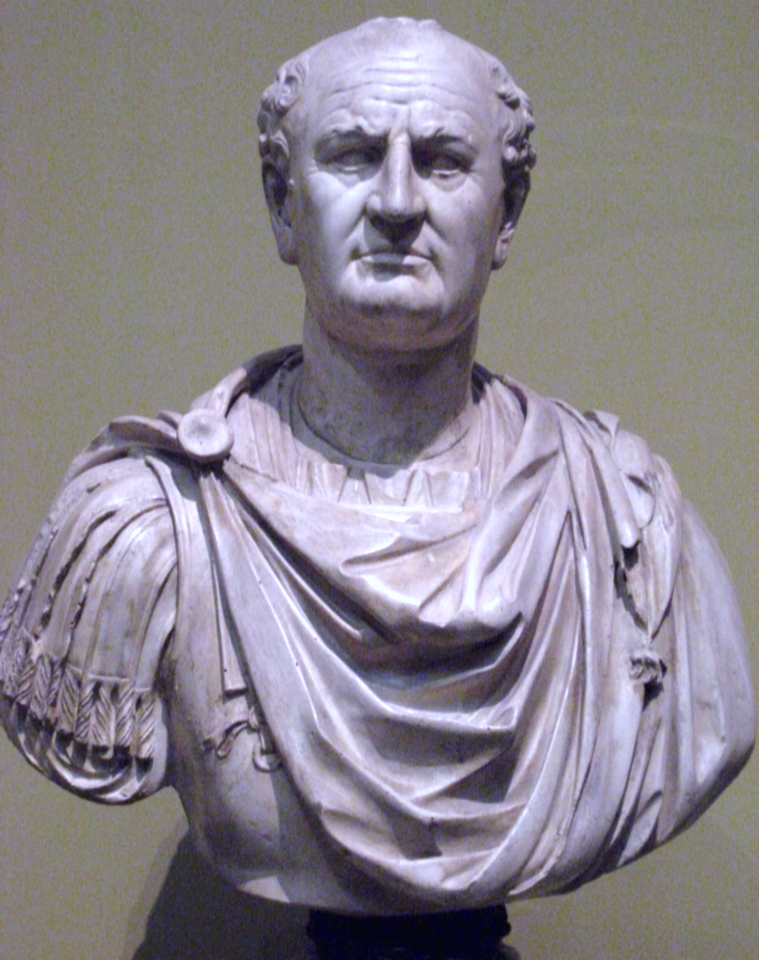
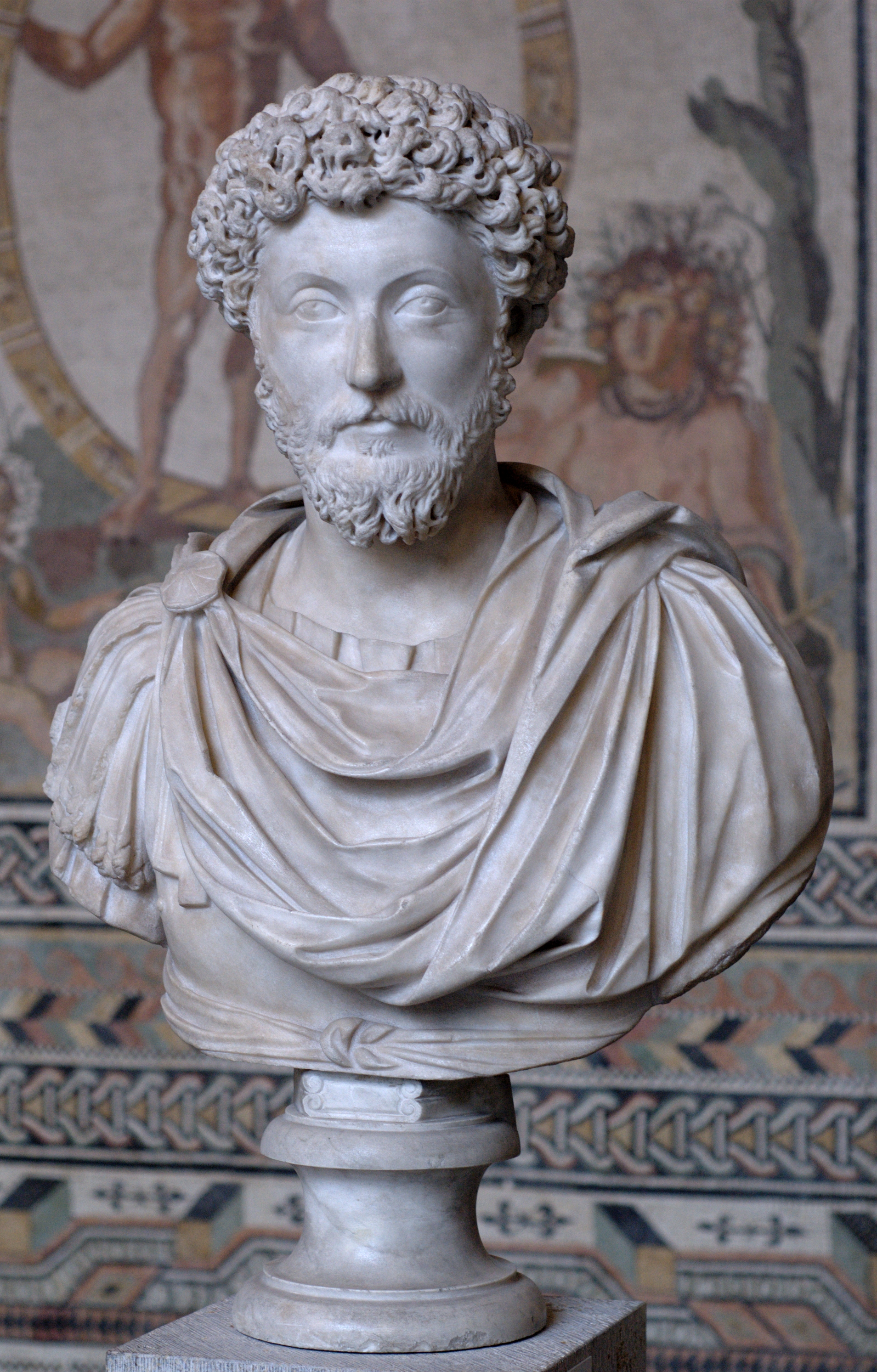
There are always competing priorities in a monarchy concerning the monarch's qualifications. Going back to the expulsion of the Tarquins and the end of the original kings of Rome in the sixth century BCE, the Romans were much more suspicious of primogeniture for legitimacy than most other nations. Augustus didn't have a son, which created the new precedent. The Romans also had a complex system of adoption, allowing the emperors to choose a successor of the greatest merit. Augustus did this for Tiberius—already his step-son and son-in-law—after all his previous choices had died. Nerva did this for Trajan, and Hadrian planned two generations in Antoninus Pius and Marcus Aurelius. Diocletian's system was similar. Several times interregnums were filled with mature men of accomplishment: Galba, Nerva, Pertinax, Jovian. Yet, in two of those cases a younger man of lesser merit was able to rouse the army against the new emperor, bringing Otho and Didius Julianus to power. Unsurprisingly, these types couldn't last long either. Vespasian and Septimius Severus represent military leaders at the height of their power who were able to establish a lasting reign on the back of civil war. Against these qualities or experiences, Valentinian had a royal education. He wasn't evil like Domitian, unsuited to power like Commodus, fratricidal like Constantius and his brothers, or the victim of fratricide like Geta.
Valentinian II was just young. And even this might not have been a problem, except the Romans were not used to this. An emperor was not a figurehead. Consider that Louis XIV was also four years old when he became king, but this didn't faze the French because his father had been just nine. Indeed, Valentinian probably would have fared better as a king, even an absolute one, than emperor. Perhaps it was he and not his murderer who was the real foreshadowing of Teutonic power.
See my previous post for my general sources.
Orosius biased me toward reading through to the death of Theodosius in early 395, because he moved quickly from the restoration of Valentinian II to that monarch's death in 392. In the interim was the usurpation of Eugenius, who ruled in the West from 392 to 394. This is what I read to learn about this period of history:
- Primary narrative histories: Orosius (Book 7, Chapter 35), C. D. Gordon's Age of Attila (to page 8, p. 16-18), and Zosimus (Book 4, p. 88-94)
- Chronicles and foreign histories: Chronicon Paschale (years 390-394), John of Nikiu (Chapter 83, Section 37-65), al-Tabari (p. 69-70), Jordanes (Chapter 28, Section 145), and Gregory of Tours (Book 1, Chapter 44-47) [Bede and the Anglo-Saxon Chronicle have nothing to report]
- Ecclesiastical histories: Socrates (Book 5, Chapter 15-26), Sozomen (Book 7, Chapter 15-29), Theodoret (Book 5, Chapter 16-25), and Philostorgius (Book 10, Chapter 9-Book 11, Chapter 2)
- Private views: Libanius' Autobiography (Section 275-285), Letters (154-193), and Orations (47-49); Jerome (Letters 52 & 54); Augustine (Book 10-11); and Claudian's Panegyric on the Consuls Probinus and Olybrius
- Modern histories: Montesquieu (Chapter 19) and Gibbon (Chapter 26-28)
I have added two new works for this segment. C. D. Gordon is a twentieth-century history. His book is of value, however, because he translates verbatim the literary fragments of the major historians of the fifth century: Olympiodorus, Candidus, Priscus, and Malchus. He also makes use of the later Byzantine historian Joannes Antiochenus. Like Philostorgius, these excerpts are preserved by Photius, in large part, and other compilers of medieval Constantinople. Because these works are not fully extent, Gordon provides his own narrative to connect the fragments. The book was originally published by University of Michigan Press, republished by Barnes & Noble.
The other new work is of a much different flavor. Claudius Claudianus was an Egyptian-born Latin poet. Much of his work is political, with subject matter not all that different from Libanius'. Similarly, he was a pagan, although he did more to try to blend in with Christians than Libanius did. His first long poem is very flowery and of little substance as the brothers Probinus and Olybrius became the consuls for whom the year would be named at the beginning of 395. Theodosius died only a couple weeks later, but I assume that the poem was written while he was still alive; line 113 in the translation names Theodosius, but he is absent from the Latin. Since Claudian's career only lasted about a decade, I don't think this will be much of an issue going forward, but because the poems are backward looking, I may have missed out on some other pieces of useful information from the poetry he wrote after Theodosius' death—Gibbon references two such later poems in Chapter 27. In the introduction, his quality of language is compared with Silver Age (late first century CE) poets like Statius, even as his content is criticized. The introduction begins by saying he "may be called the last poet of classical Rome" (vii); there are a lot of lasts in this time period (although I remember Tacitus was considered a "last" almost 300 years earlier), and it is kind of sad—it may be easier to relate to the end of a literary period, whose work still exists, than a civilization, which does not. I am reading Maurice Platnauer's translation for the Loeb Classical Library.
Platnauer's translation is available online at LacusCurtius.
I have already written something about Ambrose's relationship with Augustine, Gratian, Valentinian II, and Justina, and I plan to write soon about his dealings with Theodosius. In this post, I would like to take a step back to show the striking parallel between Ambrose's rise to becoming bishop of Milan to that of Nectarius becoming bishop of Constantinople. I also have a few reflection on the rise of Christianity/decline of Rome idea.
The history is based on the three orthodox ecclesiastical historians of the mid-5th century: Socrates, Sozomen, and Theodoret, all of whom wrote in Greek. Socrates, sometimes surnamed Scholasticus, is republished by NuVision (translator unknown). Sozomen is republished by Kessinger Publishing (translator unknown). These two books are digital reprints of out of copyright translations, with the consequence that sometimes the readability is quite poor. Theodoret was published for Bohn's Ecclesiastical Library (translator unknown).
A little before the emperor Valentinian I died in 375, the church in Milan had an opening in its leadership because the previous bishop, Auxentius, died. According to Sozomen (VI.23), Auxentius was unique as an Arian bishop in the West, for which reason the bishop of Rome (pope) and others excommunicated him; his death appears to be from natural causes. Theodoret (IV.6) says that Valentinian spoke to the bishops who were meeting to choose a successor; the emperor's concern seems to be more about the choice be a sterling example of personal ethics as having the right theology. The bishops were willing let Valentinian himself make the choice, but he declined (IV.7).
All three historians agree that the issue was causing great controversy in the city, as Christians had different favorites to be their new bishop. Socrates (IV.30) wrote, "the people…were disturbed…as some proposed one person, and others favored another, the city was full of contention and uproar." Sozomen (VI.24) expands, "a sedition arose among the people…and the city was in danger. Those who had aspired to the bishopric, and been defeated in their expectations, were loud in their menaces, as is usual in such commotions." This suggests that the "uproar" was not merely a popular phenomenon. Theodoret (IV.7) adds more context: "The citizens…assembled tumultuously, and contended about the election. Those who had received the…opinion of Auxentius demanded to have a bishop of the same sentiments. While those who had adhered to sound doctrines desired a pastor of the same faith as themselves."
The prospect of violence greatly concerned the governor of the province, Ambrose; Socrates adds that he had also previously held the title of consul. He went to the church, the source of the problem. Socrates and Sozoment say that he made a speech to all the parties to remain at peace, while Theodoret claims that his mere presence quieted everyone. In any event, the people spontaneously and unanimously declared that Ambrose should become the new bishop. Ambrose was reluctant, and had not yet been baptized—this does not necessarily mean he didn't believe in Christianity considering, for example, that Theodosius had been treated with disfavor as a soldier by Julian for his Christian beliefs, but did not become baptized until after he became emperor almost two decades later. Valentinian saw Providence behind the people's choice, and with his blessing (if not urging), Ambrose was baptized and ordained bishop. Thus, he turned from secular to spiritual office.
About five years later, when Theodosius became Emperor of the East, his first priority in religious affairs was to remove the Arians from power. For this purpose, he called a synod to meet, known as the First Council of Constantinople or Second Ecumenical Council, in 381. There were about 150 bishops present (Sozomen VII.7, Socrates V.8), maybe more after including the followers of the Macedonian heresy. All three list prominent attendees (Theodoret at V.8); none seem to be from as far west as Italy, though there are some ambiguous words in Socrates and Sozomen about correspondence with Rome. For a time, Gregory Nazianzus, a leading orthodox theologian, was made bishop of Constantinople with the support of Theodosius. However, some Egyptian bishops objected that he had already been ordained bishop in his hometown, thus violating a previously agreed to (though not one that seems to have been always scrupulously adhered to) rule; Gregory agreed to withdraw rather than cause trouble: "For it would be most absurd if, now that we have just escaped from the weapons of our enemies, we were to fall upon each other, and destroy our own strength, thus causing those who hate us to rejoice," he said according to Theodoret's report.
At this point, Sozomen has the fullest account. The bishops were divided over the new choice (VII.7). One of the bishops, Diodorus of Tarsus, was visited by a compatriot named Nectarius. Nectarius was a "senator…at this period residing at Constantinople" (VII.8); Socrates has him in "the office of proctor [sic, I assume this is praetor]" there (V.8). Now, Nectarius was about to go home, and inquired from Diodorus whether there were any letters he could bring back for him. Diodorus, however, decided that Nectarius would make a good bishop, and tried to get help from Melitius of Antioch. Melitius had other favorites, but when the emperor asked everyone to list their choices for him, Melitius did acquiesce and include Nectarius at the end of his list. Theodosius chose Nectarius, who was a relative unknown; by contrast Socrates emphasizes Nectarius as the choice of "the people," and Theodoret makes him the choice of the bishops. On his election, it came out that Nectarius was not baptized; Sozomen states that even Diodorus had assumed he was. This created some new controversy, but Theodosius maintained his support. Nectarius was baptized and ordained bishop of Constantinople at the same time. Later on during the Council, the bishops agreed that the bishop of Constantinople should be of the second rank in the Church, only below the bishop of Rome (Sozomen VII.9, Socrates V.8). Thus, Nectarius, too, moved from temporal to ecclesiastical leadership.
Let me now turn briefly to the issue of whether Christianity caused the downfall of the Roman Empire. I have already discussed this a bit from the Providential standpoint. From a cultural standpoint, the asceticism advocated by Jerome, Augustine, Gregory of Tours, and others may have caused a demographic downturn, at least on the margins. However, by the end of the fourth century, many of the Goths had converted to Christianity, too. Another problem with this is that economic factors may have led to asceticism, making a virtue of necessity, rather than the reverse; "if I didn't fast so much, I'd go hungry" as the joke goes. Lastly, Augustine may have been a more representative celibate than Jerome or Injuriosus, waiting until after he'd already had a child until turning over to chastity.
A more interesting case for Christianity helping to cause Rome's collapse can be found with Ambrose and Nectarius. They are evidence that the church was competing with the government for the services of effective leaders. Christian emperors, for whom the propagation of their beliefs was a significant concern, appear often to have encouraged the church to win that competition, to the detriment of their own political success. Valentinian's sons may have lived and led longer if Ambrose had been serving them in secular office, for example. Bishops were also paid better in glory than provincial governors: they are more important figures in ecclesiastical histories than governors are in secular histories, and many continue to be venerated as saints. This is a factor that is not immediately obvious, but the church depleting the ranks of good political and military leadership at the provincial level accounts well for timing, and why the church could gain strength as the empire lost it—even as Orosius equates the two.
Socrates Scholasticus is available online—I think in the same translation—at the Christian Classics Ethereal Library. Sozomen is available online—also appearing to be the same translation—at Freewebs. Theodoret is available online—in a different translation—also at the Christian Classics Ethereal Library.
Now that I have read my next segment in history, I am not entirely sure how I will blog it, especially considering my use of 16 different authors – mostly those listed in my previous rotation, plus those I have brought "into the mix." I will start by explaining how the works can be divided:
- Primary narrative histories: Orosius (Book 7, Chapter 34-35) and Zosimus (Book 4, p. 82-88)
- Chronicles and foreign histories: Chronicon Paschale (years 383-389), John of Nikiu (Chapter 83, Section 15-36), al-Tabari (p. 68-69), Jordanes (Chapter 28, Section 145), Gregory of Tours (Book 1, Chapter 43), Bede's Ecclesiastical History of the English People (Book 1, Chapter 9) and Greater Chronicle (years 4338-4349), and Anglo-Saxon Chronicle (year A.D. 381)
- Ecclesiastical histories: Socrates (Book 5, Chapter 11-14), Sozomen (Book 7, Chapter 13-14), Theodoret (Book 5, Chapter 12-15), and Philostorgius (Book 10, Chapter 6-8)
- Private views: Libanius' Autobiography (Sections 212-274), Letters (146-153), and Orations (50, 30, 45, 33, 23, 19, 20, 21, & 22); Jerome (Letters 22, 38, 40, 43, 44, &45); and Augustine's Confessions (Book 5, Chapter 9, Section 16 to Book 9)
- Modern histories: Montesquieu (Chapter 19) and Gibbon (Chapter 26-27)
My usual practice is to base how long a piece of history I will read on the primary histories – Orosius and Zosimus in this case. When Gratian was killed, Theodosius remained emperor in the East, Valentinian II in Italy, and Maximus had usurped control in Gaul, Britain, and the Iberian Peninsula. Thus, depending on the details they would give, I would have considered reading until the death of any of the three of these rulers. As it happens, I decided that the downfall and death of Maximus and his associates was the right stopping point, occurring about five years after his agent had assassinated Gratian. As is often the case, some judgment is necessary for what to include and how to navigate works that don't follow the same chronology, or in themselves or their editing don't clearly synch to the major political events.
I wrote briefly of Gratian's death following the British army's proclamation of Maximus Magnus as Augustus, as well as the incorrect version in the Chronicon Paschale attributing it to the Empress Justina. That Maximus was chosen by an army is not unusual—Valentinian I (Gratian's father) and his predecessor Jovian had both been elevated by that method—but because the choice had been made during the reign of a legitimate emperor rather than an interregnum, Maximus could only be a usurper. Nevertheless, the general picture of Maximus was that he was a mature leader, worthy of the office more than the method of attaining it. While some of the works condense the history, it seems that he was content with northern Europe for some years, and that Valentinian II (led by his mother Justina) out of weakness and Theodosius out of attention needed elsewhere, were willing to confirm his as emperor by treaty for a time at least. Many write that Maximus was a British native, but Zosimus explains that he was a Spaniard like Theodosius, and that they had served together as soldiers.
There is some controversy as to Maximus' religion. Orosius thinks that the only area where he was weaker than Theodosius, but Theodosius was the first orthodox emperor of the East since Constantine I (the Great), so that doesn't necessarily make Maximus a heretic or pagan. Zosimus, a pagan, doesn't say, but implies that he was an agent of retribution against Gratian for the latter's novel refusal to accept the traditional Roman priestly role of the emperors. John calls him an Arian. Gregory highlights his audience with a catholic saint. While Theodoret is the most direct about it, the other orthodox ecclesiastical historians and Bede agree that Maximus was either a self-appointed or Providential instrument of punishment for Justina's persecution of Ambrose, the bishop of Milan, as after three or four years he threatened to cross the Alps into Valentinian's territory, forcing the young emperor and his mother into exile at Thessalonica as suppliants to Theodosius. The weight of the evidence, to me, suggests Maximus was orthodox.
To back up a bit before following the imperial family to Macedonia, I want to say a bit about the issue of Ambrose. During this period, Ambrose was probably the most important bishop in the catholic and orthodox church, as Milan was one of the leading cities of the empire and the Eastern cities were still in some turmoil with Arianism—Ambrose had been a teacher to Gratian, as well. Justina wished to introduce that turmoil in Milan, under a request for toleration of Arianism and the ability to use a church in the city. Ambrose refused, and the Milanese people supported him. Not yet a Christian (although moving in that direction), Augustine was in Milan during these years as a teacher of rhetoric. He witnessed the events that came to a head on Easter in 386; the next Easter he was baptized by Ambrose.
Zosimus—for whom they're all infidels, so the religious aspect mattered not—provides the best narrative of what happened in Thessalonica. Theodosius' wife—and mother of his sons—had recently died, so Justina arranged for her daughter, the princess Galla to—seduce is probably too strong a word, but then again it might not be—attain Theodosius' interest. Being young and pretty, she was successful, and once she had his interest she said she would only marry him after he restored her brother as emperor of the West. Theodosius led his legions into Italy, and was able to achieve a victory over Maximus with as little violence and as targeted in killing as Maximus had been against Gratian, allowing Valentinian II and his mother to return in triumph. The Chronicon Paschale—for whom the whole issue of Maximus was unknown—says that Galla was the first wife, likely because it was distasteful to think that the orthodox hero had married an Arian after having been wed to an orthodox woman.
Theodosius gained much by these actions. Gratian had appointed him emperor, so his eventual execution of revenge against the usurper was a fulfillment of his duty to his benefactor. By marrying Galla, he created a dynastic tie to her father Valentinian I, thus adding to his own legitimacy. And finally, he secured his status as senior emperor over Valentinian II—although he was much older, he had been appointed by Gratian at a time when Valentinian was (at least in name) already Augustus.
Thus, during the five years after Gratian was murdered, his true death was avenged by Theodosius against the rebel Maximus, and his religion and fictional death were avenged by the steadfastness of Ambrose against the Arian empress Justina.
For Orosius, being a Roman was nearly as integral a part of his identity as being a Christian. After all the wars – foreign and domestic – of the first century BCE (not to mention those of previous centuries), "in that year in which, by the ordination of G[-]d, Caesar achieved the strongest and truest peace, Christ was born, upon whose coming that peace waited" (VI.22). Augustus was finally able to achieve unity and peace for the Empire, and this gives birth to Jesus (on December 25 (VII.2), I might add with some surprise). That Jesus was specifically a Roman is proved by being registered at the census from birth. In turn, Jesus gave Rome the "pinnacle of power, prosper[ity,] and protect[ion]" (VI.22), and peace (VII.3-4). His birth is also a mirror of Abraham's: one born in the 43rd year of Ninus, first king of Assyria/Babylonia, except maybe his father Belus, the other born in the 42nd – by a week – year of Augustus, first emperor of Rome, except maybe his adoptive father Julius Caesar (the point is certainly enhanced by beginning the reign of Augustus with the death of Julius Caesar, when his officially becoming the princeps or receiving the title Augustus came several years later). Later, he makes the – not unique, but likely spurious – association of the emperor Philip the Arab, reigning 244-249 CE, as a Christian, just to show that Providence desired the 1,000 year celebration for the city to occur under a Christian emperor (VII.20).
The development of Christianity in the Empire is seen more by its troubles than its successes for the first three centuries. Even here, Orosius sees vindication, finding a parallel between the ten imperial persecutions he identifies with the Ten Plagues preceding the Exodus from Egypt (VII.26-27). I will go through the ten:
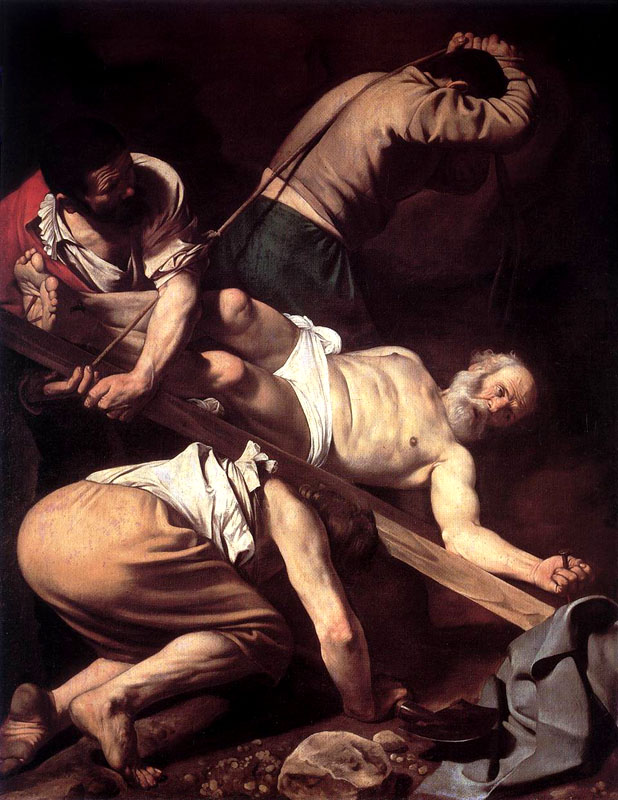
- In Egypt, the first plague was the Nile turning to blood. The first persecution, by Nero, led to bloodshed in war or from disease. Nero, reigning 54-68, killed Christians in Rome, including the apostles Peter and Paul, and throughout the empire. Then 30,000 died due to "pestilence" in Rome, and armies or cities were lost in war in Britain and Armenia (VII.7). In the year following Nero's overthrow, Galba was assassinated, Vitellius made civil war on Otho, and Vespasian made civil war on Vitellius (VII.8).
- In Egypt, there were frogs. Following Domitian's persecution, the Roman pagans were terrorized by the emperor's tyranny. Throughout Domitian's reign, from 81 to 96, attempted to end Christian worship out of megalomania that he deserved it himself, and the apostle John was exiled. At the same time, many of the leading men in Rome were killed at the emperor's order, and disastrous wars were fought in northern Europe (VII.10).
- In Egypt, there were flies. Following Trajan's persecution, there were Jewish rebellions in many provinces. Trajan, reigned 98 to 117, ordered Christians to make offerings to idols on pain of death, then Jews began fighting Libyans, Cyrenaeans, Egyptians, Alexandrians, Mesopotamians, and Cyprians, destroying a city on that island (VII.12).
- In Egypt, there were "dog flies, truly the offspring of putrefaction and the mother of worms." Following Marcus Aurelius' persecution, disease led to "death…putrefaction and worms." Marcus ruled 161-180; in the 170s Christians were "martyr[ed]" in Gaul and Asia. A plague killed so many in the country and the army, necessitating a 3-year levy of new soldiers (VII.15).
- In Egypt, there was the death of livestock. Following Septimius Severus' persecution, soldiers and civilians in the provinces were destroyed in many civil wars. During Severus' reign 193-211, "a great many saints received the crown of martyrdom." In 196, Clodius Albinus' army proclaimed him Augustus in Gaul, leading to civil war in that province followed by rebellions in Britain (VII.17).
- In Egypt, there were sores and ulcers. Following Maximin's executions of the clergy, "seething anger and hatred" led to "the wounding and killing of the chief and powerful men." Maximin became emperor on the death of Alexander Severus in 235; Orosius claims that Alexander's mother Mamea was Christian – almost certainly a false claim considering that she was the aunt of her son's predecessor Elagabalus, who was a great enthusiast for the worship of the Syrian idol Baal (the sun) for which their family had traditionally been priests – and so Maximin went after the clergy, especially Origen, Mamea's supposed teacher. Very soon, Maximin, himself, was killed in 238 (VII.18-19).
- In Egypt, there was hail. Following Decius' persecution, the air was poisoned under Gallus and Volusianus. Orosius supposes Decius undid and killed Philip the Arab out of hatred of Christianity in 249, and then expanded the persecution as emperor. While Gallus and his son Volusianus reigned 251-253, "a pestilence of incredible disease extended…" to practically every "house" throughout the Empire (VII.21).
- In Egypt, there were locusts. The Roman Empire was invaded by foreign armies. Decius himself, along with his son, were "killed in the very midst of the barbarians" in 251 (VII.21). Valerian, emperor from 253 to 260, also commanded Christians to worship idols by force, leading to torture and death, and was captured by the Persians in 260. Under his son Gallienus, who reigned until 268, the Germans crossed the Alps into Italy, Alemanni invaded Gaul, Goths invaded Greece and Asia Minor, territory beyond the Danube was lost, "further Germans" took Spain, and the Persians captured Mesopotamia and harassed Syria (VII.22).
- In Egypt, there was darkness. Following Aurelian's persecution, three emperors were killed in six months. Aurelian was emperor 270-275; soon after his persecution "he was killed while on a journey" (VII.23), then both the Emperors Tacitus and Florian were killed as well before twelve months had passed (VII.24).
- In Egypt, there was the death of the first born. Following Diocletian's persecution "was the destruction of the idols." I've already
discussed the persecutions of Diocletian and his colleagues in 303-305. Clearly, Orosius sees a direct link between that and the religious program of Constantine that eventually – although many generations later, and after Orosius' death – led to the end of idolatry.
Pharaoh finally relented and let the Jewish people "go free"; the Augustus became Constantine and he let the Christian people "be free." Certainly there are some contrivances in this system. John, for example, had correctly exonerated Marcus Aurelius of official persecution, and the idea that Philip was Christian was probably more a consequence of Decius' persecutions than the reason.
Orosius is also less anti-Jewish at places than many of his Christian contemporaries and followers. The continuity between the two religions is highlighted, as in the plague idea above, but he uses language about the Jewish experience that is typical of his own times rather than Biblical times – using the word "synagogue" for example. Unlike John, he doesn't tell the story of Julian allowing the Temple to be rebuilt in Jerusalem; rather, he thinks that Julian built an amphitheater in the city to show Christians being attacked by beasts (VII.30). I checked back to see if the Temple story had existed in the Latin historical tradition, and found that while Ammianus Marcellinus does include it, Eutropius does not – those two historians were both about a generation older than Orosius, but it seems likely that Orosius only knew Eutropius.
What's more striking is how cosmopolitan Orosius sees the experience of being part of the Roman Empire, even in its decline. Remember, he was constrained to move from what's now Portugal to what's now Tunisia or Algeria because of invasions against his native land, but it doesn't change his fundamental Roman identity. Book V, coming at a point after the Punic Wars have ended and Rome has, if not assumed sovereignty, at least proven hegemony over the entire Mediterranean, begins by making this point. In his time, "everywhere there is native land, everywhere my law and my relgion…this Africa has received me to her open peace" (V.2), unlike the past when xenophobia led to the death of foreigners in both mythical times and all the way to the historic Pompey (V.1). He is very strongly identifying, even claiming, Roman imperial unity with Christianity. At the same time, he is not myopically Roman in history, recognizing that Rome's military successes had come at the expense of other people – mainly other people who are now Romans themselves. This, too, is to show that the pagan g-ds could only benefit one nation, but cause problems for others; Christianity allows for the brotherhood of all. Apparently, literal Christian brothers like the emperors Constans and Constantine II – neither of whom I've seen ever accused of heresy by any orthodox writer – can actually make war on each other, leading to a fratricide (VII.29), even in this state of blessing.
The final history I have read to catch up to 383 is that by Paulus Orosius, called The Seven Books of History Against the Pagans (translated by Roy J. Deferrari for the Catholic University of America Press). Of those seven books, I read about six and three-quarters, but I will be considering him my lead source for the final portions of the book, which occurred during his lifetime. As the introduction explains, Orosius was born sometime during the decade of the 380s, in what is now either Portugal or Spain (xv). His homeland was invaded by the Barbarians when he was a young adult, and already ordained a priest, he left – whether it was intentional or not, he arrived at Hippo in North Africa to learn from Augustine (xv-xvi), who we have already seen in my post on Optatus. A year or two later, in 415, he wished to learn from Jerome as well, who was then near Jerusalem; Augustine trusted him with some of his own correspondence as well as a recommendation (xvi-xvii). While in the Holy Land, Orosius took part in the Council of 415 at Jerusalem, on which he wrote the Liber apologeticus, then returned to Augustine with responses from Jerome; his departure from Hippo was cut short due to continuing turmoil in the Iberian peninsula (xviii). Augustine accepted him back, and commissioned him to write the History to flesh out some of the arguments he was working on in his own City of G-d (xviii-xix and Prologue to Book I, page 3-5). As I have mentioned, some writing by both Augustine and Jerome – two of the most important theologians in the history of the Latin church – also make a part of my reading project.
The basic problem that Orosius is using his History to solve for the church is to refute the pagan belief that "present times [are] most unusually beset, as it were, by evils because there is belief in Christ and worship of G[-]d, and increasingly less worship of idols" (Prologue to Book I). While the (Western) Empire had not yet fallen by the time he wrote the book, and at least up to the narrative through Gratian's death he doesn't seem to think it inevitable, he's basically trying to preempt people from blaming Christianity for the fall of the Roman Empire. Toward the end of the 5th century, the pagan and Byzantine historian Zosimus believed just that; modern historians, such as Henry Adams, have made a similar claim. Of course, Orosius and Zosimus were looking at the issue providentially – "my deity is stronger than your deity" and all that – while the modern argument is more cultural – to wit, the religious conversion in the Empire accompanied a cultural transformation that undermined the values and institutions vital to Rome's military greatness. His method is to show how war and other disasters existed in every period, and also to an extent to minimize the problems of his own time. Secondarily, he attempts to explain the ways that history shows positive proof of Christianity.
The first of these is the bulk of the work, but is utterly derivative at least until the point that Eutropius ends during the reign of Valens, for which reason I have not found it necessary to get the book until now. With the end, he is putting his own knowledge into the narrative. The sources he names are not any different from the ones available to us, and for the most part those I have already read. He uses both pagan and ecclesiastical historians, including at least one Greek (Polybius), though the citation may itself be derivative (or through translation). As the special index for it attests, the number of direct quotations from Scripture is rather low, and I assume he had access to Jerome's Vulgate, rather than any of the earlier translations of the Bible into Latin that were considered quite inferior. Thus, Orosius' History's survival and influence (in the Middle Ages, at least) is due not to his originality or quality, but Saint Augustine's imprimatur.
Augustine focused on the city of G-d; for Orosius, the "City" (I.1, passim) is Rome. He is writing a full history, abbreviated as it is compared to his ultimate sources like Livy, not a chronicle. Still, his dating system by Roman years, before or after the founding of the city, is instructive compared to John's Biblical and imperial system and the Chronicon Paschale's consular years and years from creation. Even amid the beginning of the breakup of the Western Roman Empire, Orosius sees it as the goal toward which history has been driving. Nevertheless, his project is a full world history.
Rather than using mythology to display geology as John of Nikiu did, Orosius actually elaborates a full description of the known world's regions to begin his narrative in Book I Chapter 2. Although the Romans had some limited contact with China, Orosius doesn't extend beyond India to the east.
At II.1 and VII.2, he explains that he conceptualizes history as beginning with the Babylonian Empire and ending with the Roman Empire. He finds parallels between these empires of East and West, some in year counts, others that Babylon fell as Rome rose. As lesser empires, he also finds a place for Macedonia/Greece in the North and Africa/Carthage in the South. The last is a bit out of place, both from the Biblical idea (e.g. Daniel) that would have the fourth (second chronologically) empire as Persia/Medea. Carthage is also out of place due to the information Orosius gives on it. He on discusses Carthage in context of the Punic Wars, which cover the bulk of the fourth book; even the foundation story of Dido doesn't come until IV.6, rather than other events before the beginning of Rome. While he makes clear that Carthaginian power had come to extend over much of North Africa, the Iberian Peninsula, Sicily, and other islands by the time the First Punic War began in 264 BCE, he does very little to vitiate the paucity of historical knowledge on Carthage at its apex, compared to the other empires, either in his own narrative or by pointing to another, as he does at times.
As the title of the history might be trying to suggest, there is little about Jewish history. Rather, the Jewish Bible is used to talk about Adam (I.1,3), Noah (I.3), Sodom and Gomorrah (I.5), and Joseph (I.8) and Moses (I.10) in order to discuss Egypt. Egyptian legend and Greek mythology also inform Egyptian history, and Greek mythology also informs ancient Greek and Trojan history; Orosius is better able to escape from Hesiod than John, but he cannot ignore the mythological foundations completely. At least indirectly, though, he does begin within his system. To start the narrative in Book I Chapter 1, he writes, "Since nearly all men interested in writing, among the Greeks as among the Latins, who have perpetuated in words the accomplishments of kings and peoples for a lasting record, have made the beginning of their writing with Ninus, the son of Belus, king of the Assyrians, because they wish it to be believed in their blind opinion that the origin of the world and creation of mankind were without beginning; yet they explain that kingdoms and wars began with him as if, indeed, the human race up to that time lived in the manner of beasts, and then for the first time, as if shaken and aroused, awoke to a new wisdom." He, instead, calculates that Ninus was a contemporary of Abraham, some 3,184 years after Adam, the first man; those years "have been omitted or unknown by all historians," though he is able to refer to Noah later. Two thousand and fifteen years after that, Augustus Caesar was emperor of Rome and Jesus was born. The geography in I.2 associates Assyria with the Iranian lands; at II.2, Semiramis, the wife and successor of Ninus as ruler of Assyria "restored the city of Babylon"; and VII.2 calls Babylon "a city of the Assyrians." Thus, we can see that Orosius, in calling Babylonia the important Eastern Empire in his system of history, intends to at least roughly include Assyria and Medea/Persia in the equation.
Before turning to the main subject – Rome – I just want to state my disappointment in his treatment of Classical Greece and Hellenistic history. Orosius does nothing to supplement the gap in history between the end of the first generation of the successors to Alexander the Great and the end of the 3rd century when the Hellenistic kingdoms start to appear in Roman history.
Just like the other empires, Orosius' history of the City of Rome and the Empire it won is derivative, and although it is treated more comprehensively, I will not go through the entire narrative. As elsewhere, he constantly compares the wars Rome faces with those of his own time, and prefers the latter. Yet, as he goes through a litany at the end of Book V (24th chapter) of all the wars Rome was fighting simultaneously early in the first century before the common era – civil wars, wars against slaves, against Mithridates, wars in Spain, in Macedonia, in Dalmatia, in Pamphylia – one can't help but feeling how impressive and vast Rome's military resources were to not only fight in so many places at the same time, but win. Unwittingly, he proves the dictum of Pyrrhus still applied two centuries later: "if I conquer again in the same manner, I shall return to Epirus without a soldier" (IV.1) – Rome's reserve of soldiers appeared inexhaustible. For all Orosius' optimism, one doesn't have the sense that it is still true in the fourth century of the Common Era.
Since I have already written more than I expected, I will save my comments on the Christian era to the next post.
A different translation is hosted by Google.
The next book that I am bringing "into the mix" is the anonymous Chronicon Paschale as translated by Michael and Mary Whitby for the Liverpool University Press and its Translated Texts for Historians series. This work, of the same genre as the John of Nikiu's, was written about half a century earlier, around 630 CE in the city of Constantinople by an anonymous priest. The book is so called because of its emphasis on calculations for the Easter festival. The Whitbys decided to only translate the portion of the chronicle that begins with Diocletian's reign in 284 CE, until it ends in 628. Given the lack of credibility in John's Chronicle for nearly everything up to this point, I can certainly understand why they would think that the earlier portions are of little historical value; in their introduction they certainly suggest that this is the case. On the other hand, it would be interesting to compare John's fantastic tales with what this Byzantine author wrote on antiquity as they both emerged out of a similar chronicling tradition.
This history has a great deal of structure that John's lacks. In addition to the chronicle tradition, it is annalistic in that the author gives a mention to every year. Years are identified by consuls, imperial years (how many years since the beginning of an emperor's reign), and indiction years (a 15-year tax cycle somewhat akin to the American 10-year census cycle). Beyond these, years are grouped by Olympiad and emperor. Specific dates within a year are given based on the Roman (Julian), Greek, Syrian, or Egyptian calendar, depending upon the source of the material. Very helpfully, the translators have added the year of the common era and Roman month if necessary. Thus, anything specific I write will be based on the year (and date, if applicable) that we would use, with no other citation. With each emperor, the author also keeps track of the years since creation. In year 325, after telling of the celebration for Constantine's twentieth year in power, he gives his calculation for what the translators say is the second time – the first was for Jesus' baptismal year and beginning of his ministry. The note suggests that because the vicennalia was the end of Eusebius' Ecclesiastical History, he is importing it from that source. The important people or events by which he calculates are:
Altogether, this means that, in the author's view, the world was created 5,833 years earlier; put into our terms, he thinks the world was created in the year 5509 before the common era. The Chronicon also occasionally dates an event in Christian years, but from Jesus' death (placed in 29 CE) than his birth as our system was designed to do.
I would also note that the identification of the year is sometimes all he has to say about it. While he is certainly more detailed than John, it is with Diocletian that the latter at least starts to include every emperor. The renewed interest in the empire and the relative modernity of history starting with Diocletian for both writers has some sense to it for two reasons: 1) Diocletian divided the Roman Empire between East and West in a way that was not yet quite permanent, but close enough from the perspective of the 7th century, and 2) the persecutions under Diocletian in 303-305 (important also for Optatus) seemed to lead directly to Constantine's accession to become Augustus in 306, following which the empire slowly began to develop an officially Christian character that was probably more resonant to the Byzantines than the old Roman institutions.
Diocletian and his colleague Maximianus voluntarily (or at least Diocletian volunteered) abdicated their power in 305, leaving their Caesars to become Augusti and nominating new Caesars. Thus Constantius I gained full power in the West and remained where he had held subordinate power in Britain and Gaul. When he died a year later, his armies declared in favor of his (illegitimate) son Constantine to succeed him (at what is now York, England), despite the existence of Severus as Caesar and legal heir. This led to a series of civil wars for power against various Caesars, Augusti, and usurpers that lasted until 323, and for Constantine to find the Christian faith of his mother Helena. Not surprisingly, the Byzantine author pays a lot of attention to the (re-)foundation of Constantinople, while John hardly pays any.
Constantine left the Empire to his three sons Constantius II, Constantine II, and Constans when he died in 337. Following the behavior of their father, they eliminated threats methodically, in their case at first from cousins; then Constatine II and Constans fought each other, as John relates in Chapter 78, while the Chronicon Paschale omits such fratricide, only alluding to Constantine's death. After that, from 340-350, the rough East-West split returned with Constantius II in the East and Constans in the West. While they were able to maintain a rough peace, religion divided them as much as power politics. After Constans was killed in rebellion, Constantius II ruled the entire Roman Empire; however, with internal rebellions challenging his power and war with Persia in the east – though the Chronicon Paschale believes that the city of Nisibis was miraculously protected in 350 in the emperor's merit (despite his Arianism) – Constantius named his cousin Gallus as Caesar to hold power in the West. However, he never really trusted Gallus, who was put to death after a few years.
Soon, Constantius chose Gallus' brother Julian to take over as Caesar, as he still needed help. He trusted Julian even less, but Julian was smarter. Neither chronicler discusses Julian's military successes in northwestern Europe, thus giving rise to an implication that he rebelled due to his apostasy, for he had been raised a Christian but turned pagan. Anyhow, Constantius II died in 361 before the rift had turned to battle, and Julian became the legitimate Augustus of the entire Empire. While the two orthodox (or nearly so from the perspective of the 4th century) writers condemn Julian's persecution of Christians, they cannot but admit that he actually reversed some of the anti-orthodox decrees of Constantius because that allowed Athanasius to return from exile. Julian did give in to some pagan excesses (which the Christians historians make much of), but he was probably more tolerant than the Christian emperors of his era; at Chapter 80, John tells the story of how Julian allowed the Jews to try to rebuild the Temple in Jerusalem. Julian made war on Persia, but died in battle in 363 – both authors see this as divine punishment.
Jovian was emperor for less than a year. In praising him for his orthodoxy, the chroniclers try to cover up the surrender he agreed to the Persians on very unfavorable terms. Next was Valentinian, who chose his brother Valens as a colleague; the former took the West and the latter got the east. Again, there was a sectarian disagreement between the brothers, with Valentinian holding the orthodox position. Thus, whatever Valentinian did was good, and whatever Valens did was bad. Valentinian died in 375 and was succeed by his sons Gratian and Valentinian II, who had different mothers. Both writers completely omit the first great loss by the Romans to the Goths (or any other barbarian) inside the empire's borders at Adrianople in 378, where Valens died. They elide straight to the elevation of (the orthodox) Theodosius (chosen by Gratian). The Chronicon Paschale mentions intrigues attempted by Valentinian II's mother Justina, an Arian, against her step-son Gratian in 380, supposedly leading to his death. John, however, has it correct that it was an assassin acting for the British usurper Maximus who killed Gratian in 383. And that, as I have mentioned elsewhere, has caught me up to my reading in other histories.
I do not believe that there is a freely available translation of this portion of the Chronicon Paschale on the internet.
Now that we have separated the mythology of Greece from the legend of Assyria, I will continue my discussion of the Chronicle of John, Bishop of Nikiu. So far, John has written of Mesopotamian/Iranian "history" and some Egyptian "history." Next, he comes to legendary Greek history. Again, he conflates it with legend.
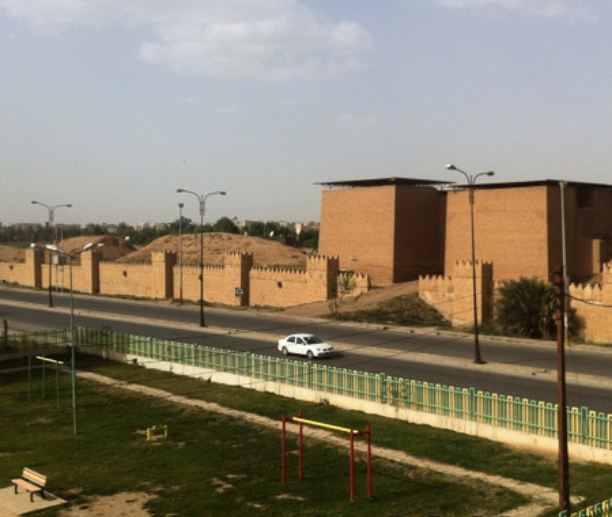
In Chapter 22, he writes of Inachus as a descendent of Noah's son Japhet; to the Greeks he was a deified/personified river (one of the many sons of Oceanus and Tethys), and he stands at the head of the genealogy of Argive mythology. John says he instituted worship of the Moon as Io; while this is a traditional identification, Io was considered a daughter or otherwise descendent of Inachus who was seduced by Zeus. John may have this in mind in the next chapter as Zeus has a daughter Libya with a woman that might refer again to Io; Libya married Poseidon (his first mention), and "named the country over which he ruled after" her. Among their sons were Belus and Agenor. Agenor moved and founded Tyre, and his sons were the eponymous founders of Syria, Cilicia, and Phoenicia. A Cretan king, in Chapter 24, attacked Tyre and stole away Europa to marry her; John considers her of the race of Zeus. In mythology, she was a princess of the line under discussion, but her seduction was also by Zeus. The following chapter again misses the connection—John mentions the Theban Laius and Oedipus, without explaining as in myth that their antecedent Cadmus arrived there while searching for his sister, Europa.
At Chapter 27, he turns to the Biblical Melchizedek, king of Jerusalem. He calls him "holy though of gentile origin," which is silly because he was a (seemingly older) contemporary of Abraham, the first Jew. The gentile distinction should be obvious. He extrapolates an awful lot on the Bible's lack of history for him – Jewish commentary usually identifies him with Shem, while Christians often relate him to Jesus. Even more oddly, he spends much more attention on Melchizedek than on Abraham, and almost none for Isaac, Jacob, or his children (including Joseph). It is only at Chapter 30 that he gets to the Exodus from Egypt, and with characteristic perspective from the Egyptian side as the Jewish. Egyptian and Jewish affairs continue through the time of David and Solomon.
The chronology here is quite jumbled, with Greek events being equated in time with Jewish history, jumping from the time of Joshua, or the Judges, before the Exodus or after the institution of the monarchy. In Chapter 34, he says that "Prometheus and Epimetheus discovered a stone tablet with an inscription which had been written…in the days of the ancients…And Elijah the prophet interpreted the verses." As we had seen from Hesiod, Prometheus and Epimetheus were prior to mortal humanity, while Elijah lived well after the division of the Jewish kingdom in two. In Chapter 36, John says that Orpheus wrote a "Theogony." Heracles is again mentioned as part of the voyage of Jason and the Argonauts in Chapters 40-41. Chapters 45 and 47 discuss Troy a bit, although references to the Trojan War are very incidental.
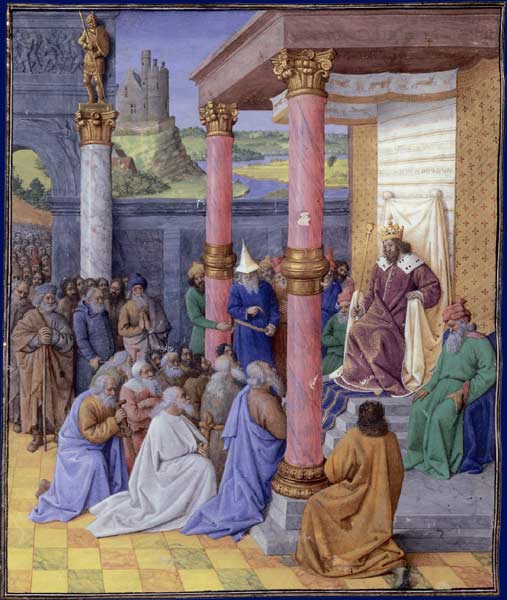
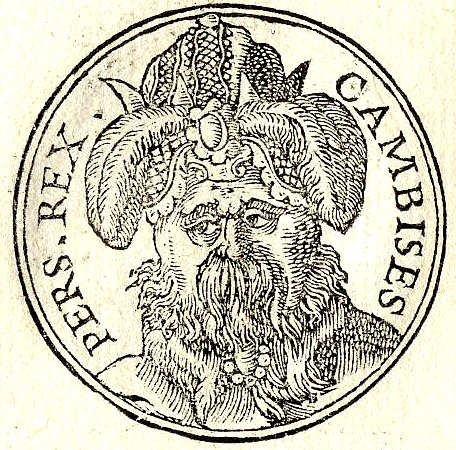
In Chapter 48, John moves directly from Solomon, who built the Temple, to Nebuchadnezzar, who destroyed it. John calls him a king of Persia, rather than Babylonia. After spending two more chapters on his conquests, using especially Apocryphal sources, he turns to Cyrus – who actually was king of Persia – in Chapter 51. John focuses on his relationship with Daniel, and his counsel aiding his victories. Cyrus' son and successor, Cambyses, reversed his father's pro-Jewish policies, and so had troubles in his conquest of Egypt, although he eventually emerged victorious. At the end of this long chapter, I think John has confused himself. He briefly mentions the final few Persian emperors before Alexander the Great, but it reads as if they directly followed Cambyses. This in follows neither the Bible nor Herodotus, and thus he skips over the Persian Wars against Greece completely. He has gotten himself even more out of place such that the Peloponnesian War is completely irrelevant to his purposes.
Looking at the events John chooses to recount, most of which do have plenty of parallels, it is interesting to think about the methodology (if one exists) behind that choice. He uses Greek mythology, fit within a Noahide (with all his emphasis on descent from Noah, however, he never actually wrote about the Flood!) genealogy, to give what really amounts to a geography lesson. He also is very Hellenistic in placing scientific or technological firsts in Greece. He also tends to see the Bible and kingship as the basis of history. Thus he writes about Melchizedek the king, but not Isaac and Jacob the patriarchs. Joseph, because of his relationship to the Egyptian pharaoh, is then an even more curious omission. Because the many Greek leaders in the Trojan War, though kings, function in a way we might recognize as democratic – and defeat the "Eastern" monarchy of Troy – he doesn't pay much attention. When the democratic/oligarchic/timocratic Greeks defeat the Persian Empire, or fight amongst themselves – even though by this point we are at very clear and historically attested material – John doesn't even say anything.
In my next post, I will continue with his take on Rome and Macedonia.
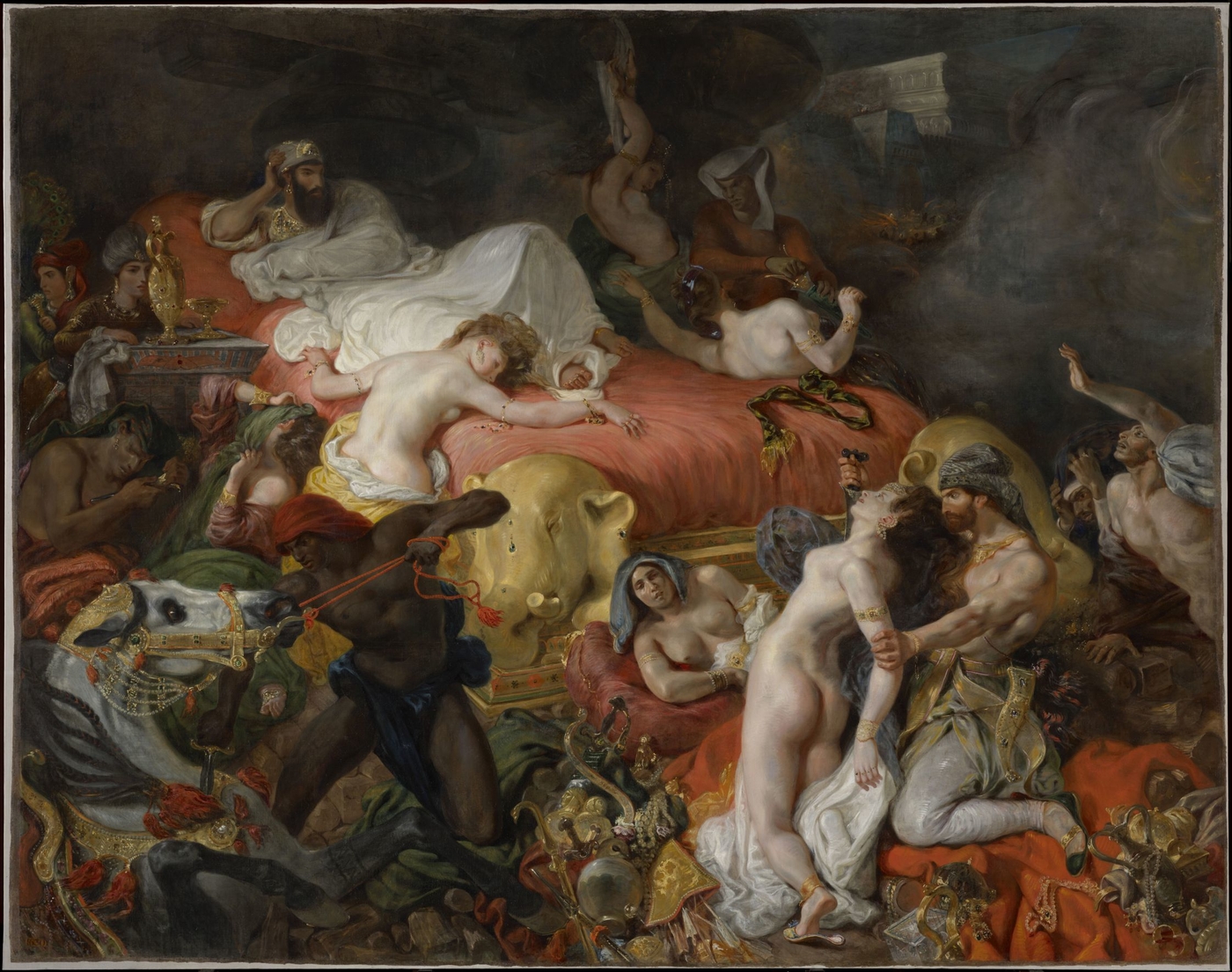
Modern archaeology and scholarship, as well some of the books of the Bible, give us today an enormously better sense of what the Assyrian Empire was than the ancient Greeks and Romans knew. Unlike for their own history, they had no access to writing that is now lost. Thus, my criticisms of John of Nikiu, were not for his lack of truth, but his odd way of making things up. While, as names for literature, the figures of Sardanapalus, Semiramis, and Ninus were not uncommon, they were types for "oriental" luxuriousness or aggression, not historical personages. My purpose in this post is not to say anything about real Assyrian history, or the myths that the Assyrians told, but how the ancient Greeks and Romans put their limited knowledge into their idea of history.
I will be illustrating this through two historians: Herodotus and Velleius Paterculus. A third historian, Diodorus Siculus, wrote somewhat more extensively about the subject, in my understanding, but I have not read that part of his work.
While I will be getting much more extensively into both Herodotus and his work in the future, I just want to point out that he lived significantly closer in time to the final fall of the Assyrian Empire than he did to the time of Julius Caesar. In fact, he was born closer to the fall of Assyria than he was to the death of Alexander the Great, let alone the beginning of Roman involvement and conquest in Greece. Yet, already for Herodotus, Assyria was just a memory from the hazy and distant past. In the first chapter of the first book of his Histories, the Assyrians are named as an ancient people who did commerce with the Phoenicians. At 1.95, he explains that they held dominion over "inland Asia" (Robin Waterford's translation for Oxford World Classics) for about 500 years, when the Medes began to rebel, soon followed by their other subjugated people, based on Persians sources Herodotus considers especially accurate. At 1.102, the Medes made war anew on the Assyrians, who had been reduced to little more than Nineveh, in order to enlarge their own empire. At 1.106, Babylon is considered the one part of Assyria that remained independent of Medea at its height. Chapter 131 of book 1 includes some discussion of how the Assyrians (now just a people, not an empire) influenced Persian religion. Cyrus' conquest of Babylonia in 1.178-200 equates the Babylonians with the Assyrians (John of Nikiu, remember, equated Assyria with Persia).
Going through Egyptian history in Book 2, Herodotus mentions the Assyrian king Sennacherib's invasion at chapter 141. At 2.150, he relates that Sardanapalus, the son of Ninus, dug subterranean tunnels in Nineveh to protect his treasures. Listing the Persian provinces under Darius in Book 3, Babylon is considered the leading city of Assyria in chapter 92. In Book 6, Herodotus tells the story of Perseus, and considers (John's) an Assyrian origin to be a Persian variant at chapter 54. Finally, at 7.63, he says that the Greeks called "Syrians" the Assyrian soldiers in the Persian army.
Velleius Paterculus wrote about 500 years later, in the middle of the first century of the common era. He was a Roman soldier, whose endeavors writing history were of an amateur quality. The first book of two in his Compendium of Roman History (Frederick W. Shipley's translation for the Loeb Classical Library) is very fragmentary, and dealt with events prior to the Punic Wars. At 1.6.1, he says that Assyrian hegemony in Asia passed to the Medes 870 years before his time, after holding it for 1,070 years (1.6.2). He considers Ninus and Semiramis the founders of the dynasty, and Sardanapalus the last, with 32 generations in between. At 1.6.6, which the notes consider a later gloss, Assyria is called the "first…world power."
Thus we can say that the basic Classical understanding of the Assyrian Empire was something like the following: The Assyrians held the first empire, stemming from a time before we can really remember, a time possibly coeval with the events of Greek mythology – Herodotus places the Trojan War in the 13th century BCE and Velleius puts Ninus and Semiramis in the 19th or 20th. They were centered in Nineveh/Ninus, and had kings named Ninus and Sardanapalus, and a queen named Semiramis. Eventually, just as our historical understanding comes to light in the 7th century or so, the empire was broken apart by the Medes (and the Babylonians to the more sophisticated). Nineveh was destroyed, and, by the sixth century, the first Persian emperor Cyrus (after defeating the Medes) conquered Mesopotamia, which includes the Assyrian homeland in the north of the region. Soon, at least to outsiders, they were indistinguishable from the Babylonians to the south, or Syrians to the west (although I don't exactly know that "Syria" was a meaningful term before Greek dealings in the area). Perhaps their loss of identity (to outsiders, at least) is a fitting retribution for their own policy of transferring conquered peoples from their native land to extinguish national sentiments – the Ten Lost Tribes of Israel are the obvious example.
I wrote my last post before I began reading the Chronicle of John, Bishop of Nikiu (as translated by R. H. Charles, and republished in the Christian Roman Empire series). Over the next day and a half, I read the first half the book, another one that will be entering my "rotation". John's writing demonstrates the great – and silly – pitfalls that come from being without the foundations I was explaining the need for.
John lived in the late seventh century in Upper Egypt, the first generation following the Arab conquest of that country. His work is in the Byzantine chronicle tradition (of which another example to come soon) that I wrote of a few days ago in which all world history is combined into a whole narrative, although some national pride comes through with some focus on Egyptian affairs. According to the introduction (p. iv, §2), the John wrote his Chronicle in Greek, and possibly (in part or in full) Coptic – an Egyptian language written in Greek letters – as well. At some point in time, the text was translated into Arabic, and then in 1602 from Arabic into Ethiopic (p. v). It is only two manuscripts (§3) from this final language that Europeans discovered in the 19th century, and from which the translation to English was made. Thus, it's quite possible that some of the oddities of the history are due to the numerous translation and not John himself; as Charles explains (p. vi, §4), "the Ethiopic translators were…largely ignorant of the historical persons and events described." On the other hand, the notes points to comparisons with other chroniclers, so neither John nor his genre can be completely innocent.
I plan to take a few posts to go over some of the issues I have found with John's Chronicle. The important foundations of history I described were the Jewish and the Graeco-Roman. As a Coptic Christian, John believed in the Coptic tradition, and as an Egyptian he was a cultural heir to the Greek tradition, via the Byzantine Empire, via the Roman Empire, which imported Greek Hellenistic culture, which itself involved both ancient Greek and Egyptian traditions. Anyhow, at the very least he should have had access to some of the Greek literature we have, in addition to the Bible. Yet, he combines mythology with religion in some very weird ways.
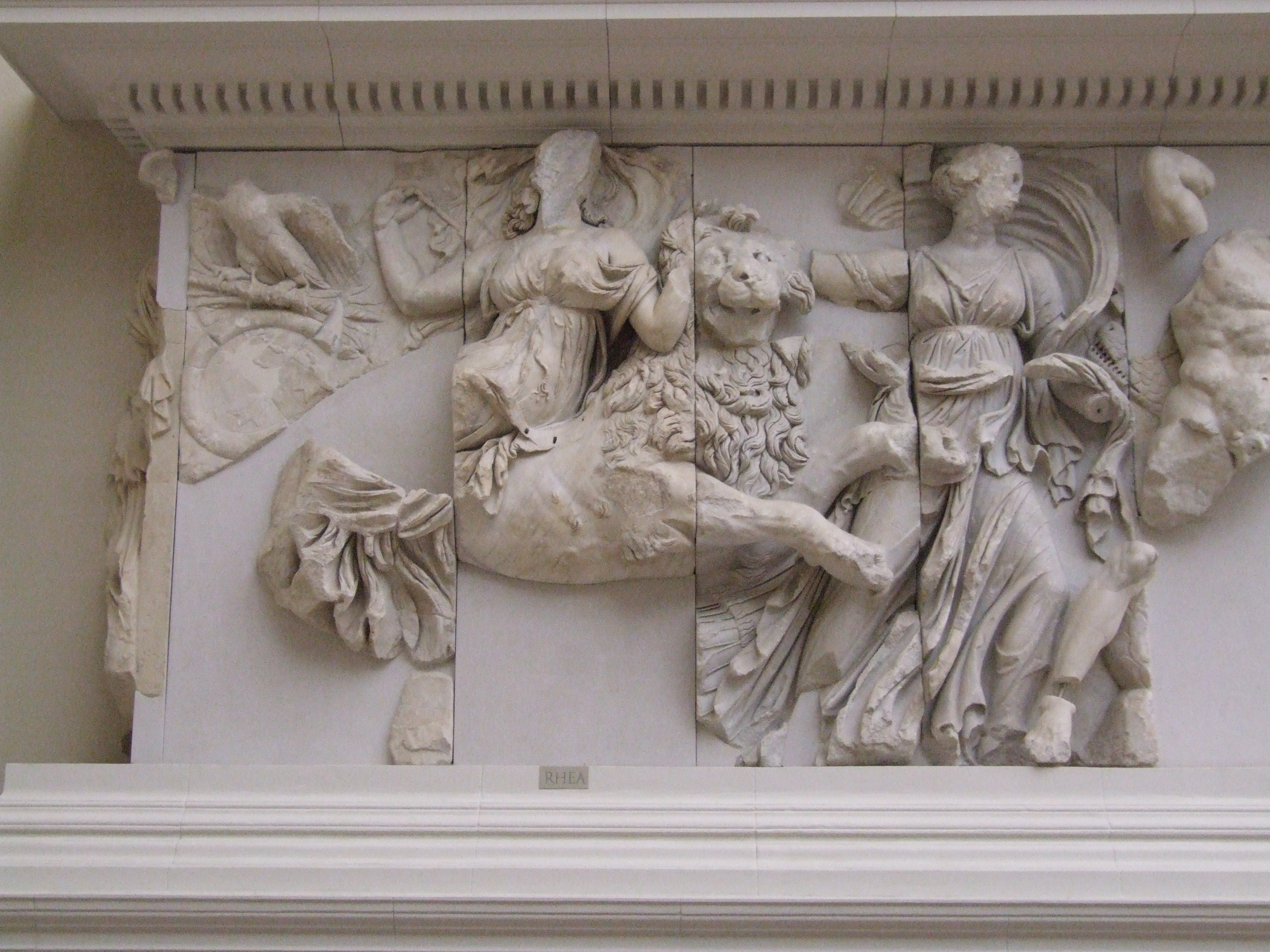
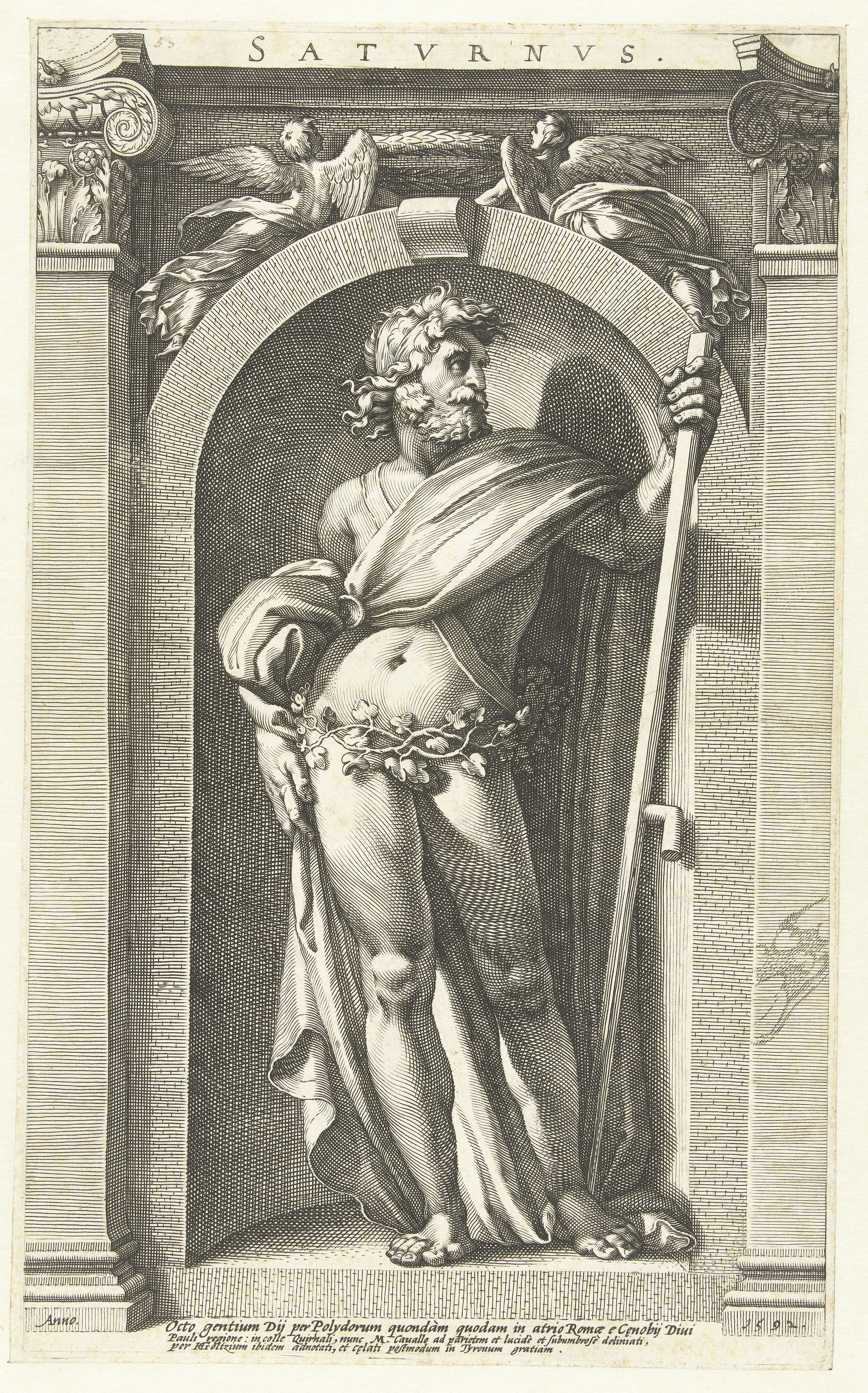
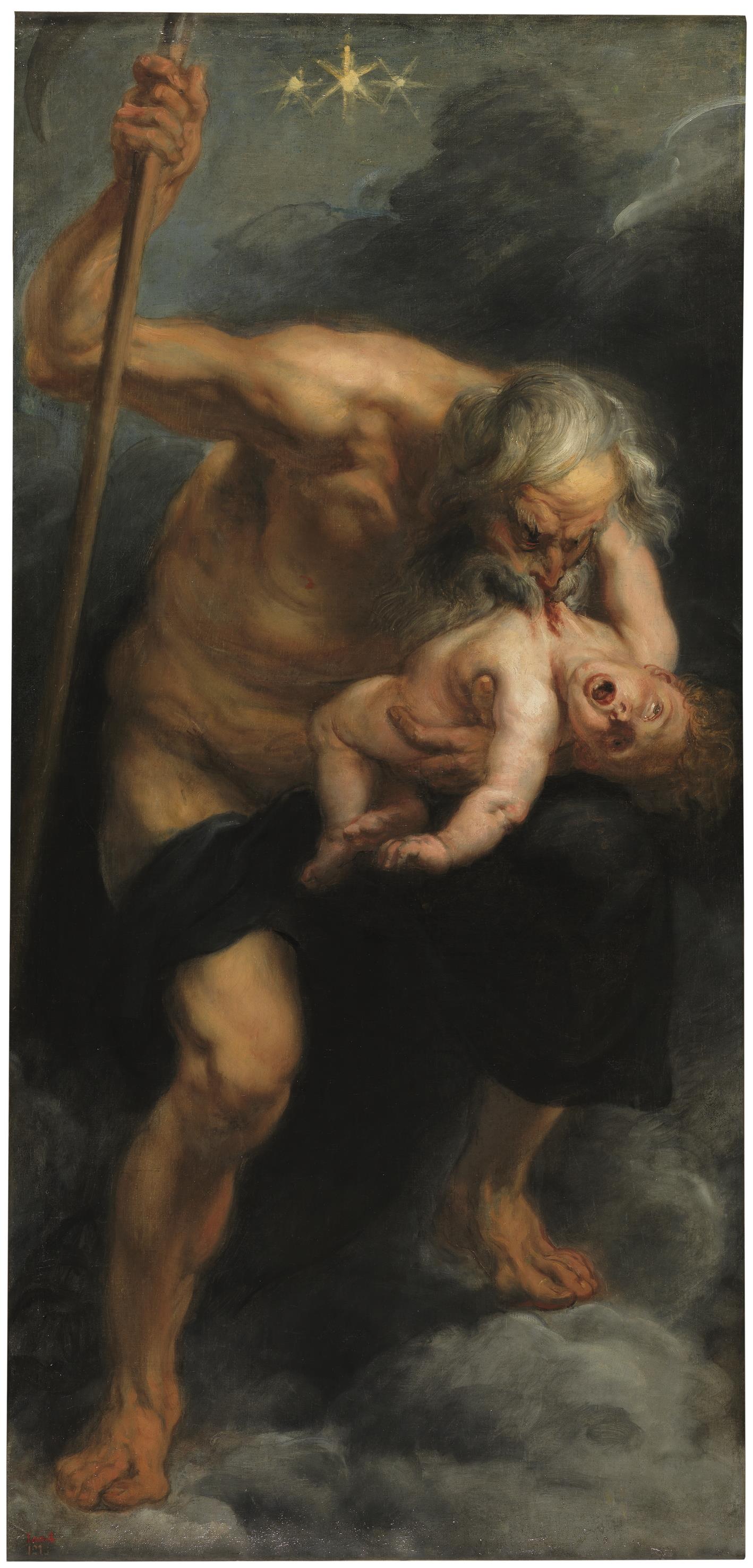
In the second chapter, he explains that Adam's son Seth named the five known planets (excluding Earth); while the notes and the many translations put this into question, it appears that John was suggesting that Seth gave them the Greek version of the names that we use, which is to say the names of Greek and Roman g-ds. Thus, the planets would be Hermes (Mercury), Aphrodite (Venus), Earth, Ares (Mars), Zeus (Jupiter), and Cronus (Saturn). It is later, according to John (Chapter 6), that Cronus, "a giant," who was a descendent of Noah's son Shem – and thus at least ten generations later than Seth – was named after the planet. I don't know whether the stories of mythologies developed before or after the identification of the g-ds with the planets, but even John can't really believe this order of things. Indeed, in the previous chapter, he explains that the Persians worshipped the Biblical giant Nimrod of Babylon, and identified him with the constellation Orion. John further places Cronus in "history," calling him the first king of Persia and Assyria (his distinctions between the two are never very clear). He married Rhea, as in mythology, but here an "Assyrian woman," and they have two sons: Zeus (also called "Picus") and Ninus. Zeus, of course, was Cronus' youngest son with Rhea in Greek mythology, while Ninus (as John explains) was the founder of the Assyrian capital Nineveh. The names, I believe, are identical in Greek, and while John didn't invent him, he may well have been a Greek personification of the city rather than a figure of Assyrian history or lore. Back to following the mythology, Cronus moved "to the west" to rule there, but still Zeus-Picus killed his father "because he devoured his children"; presumably these are the not here named Poseidon, Hades, Hera, Demeter, and Hestia. In myth though, Cronus moves from Greece to Italy after he has been defeated by his son. Based on Chapter 9, it seems that Zeus ruled in the west, as well.
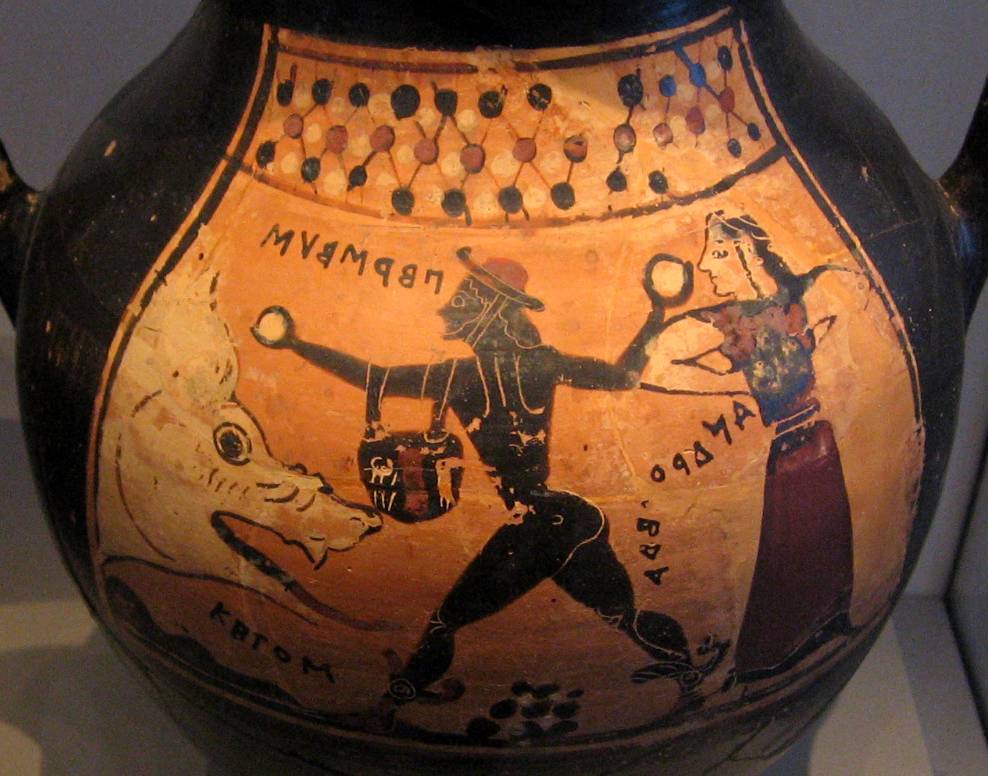
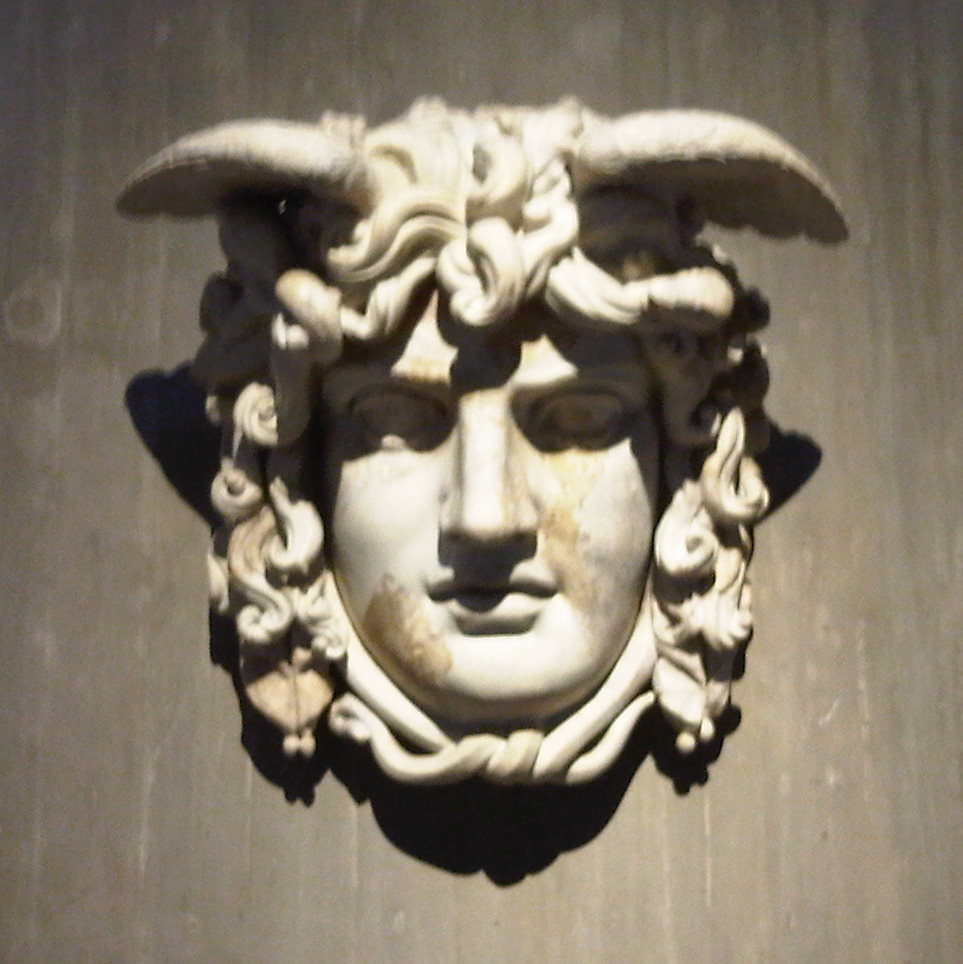
The next chapter has Zeus marrying both his mother Rhea and his sister, who still is not named. In the mythological tradition, Rhea was also overthrown in Zeus' rebellion, but he did marry his sister Hera – and have a daughter (Persephone) by Demeter. "[H]e begat by her a son named Belus": who the mother is is not clear, but I presume it's Hera. Belus, Greek for the Semitic idol Baal, does not match well with either of her sons, but was identified with the Sun (Helios), and eventually Zeus/Jupiter in Hellenistic and Roman times. Belus succeeded his father as king of Assyria, and was followed by Ninus (Chapter 8), who also married his mother, who in Chapter 6 was the same Rhea but now in Chapter 8 is Semiramis, the famous Assyrian queen of legend. Perseus comes to challenge Ninus' sons in Chapter 21; while the mythical Danae is forgotten as his mother, Zeus seems to remain as his father who helps him develop magical powers through the Gorgon (Medusa in mythology), to defeat Sardanapalus, presumably the reigning son of Ninus. Sardanapalus was a name like Semiramis in the legends of Assyria. As the new king, Perseus gives his name to the country, i.e., Persia.
In Chapter 9, Hermes follows Zeus in the west, with an alternate name of Faunus. (Traditionally, the former is the name of the messenger of the g-ds, while the latter is a Roman deity of wildlife [the "fauna" of "flora and fauna"], who was sometimes identified with the Greek Pan, son of Hermes.) As a worker in gold and silver, he drew envy from his brothers and fled to Egypt. His story is reminiscent of the Biblical Joseph. John returns to Hermes in Chapter 15, calling him a sage who explained the doctrine of the Trinity. Chapter 11 explains that Hephaestus was a king in Egypt; otherwise his character follows mythology. Chapter 12 adds that both he and his son who succeeded him were worshipped as the Sun. The next chapter gives Dionysus rule over Egypt as well; both it and the fourteenth name cities in Egypt built by Dionysus and Osiris as identified with Apollo. Heracles (Hercules) was a philosopher of Tyre in Phoenicia who discover silk (Chapter 20).
There is too much about John's Chronicle to put in one post, but as my next post will get into the right way to read foundations to Greek prehistory, I will just add that in Chapter 28, Hesiod is named as a descendent of Noah's son Japhet, and called the inventor of Greek writing.
An internet version of Charles' translation can be found at the Tertullian Project.
I mentioned twice starting with Herodotus and Livy. Conceptually, though, it is important to have a grounding in prehistory, as well. By "prehistory" I mean two things: a) that which one should understand before reading history, and b) that which occurred before people began to write history. The second point would refer to anything that happened before the events Herodotus wrote about; while there are certainly recordings of prior times, they were either transmitted orally or not written as history but for another purpose. Far from making these events historically remote, the versions that were written – and survived – are of the greatest significance in understanding the ways people of historical times thought. Until rather recently, the authority of tradition had few challenges. For my purposes there are two and a half traditions to look at for the foundations to prehistory.
The first is the Jewish tradition, and is based upon reading the Tanach (Jewish Bible). Exact historical accuracy is not the point, and I don't really want to get into arguments about that. Instead, what matters is that for over three millennia, Jews, and to a lesser extent Christians, and to an even less extent Muslims, have lived within a culture and context of the Tanach holding moral truth to them.
The second tradition is Greek mythology, and the final half includes any variations in Roman mythology. While the relationship of mythology to pagans is not the same as the Bible to monotheists, it still provided a context and explanation for why things existed as they did. I will be getting into the Archaic and Classical literature is most relevant for such foundations in the future. In addition, the transitions from legend to history tell us something about when the Classical writers themselves saw pre-historical times, rather than times that seemed very similar to their own.
We all know the advice about learning from history to avoid repeating mistakes. It is fair to say that even if, today, we don't necessarily see the stories in these traditions as historical, ancient people were even more likely to turn to them for help in their own lives.
I think these threads are the most important for understanding the history of Western Civilization. Obviously, Christianity plays an outsize role as well, and I have included it in my reading (as here and here). That religion, of course, developed during historical times, and so requires no prehistory beyond the Jewish tradition. Egyptian, Mesopotamian (Sumerian, Chaldean, Assyrian, Babylonian), and Iranian (Medean and Persian) traditions have also played some significance. However, until much more modern times, most of the Western understanding of these cultures has been mediated through the other traditions – primarily Greek, but also the Bible. At the end of antiquity, Germanic/Norse peoples conquered much of Europe. My reading is increasingly bringing me into contact with them, but for the most part the growth of literacy (even for a tiny, educated minority) was coeval with the proliferation of Christianity. Just as with any other nations, writers will tend to explain more or less of their background depending on how exotic he finds them.
I mentioned below that Herodotus and Livy were the natural places to start reading ancient history. That raises the question of whether they are equally valid sources, considering Herodotus wrote about events within the previous generation to his writing, and specifically mentioned that he was able to interview people who were involved in the events described. Livy, on the other hand, write from the founding of the city of Rome (the title of the work meaning that in Latin: Ab Urbe Condita) all the way up to his own lifetime about 750 years later. But then can I really say that they're equally valid sources? The answer, I believe, is a qualified yes.
I have long believed that, for modern history, a lag time of around fifty years is necessary in order to achieve something close the objectivity. Opinions last quite a long time, one would say entire adult lifetime. Now, in the ancient world, when lives were shorter and without any mass media or even daily newspapers, a shorter lag time is probably effective enough at giving some distance and perspective. Herodotus, I believe, was within the sweet spot for perspective; Thucydides, on the other hand, probably was not. While he was intimately involved in the events of the Peloponnesian War, he had no perspective. I'm sure I will be getting into this in some detail in a later post.
Livy wrote around the turn of the eras. Thirty-five of the first forty-five books in his history survive, covering around six hundred years, while the more recent 150 years in the final 98 books are only now available in summaries and short excerpts. This tells us something about the relative degree of detail between the two periods. Livy had access to several works by earlier authors that have not survived; for example, Cato the Elder was, by all accounts, a self-serving history, but by a man of great importance – having served in the Second Punic War in his youth, he attained the highest offices of the Roman Republic, and as an elder statesmen he was the lead advocate for the Third Punic War. Unfortunately this work is totally lost, although I will be getting into the work of his that has survived in the future. I believe the loss of Cato and the survival of Livy (at least for most of the period on which Cato wrote) indicates something about the way the readers, and most likely audiences as well, felt about the merit and value of the two. Livy had become superior to Cato. This suggests that even if Cato was more detailed, or had some slightly different spin, by the time of Livy and his readers in future generations, Livy's version of events was preferred. Quite often similar logic can apply to any other pair or group of authors.
Had they all survived intact, Livy, Tacitus, and Ammianus Marcellinus alone could provide a Roman history from the founding of the city to the sack of Adrianople and the death of Valens some eleven centuries later. From what I can tell, these three authors would provide the best understanding of the way the Romans themselves understood how their history unfolded. Unfortunately, much of it is lost: much of the third century and the final century and a half from Livy are no longer extent, Tacitus is spotty in parts, and the portions of Ammianus Marcellinus before his own time are gone. Thus we must rely upon another source. Sometimes the other sources are more contemporary, sometimes they are less. Especially among sources written in the Greek language, Byzantine writers of the Middle Ages compiled the writings into collections or summaries of classical works. Sometimes these are the best we, as modern historians, can do. Possibly the most important fault-line to consider is whether book was written before or after the invention of the printing press (1440). As long as the author I'm reading had access to a work that I do not, he has something to contribute. Is this ideal? No, of course not. But, it's the best we can do.
I prefer history that was written closer to the time period the events occurred. The closer the historian to the event, the fewer other sources I should probably require. Still, authors of a later time may have had access to different authors of earlier times. I mentioned in an earlier post the historians of Alexander the Great. None of them wrote within a quarter millennium of Alexander's tine, yet it is clear that they had access to at least three or four writers who'd taken part in Alexander's campaign. It would be nice if we had the works of Ptolemy or Aristobulus, but we do not. We can hope that the later authors preserved the truth in their sources faithfully, while adding perspective and other information to what was in the received material. By the time of the authors that do survive had passed, they were providing what the general understanding of Alexander had become; the new authors were also the new standard. It is my continual working hypothesis that it is the same with most other circumstances. Historical traditions can be variable, which is why I usually attempt to find multiple sources for an event. When variation can end and any new "information" about an old event must be dismissed as fiction is by no means clear line, but if the author can conceivably be thought ancient in culture, in knowledge, in technology, in resources (certain ancient libraries of great importance survived some centuries into the common era) I consider the author to be a good enough ancient source, in lieu of something better.