Showing posts with label Mythology. Show all posts
Showing posts with label Mythology. Show all posts
Wednesday, September 15, 2010
John of Nikiu: Greece, Israel, Babylonia, and Persia
Now that we have separated the mythology of Greece from the legend of Assyria, I will continue my discussion of the Chronicle of John, Bishop of Nikiu. So far, John has written of Mesopotamian/Iranian "history" and some Egyptian "history." Next, he comes to legendary Greek history. Again, he conflates it with legend.
In Chapter 22, he writes of Inachus as a descendent of Noah's son Japhet; to the Greeks he was a deified/personified river (one of the many sons of Oceanus and Tethys), and he stands at the head of the genealogy of Argive mythology. John says he instituted worship of the Moon as Io; while this is a traditional identification, Io was considered a daughter or otherwise descendent of Inachus who was seduced by Zeus. John may have this in mind in the next chapter as Zeus has a daughter Libya with a woman that might refer again to Io; Libya married Poseidon (his first mention), and "named the country over which he ruled after" her. Among their sons were Belus and Agenor. Agenor moved and founded Tyre, and his sons were the eponymous founders of Syria, Cilicia, and Phoenicia. A Cretan king, in Chapter 24, attacked Tyre and stole away Europa to marry her; John considers her of the race of Zeus. In mythology, she was a princess of the line under discussion, but her seduction was also by Zeus. The following chapter again misses the connection—John mentions the Theban Laius and Oedipus, without explaining as in myth that their antecedent Cadmus arrived there while searching for his sister, Europa.
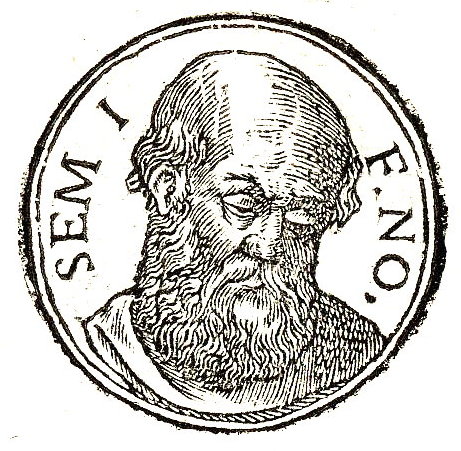
At Chapter 27, he turns to the Biblical Melchizedek, king of Jerusalem. He calls him "holy though of gentile origin," which is silly because he was a (seemingly older) contemporary of Abraham, the first Jew. The gentile distinction should be obvious. He extrapolates an awful lot on the Bible's lack of history for him – Jewish commentary usually identifies him with Shem, while Christians often relate him to Jesus. Even more oddly, he spends much more attention on Melchizedek than on Abraham, and almost none for Isaac, Jacob, or his children (including Joseph). It is only at Chapter 30 that he gets to the Exodus from Egypt, and with characteristic perspective from the Egyptian side as the Jewish. Egyptian and Jewish affairs continue through the time of David and Solomon.
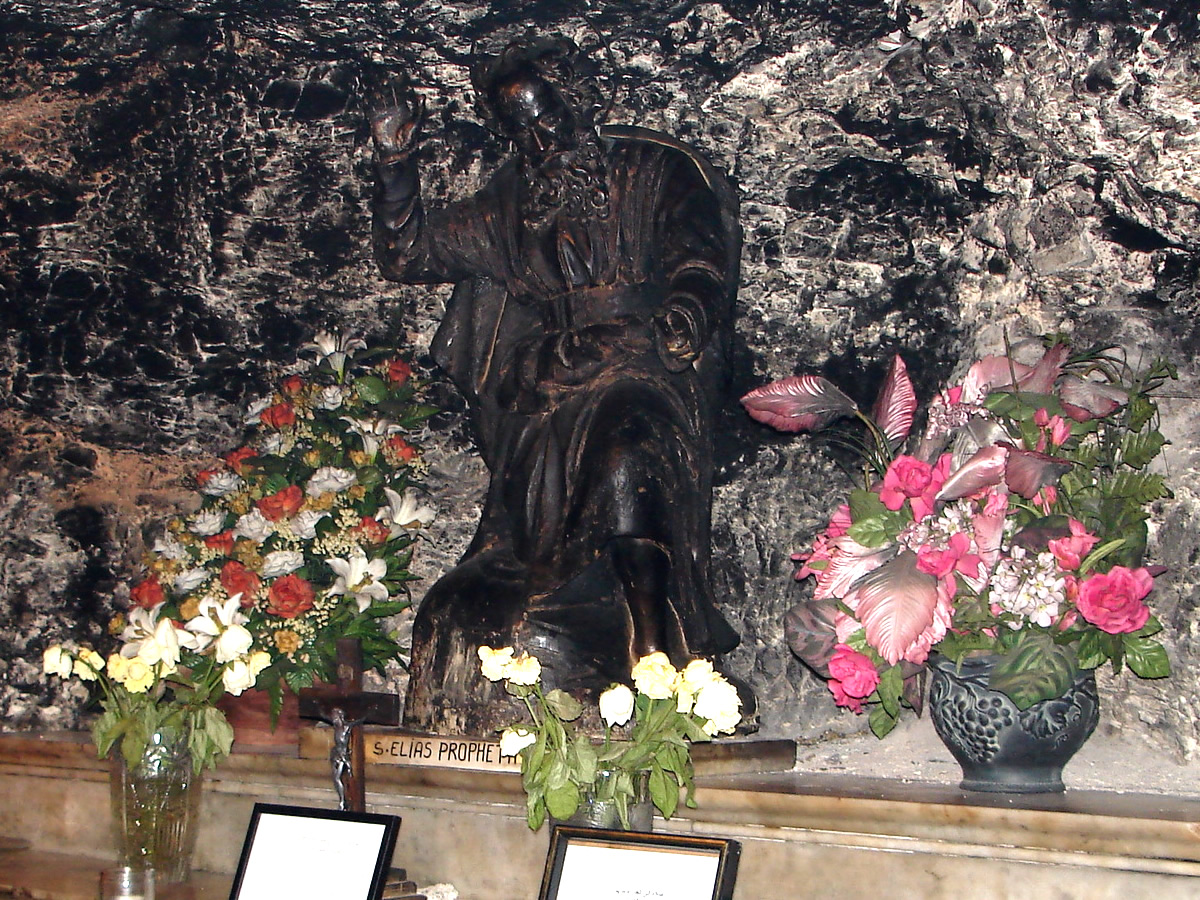
The chronology here is quite jumbled, with Greek events being equated in time with Jewish history, jumping from the time of Joshua, or the Judges, before the Exodus or after the institution of the monarchy. In Chapter 34, he says that "Prometheus and Epimetheus discovered a stone tablet with an inscription which had been written…in the days of the ancients…And Elijah the prophet interpreted the verses." As we had seen from Hesiod, Prometheus and Epimetheus were prior to mortal humanity, while Elijah lived well after the division of the Jewish kingdom in two. In Chapter 36, John says that Orpheus wrote a "Theogony." Heracles is again mentioned as part of the voyage of Jason and the Argonauts in Chapters 40-41. Chapters 45 and 47 discuss Troy a bit, although references to the Trojan War are very incidental.
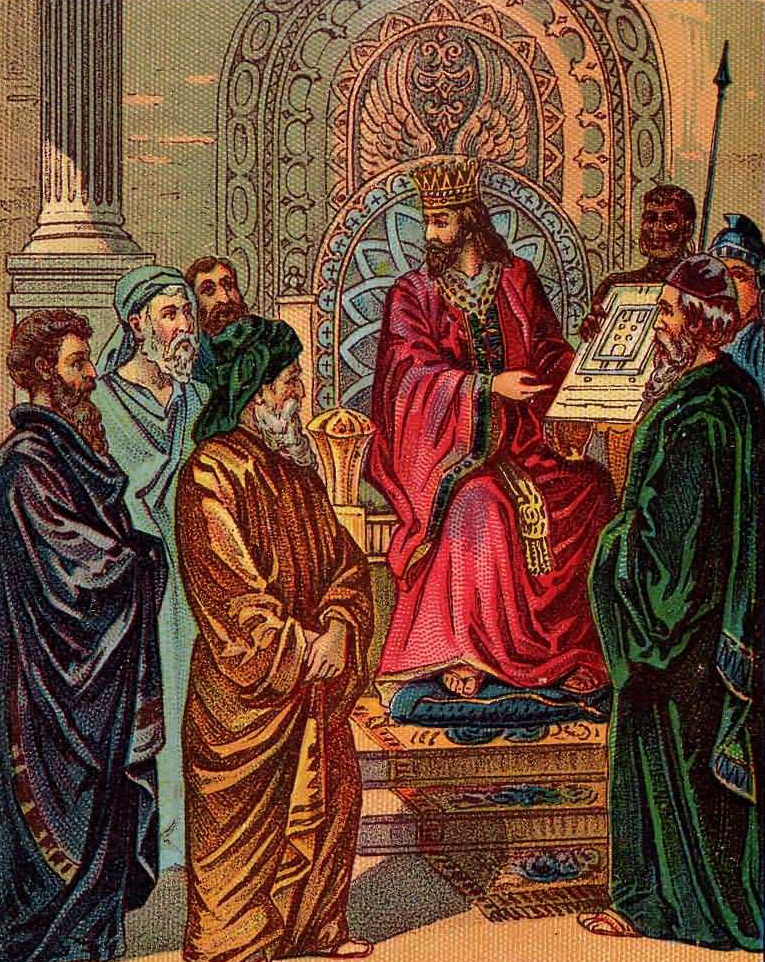
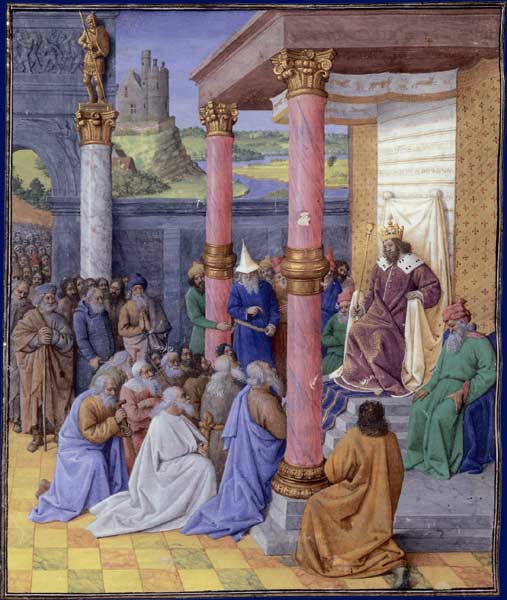
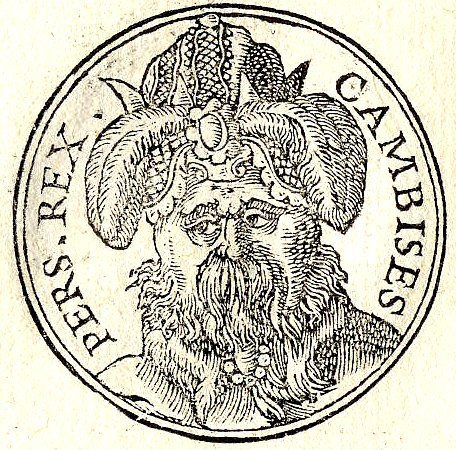
In Chapter 48, John moves directly from Solomon, who built the Temple, to Nebuchadnezzar, who destroyed it. John calls him a king of Persia, rather than Babylonia. After spending two more chapters on his conquests, using especially Apocryphal sources, he turns to Cyrus – who actually was king of Persia – in Chapter 51. John focuses on his relationship with Daniel, and his counsel aiding his victories. Cyrus' son and successor, Cambyses, reversed his father's pro-Jewish policies, and so had troubles in his conquest of Egypt, although he eventually emerged victorious. At the end of this long chapter, I think John has confused himself. He briefly mentions the final few Persian emperors before Alexander the Great, but it reads as if they directly followed Cambyses. This in follows neither the Bible nor Herodotus, and thus he skips over the Persian Wars against Greece completely. He has gotten himself even more out of place such that the Peloponnesian War is completely irrelevant to his purposes.
Looking at the events John chooses to recount, most of which do have plenty of parallels, it is interesting to think about the methodology (if one exists) behind that choice. He uses Greek mythology, fit within a Noahide (with all his emphasis on descent from Noah, however, he never actually wrote about the Flood!) genealogy, to give what really amounts to a geography lesson. He also is very Hellenistic in placing scientific or technological firsts in Greece. He also tends to see the Bible and kingship as the basis of history. Thus he writes about Melchizedek the king, but not Isaac and Jacob the patriarchs. Joseph, because of his relationship to the Egyptian pharaoh, is then an even more curious omission. Because the many Greek leaders in the Trojan War, though kings, function in a way we might recognize as democratic – and defeat the "Eastern" monarchy of Troy – he doesn't pay much attention. When the democratic/oligarchic/timocratic Greeks defeat the Persian Empire, or fight amongst themselves – even though by this point we are at very clear and historically attested material – John doesn't even say anything.
In my next post, I will continue with his take on Rome and Macedonia.






Tuesday, September 14, 2010
Hesiod: The Birth of Greek Mythology
John of Nikiu, as a Christian, attempted to keep Greek mythology by placing the Olympians in history, yet outside of Greece. Hesiod gives us our best understanding of the way the Greeks themselves believed about their g-ds before the advent of Christianity. I have read both M. L. West's translation for Oxford World's Classics and Richard Lattimore's translation for University of Michigan Press; I will be referencing the former unless noted.
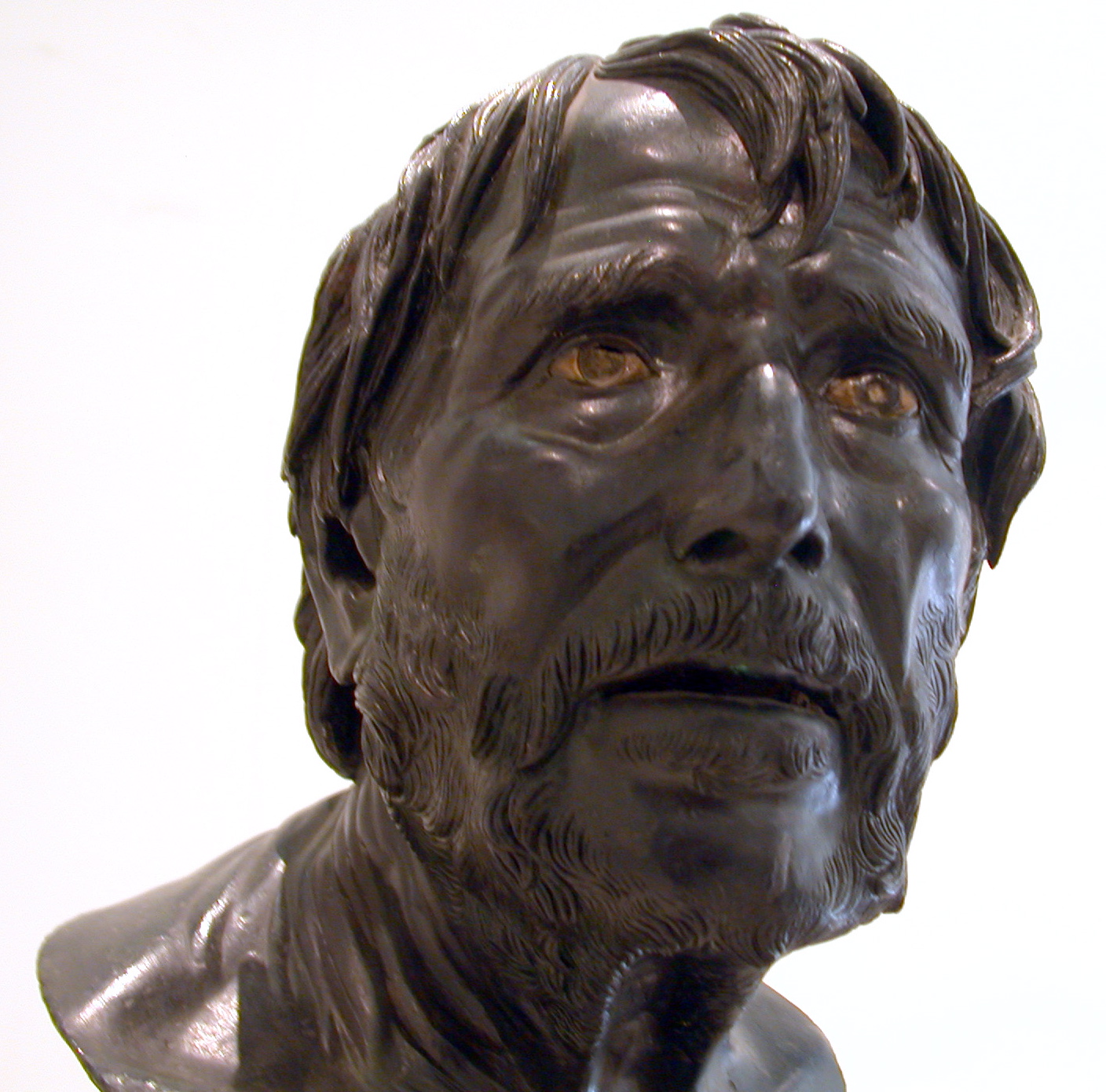
Hesiod lived in the central Greek region of Boeotia (largest city Thebes) around the year 700 BCE. He gives biographical details about himself in his Works and Days, although there is not necessarily anymore belief that he is an individual writer than about Homer. It is most likely that whether the poems attributed to Hesiod were actually written by him or not, he was part of an oral tradition of mythical poetry that had existed for several generations. For our purposes, his Theogony is the poem to start Greek mythology with, meaning the "Birth of the G-ds" and fulfilling that title. It is important to realize that by the end of Hesiod's career, there existed a significant corpus of mythological literature for the Greeks, including the Theogony and a sequel no longer extent called the Catalog of Women, documenting the adventures of the heroes and their mothers who had consorted with the g-ds, as well as the Homeric cycle of Trojan War epic, and numerous smaller poems. Also remember that the Greek tradition, by this time, incorporated some elements of Egyptian and Mesopotamian religion.

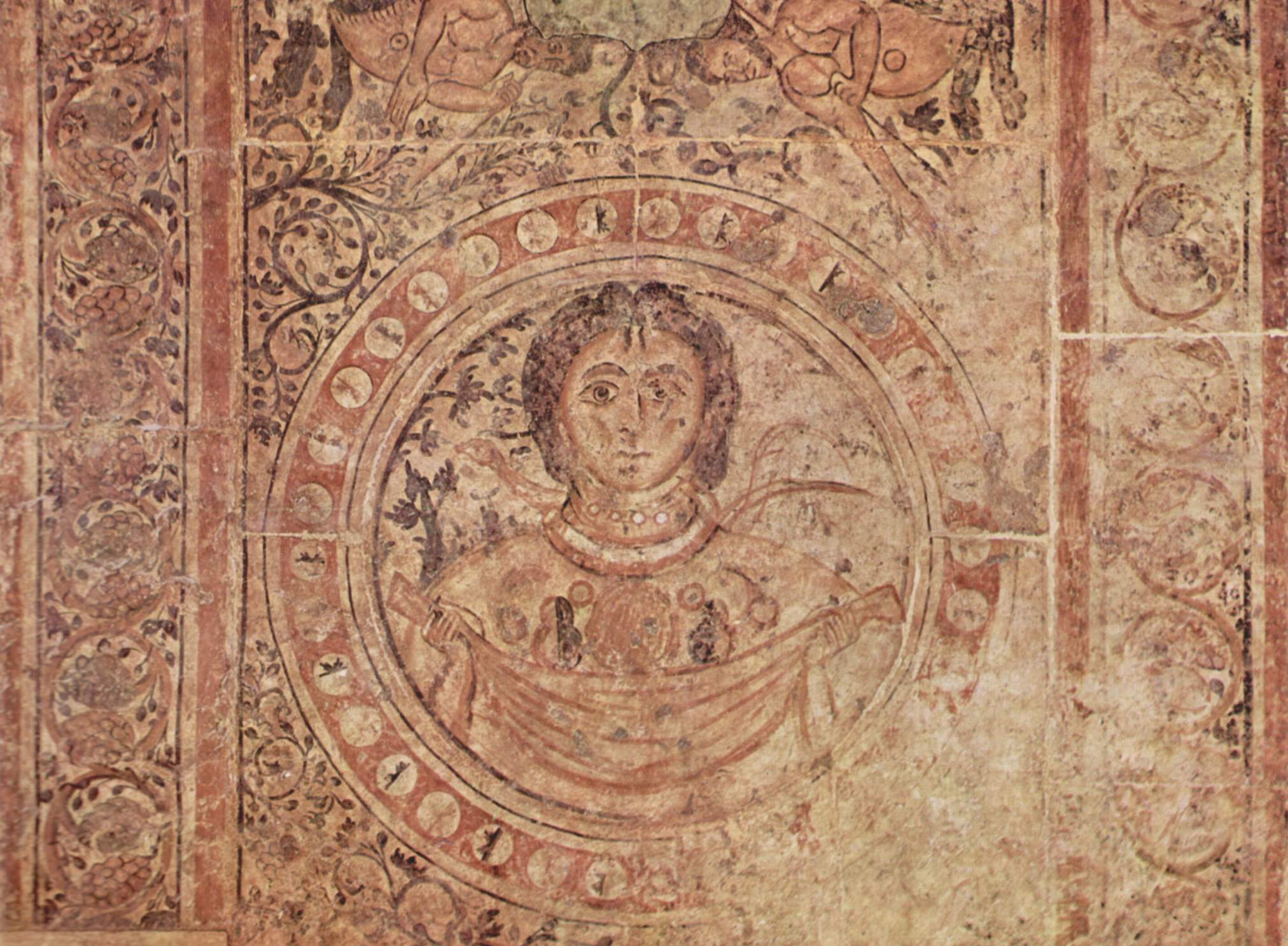
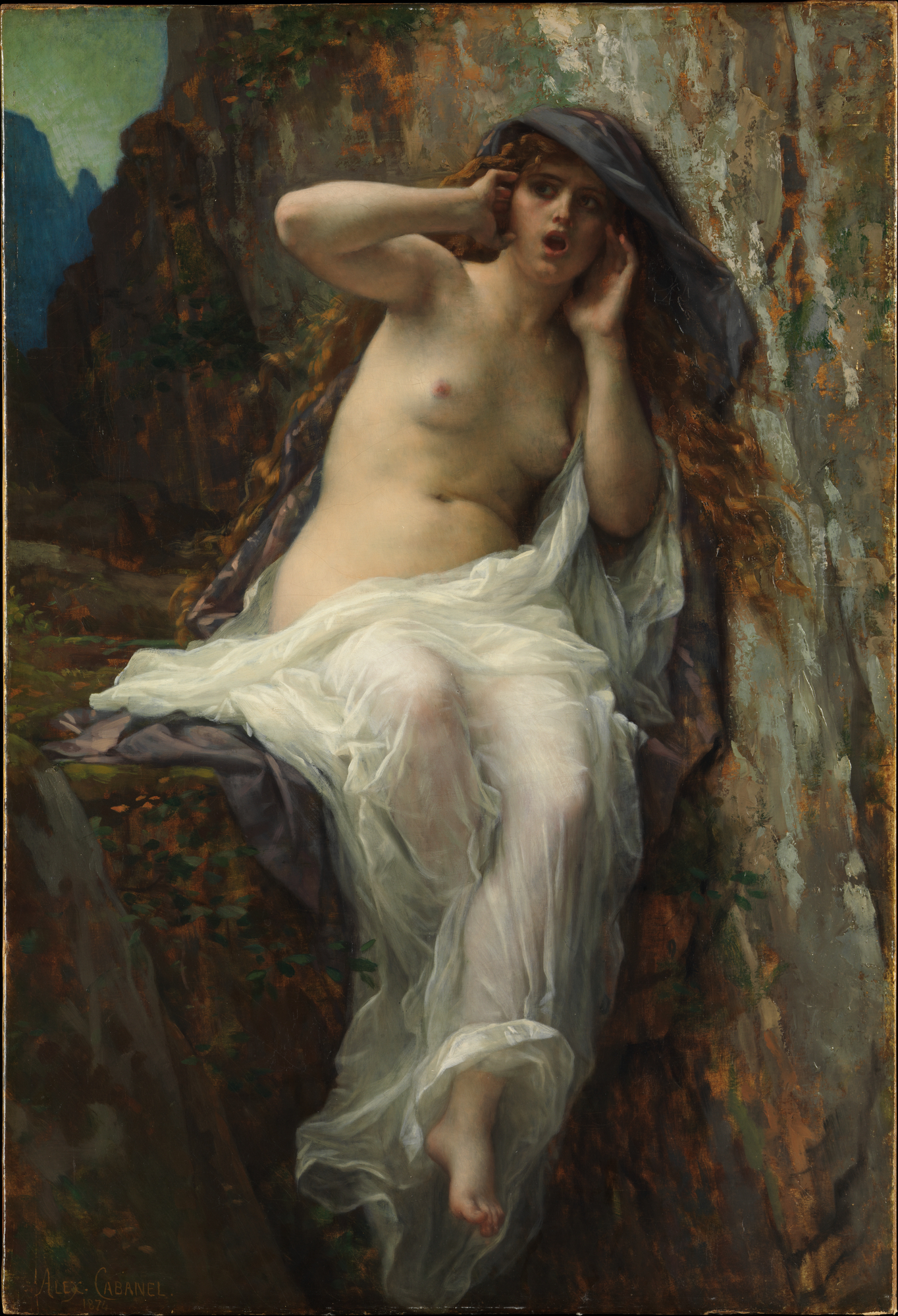
Hesiod's purpose is to give a genealogy of the Greek g-ds. In his introduction, Hesiod claims inspiration from the Muses who can "tell many lies that sound like truth" (line 27) or "sing reality" (28), indicating that he will be telling the true version of these events, while acknowledging that not everyone agrees. For Hesiod, in the beginning was Chasm, or Chaos, or Void. Out of this, springs certain natural and supernatural phenomena: Gaia—the Earth, Tantaros—the Underworld, Eros—Love, Erebos—Darkness, and Night. After the appearance of Eros, sexual reproduction became possible: first Erebos and Night begat Aither—the Air, and Hemera—the Day (in case you don't look at the picture linked for Night, Erebos was the father and Night the mother). Later Night (alone now, Hesiod says), bears Moros—Doom, Ker—End (Lattimore), Death, Sleep, the Dreams, Momos—Cavil, Oizys—Misery, the Hesperides "who mind fair golden apples…and the trees that bear that fruit" (216), the Moiroi—the Fates, Nemesis—Resentment, Deceit, Intimacy, Old Age, and Eris—Strife. Eris, in turn, brought Toil, Neglect, Starvation, Pain, Battles, Combats, Bloodshed, Slaughter, Quarrels, Lies, Pretenses, Arguments, Disorder, Disaster, and Oath.
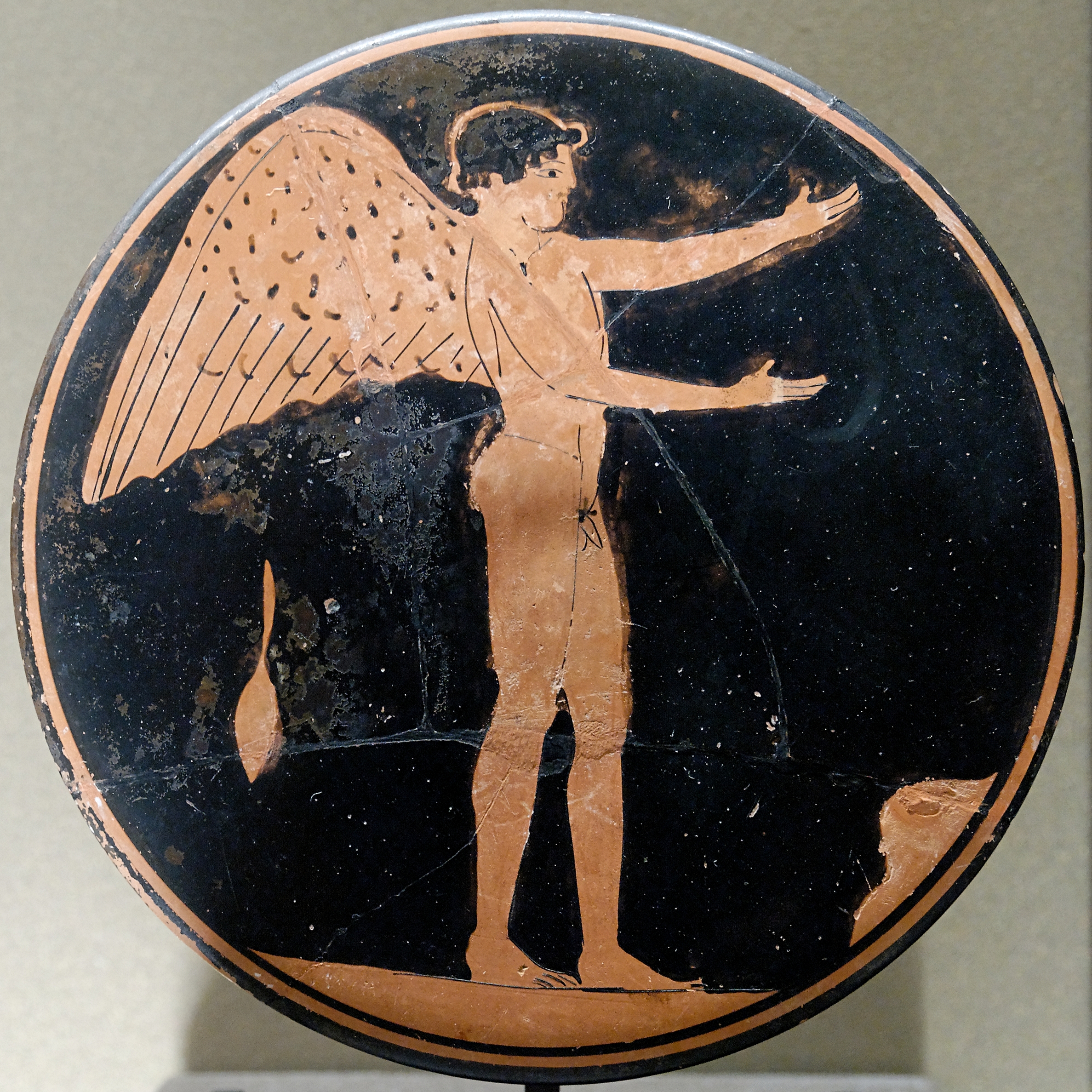
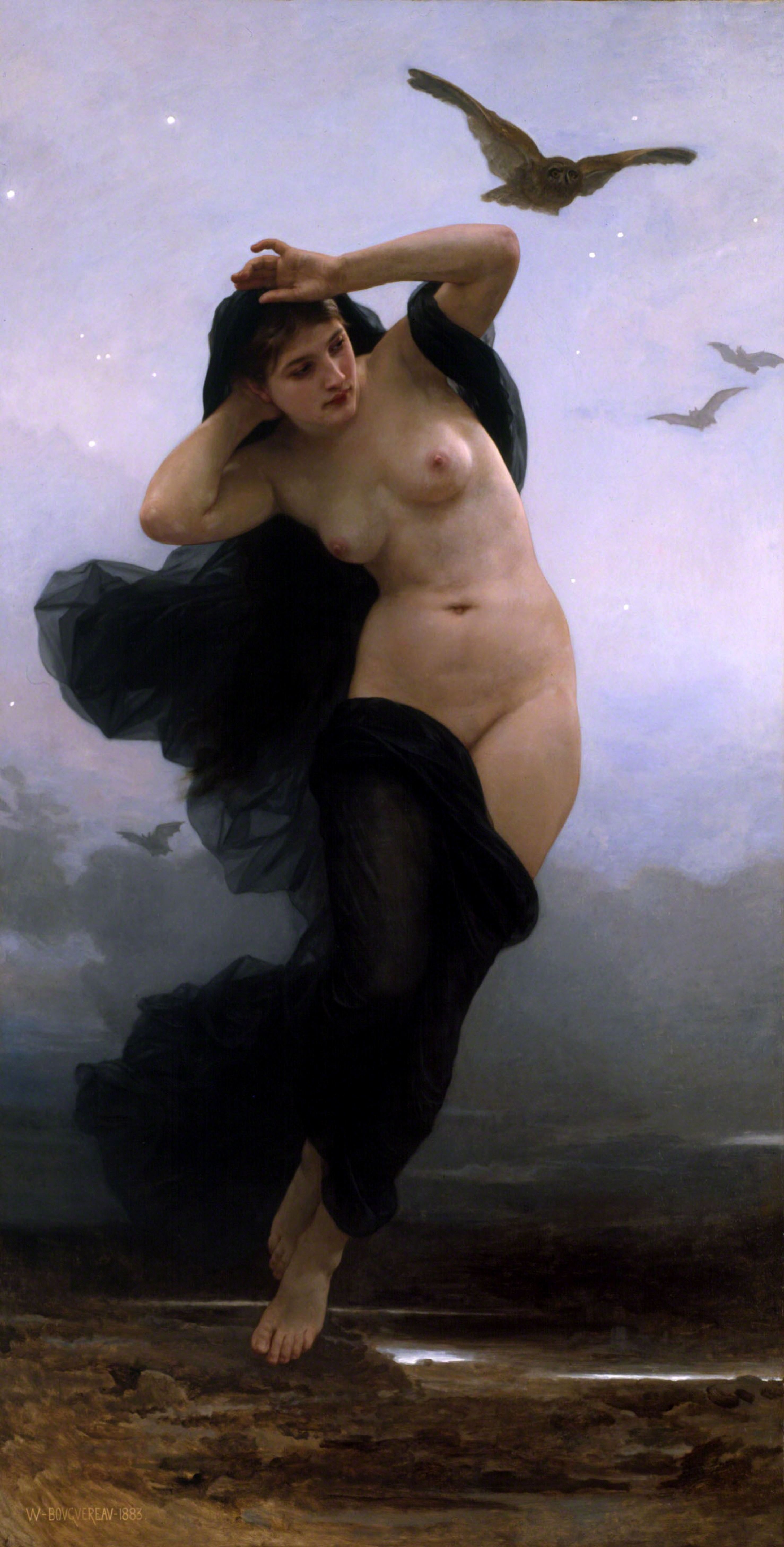
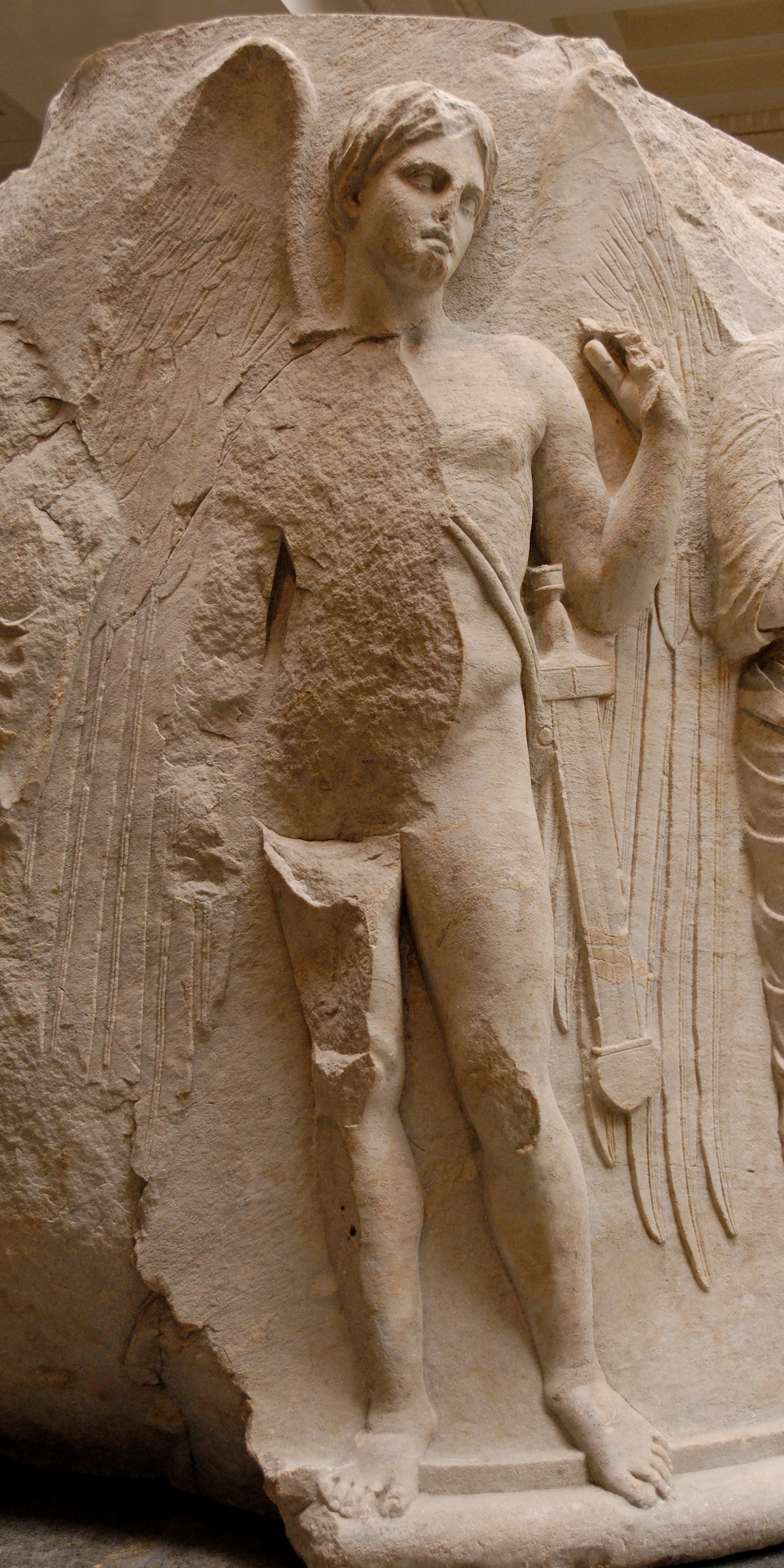
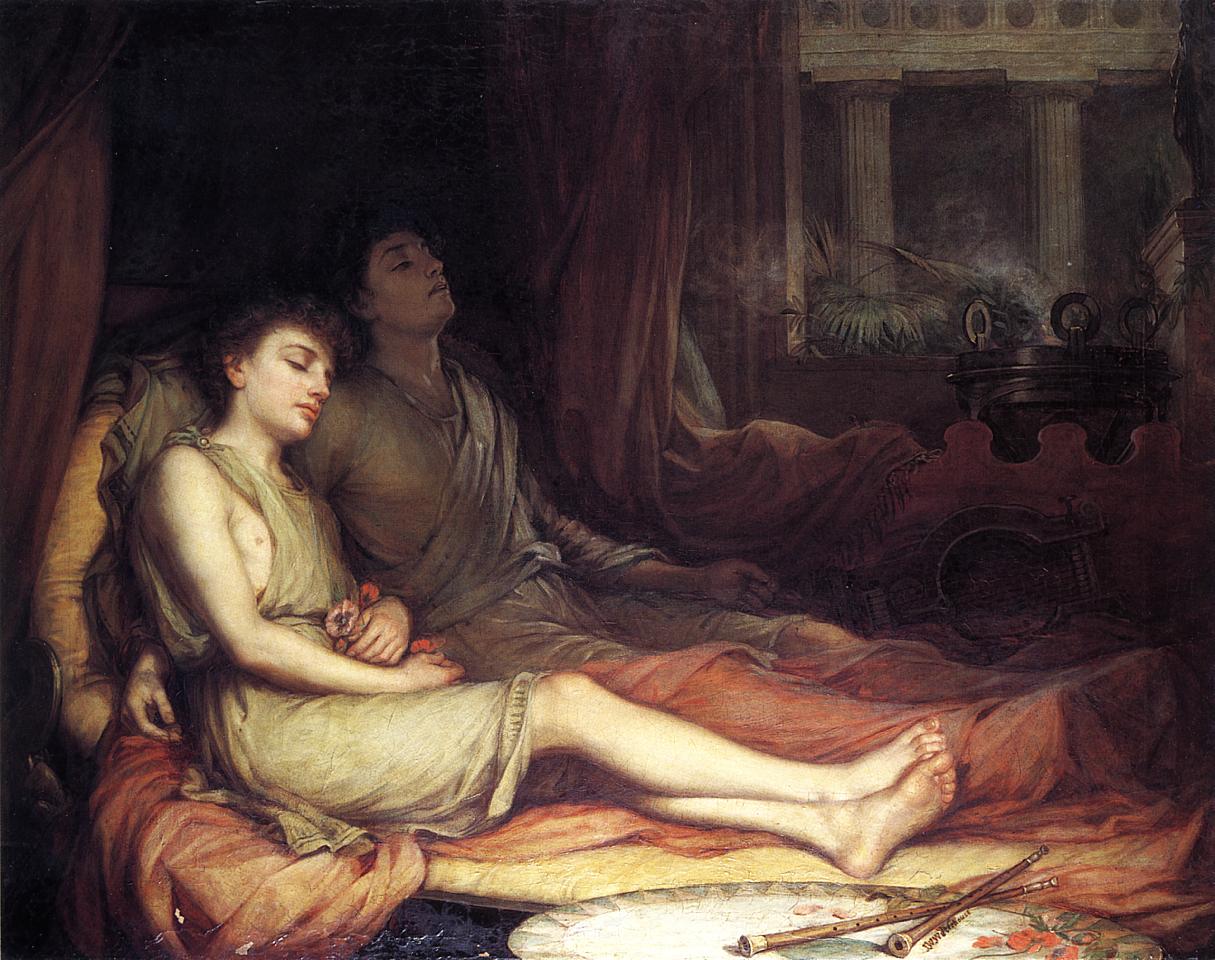

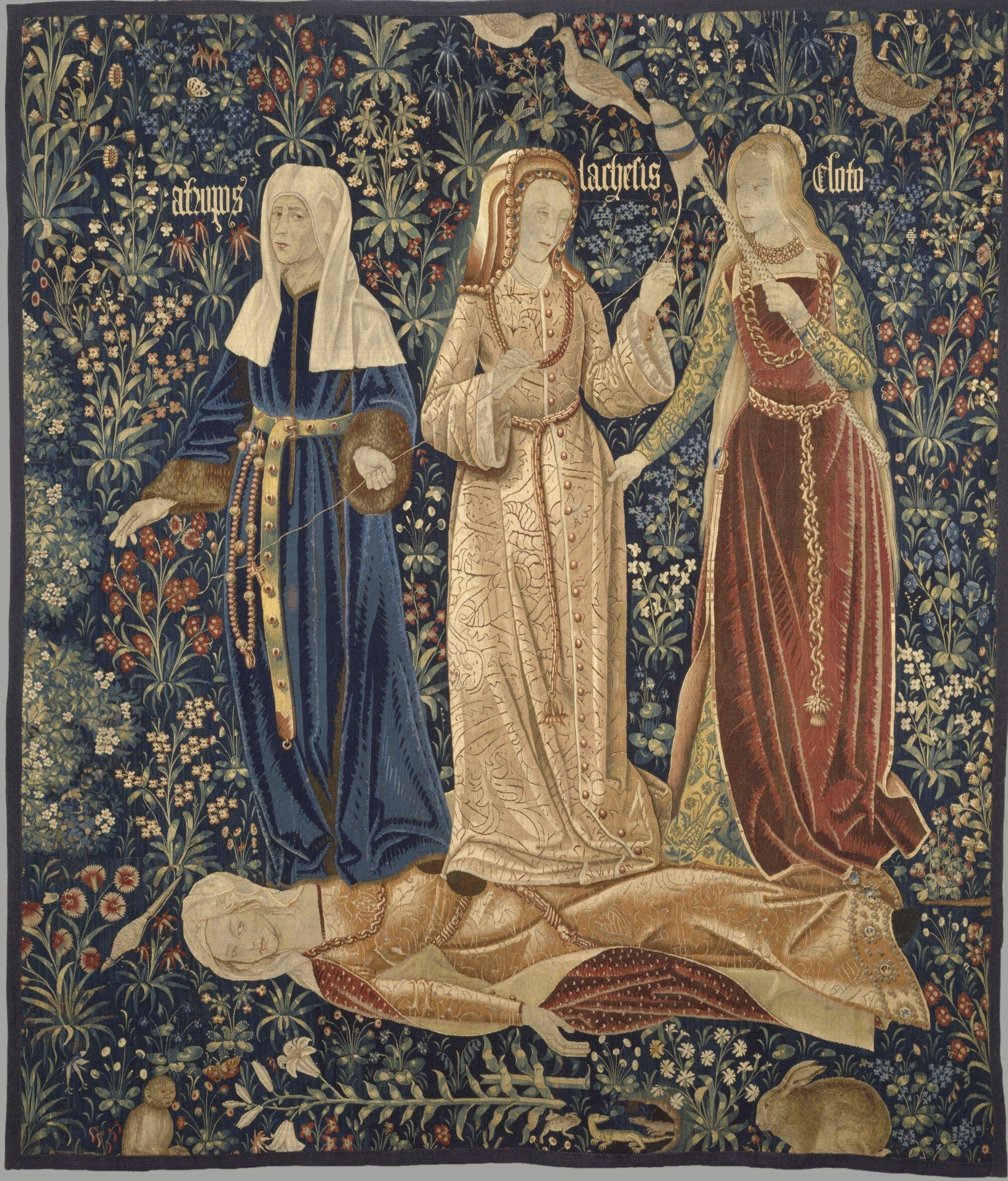

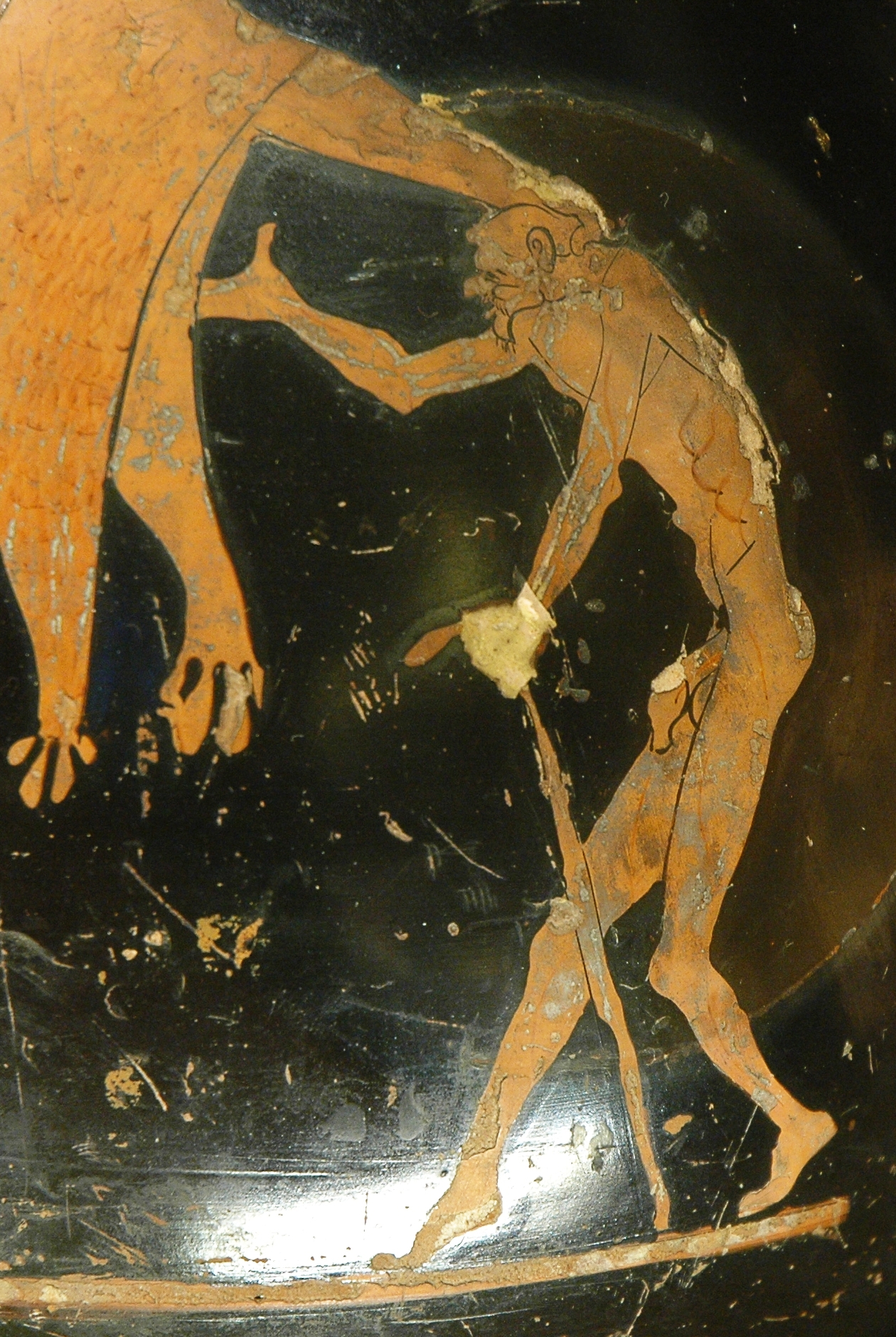

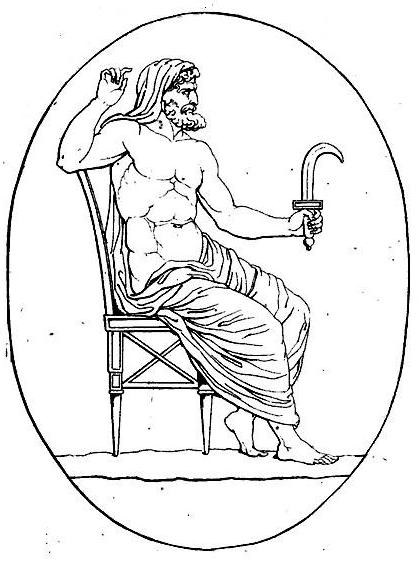
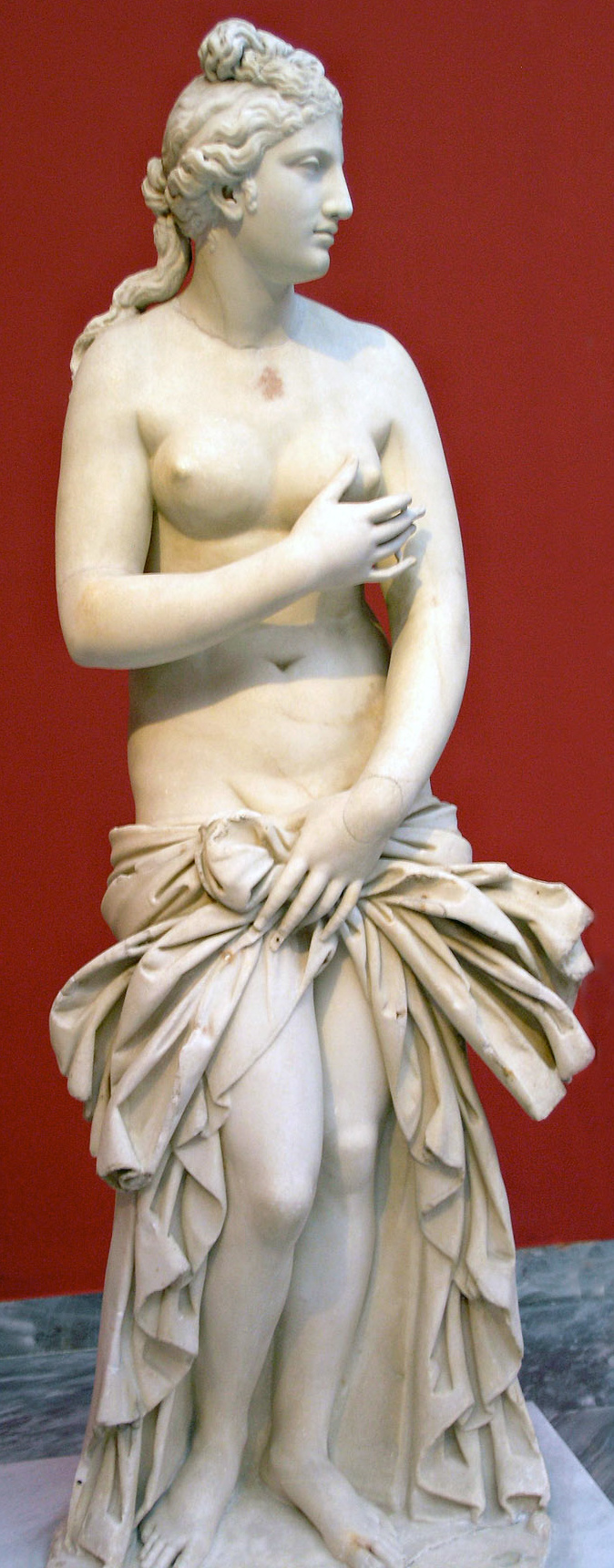
Gaia then gave birth to further natural phenomena: Uranus—the Heaven, Mountains, Mountain Nymphs, and Pontus—the Sea. After this, she mated with Uranus, and they had the twelve Titans and other gigantic monsters. Though Uranus is in the third generation from the beginning, he is still considered, in a sense, the first king of the universe. As such, he is jealous of power and fears his children will overcome him; thus, he suppresses them, displeasing his mother/wife. Cronus, the youngest Titan (or just a giant Semite if you ask John!), volunteered to help his mother punish his father, and "reached out from the ambush with his left hand; with his right he took the huge sickle with its long row of sharp teeth and quickly cut off his father's genitals, and flung them behind him to fly where they might" (173-183). The blood fertilized the Earth (or Gaia, as there is no distinction) to produce the Erinyes—the Furies, more Giants, and the Meliai—the Nymphs of Ash Trees. In addition, "a white foam grew from the immortal flesh, and in it a girl formed…And out stepped a modest and beautiful g[-]ddess…call[ed]…Aphrodite, because she was formed in foam" (191-196). Unlike in some versions of myth where Eros is a son of Aphrodite, Hesiod has him and Himeros—Desire—attending her.




![out stepped a modest and beautiful g[-]ddess](http://upload.wikimedia.org/wikipedia/commons/6/69/La_naissance_de_V%C3%A9nus.jpg)
Pontus had Nereus, one of the "old m[e]n" (234) of the sea. With Gaia, Pontus fathered more children. Further generations from these children include Iris—the Rainbow, Harpies, Gorgons, Pegasus, sea monsters, not-sea monsters, including the Sphinx and many who were defeated by Heracles. Two Titans, Oceanus and Tethys, were also aquatic: they had the Rivers and Ocean Nymphs (Oceanids). One such Ocean Nymph, Doris, married Nereus and they had fifty daughters, the Sea Nymphs (Nereids).

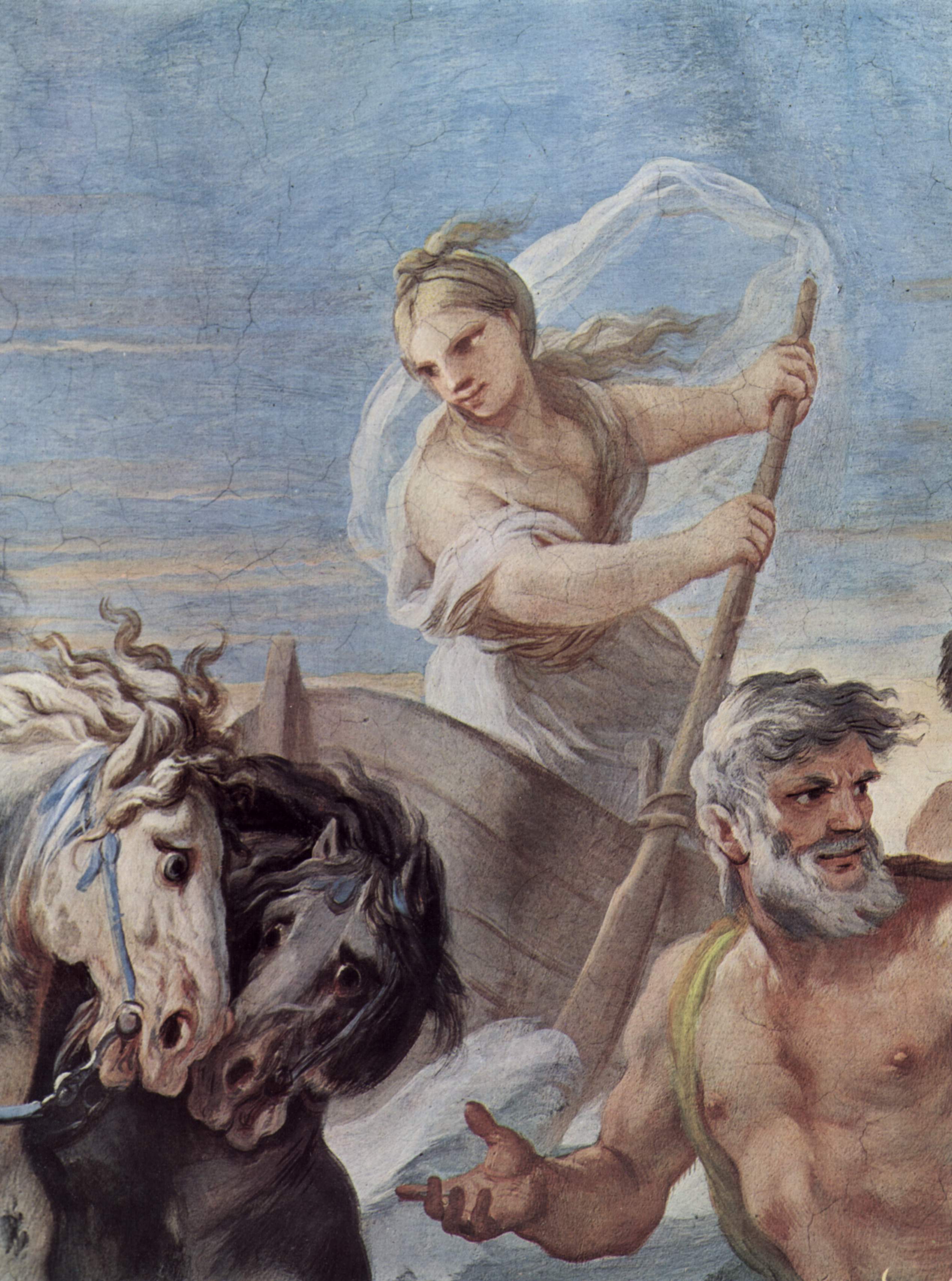
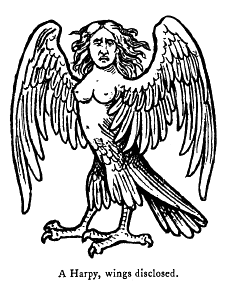


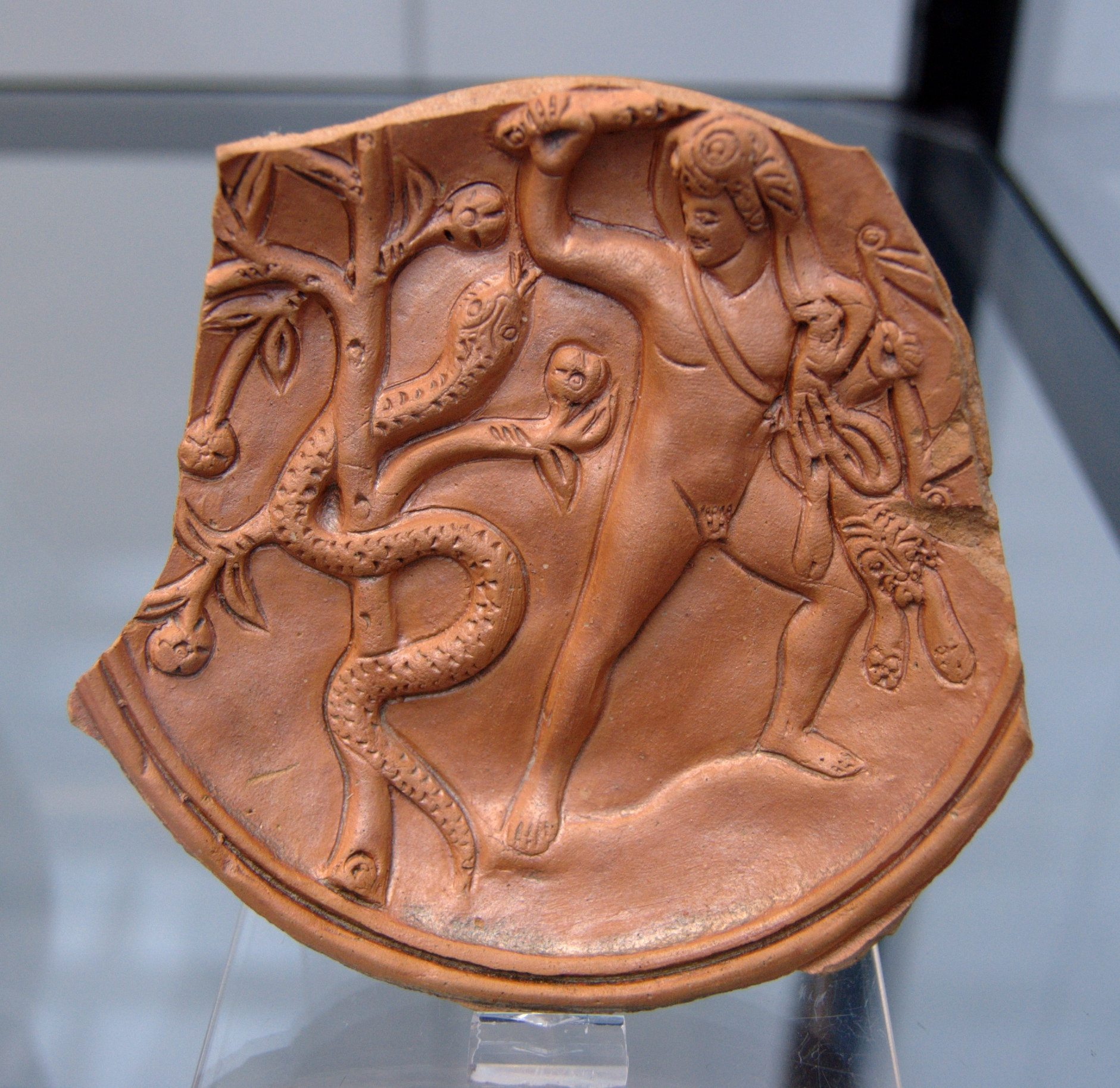


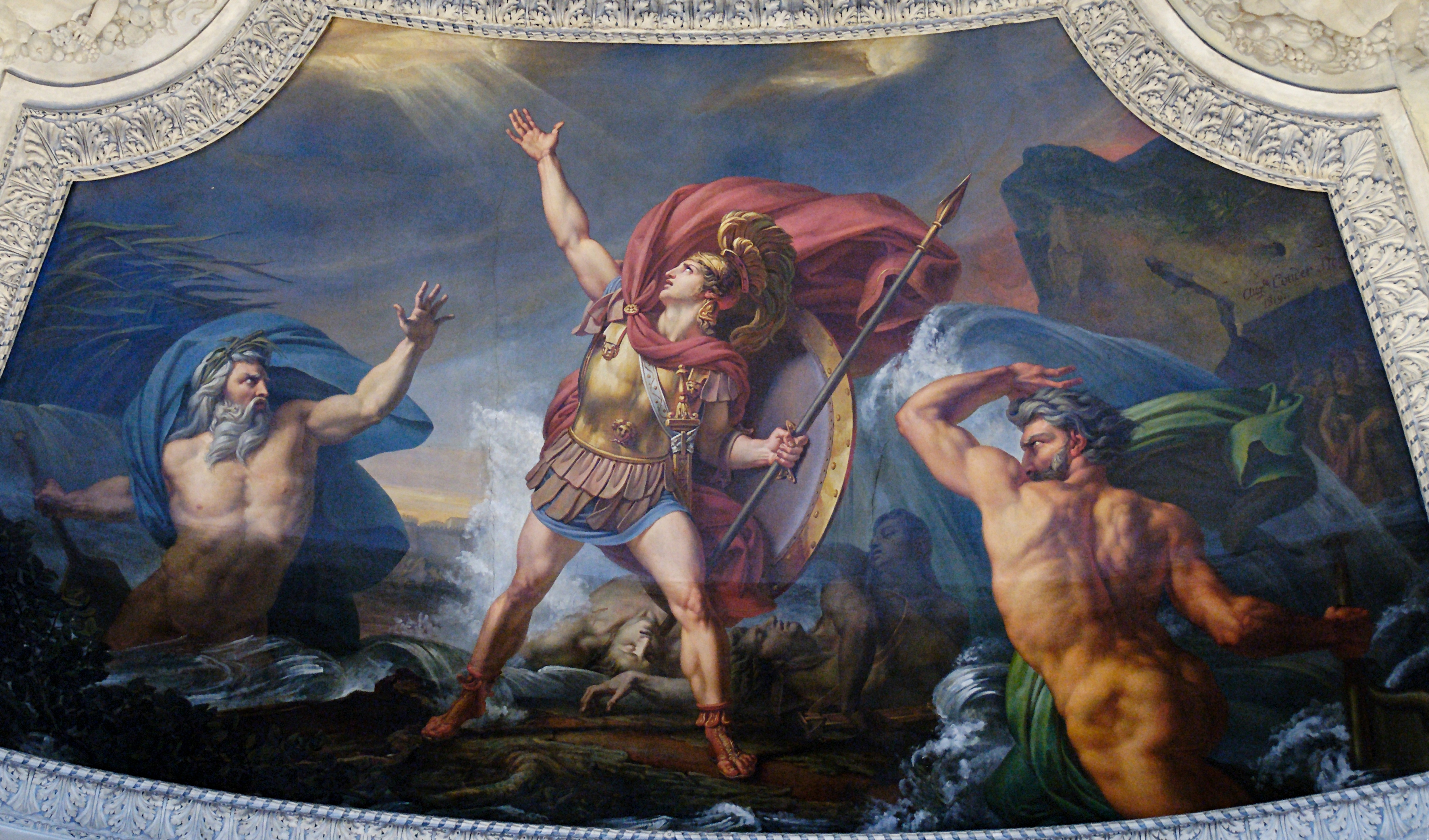
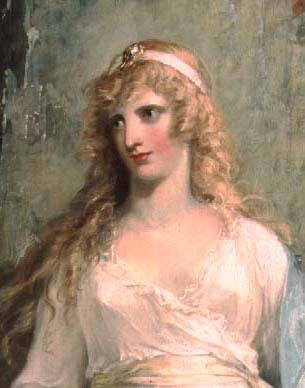
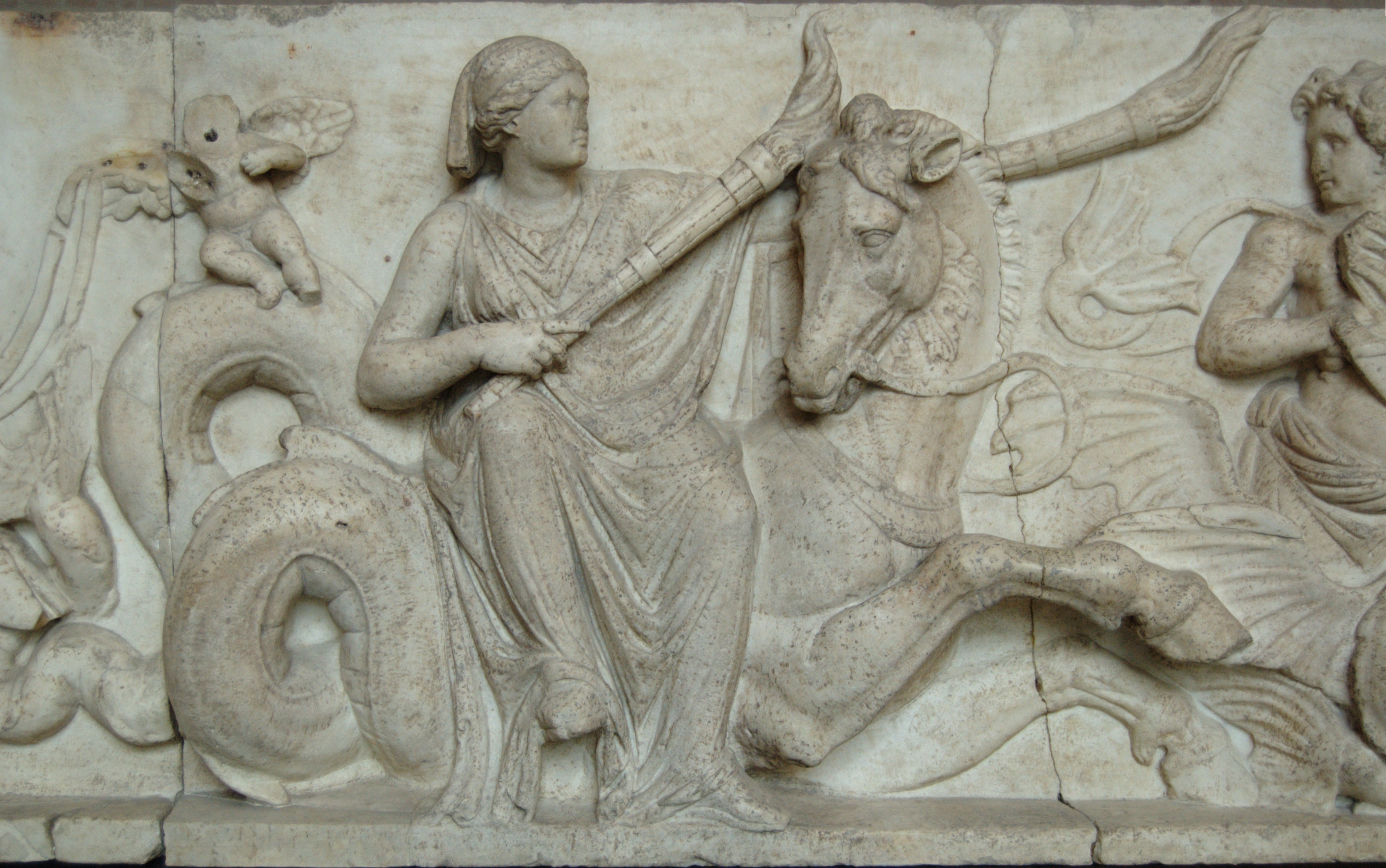

Two other Titans, Hyperion and Thea, begat Helios—the Sun, Selene—the Moon, and Eos—the Dawn. Eos bore the Winds and Stars to Astraeus, a son of the Titan Kreios. Koios and Phoebe, another two Titans, married and had Leto. The Titan Iapetos and Ocean Nymph Clymene had four sons, including Atlas, Prometheus, and Epimetheus, who later wed Pandora the first mortal woman.

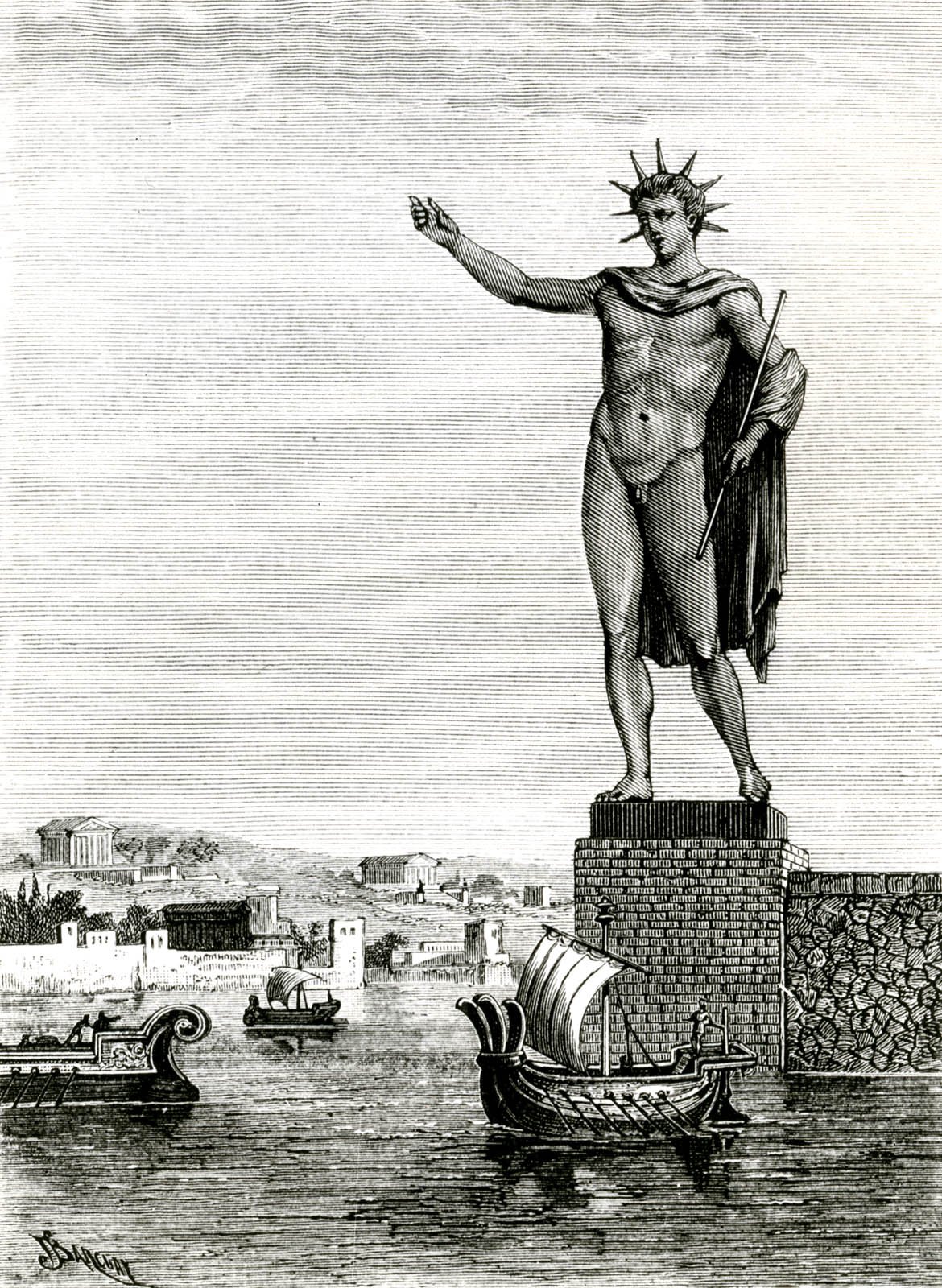

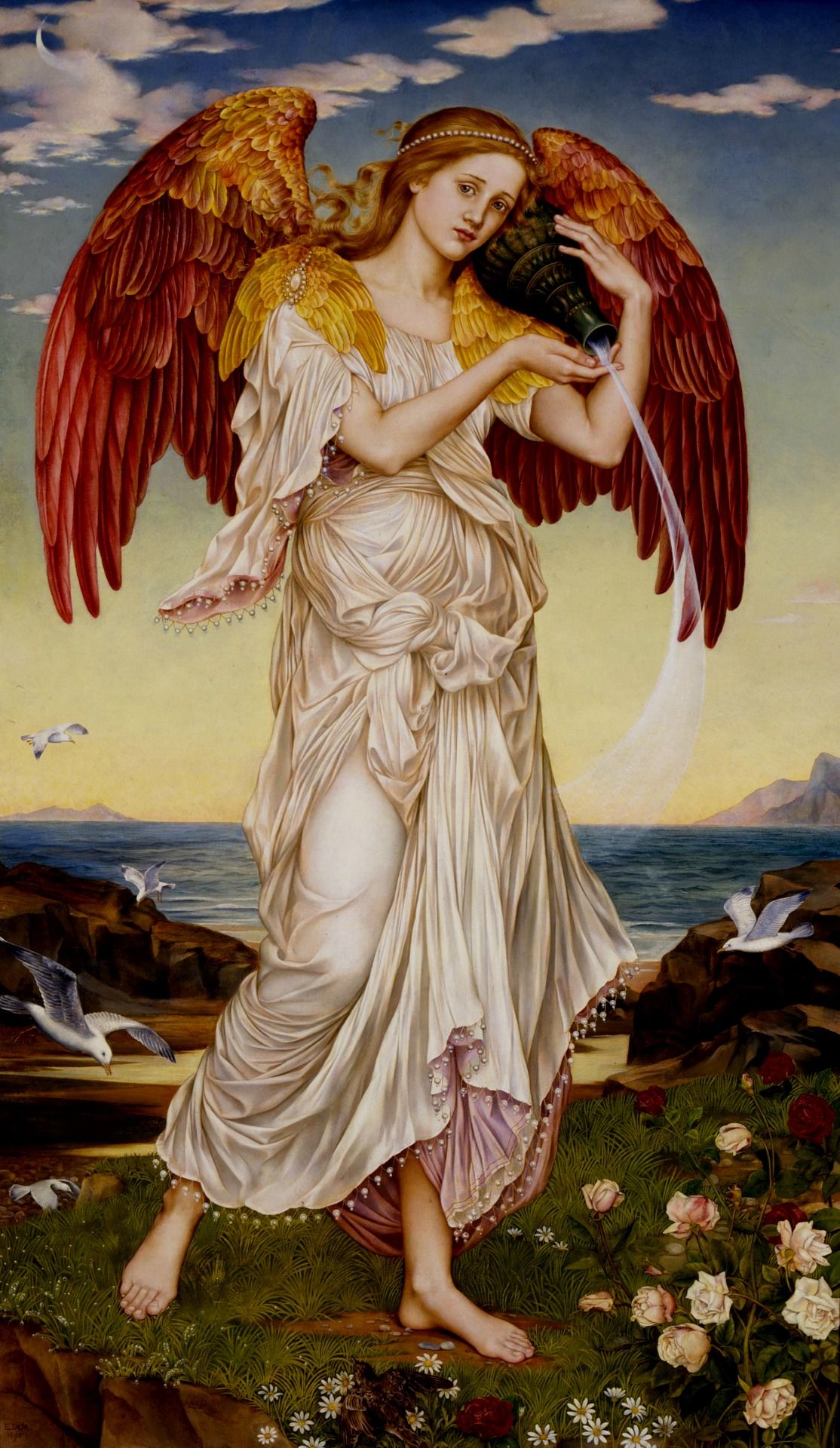

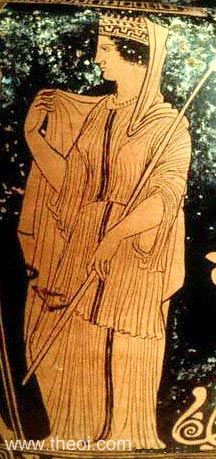

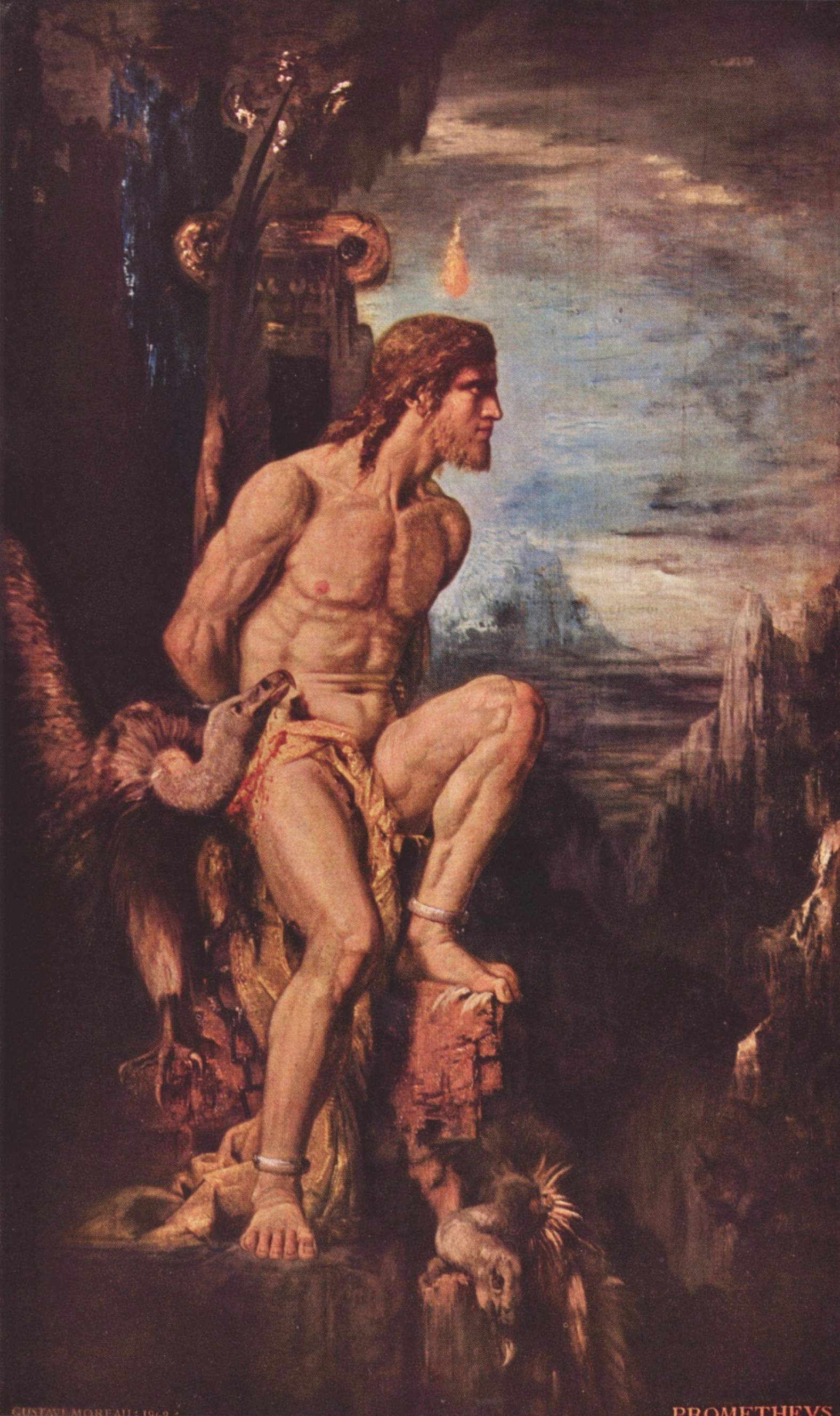

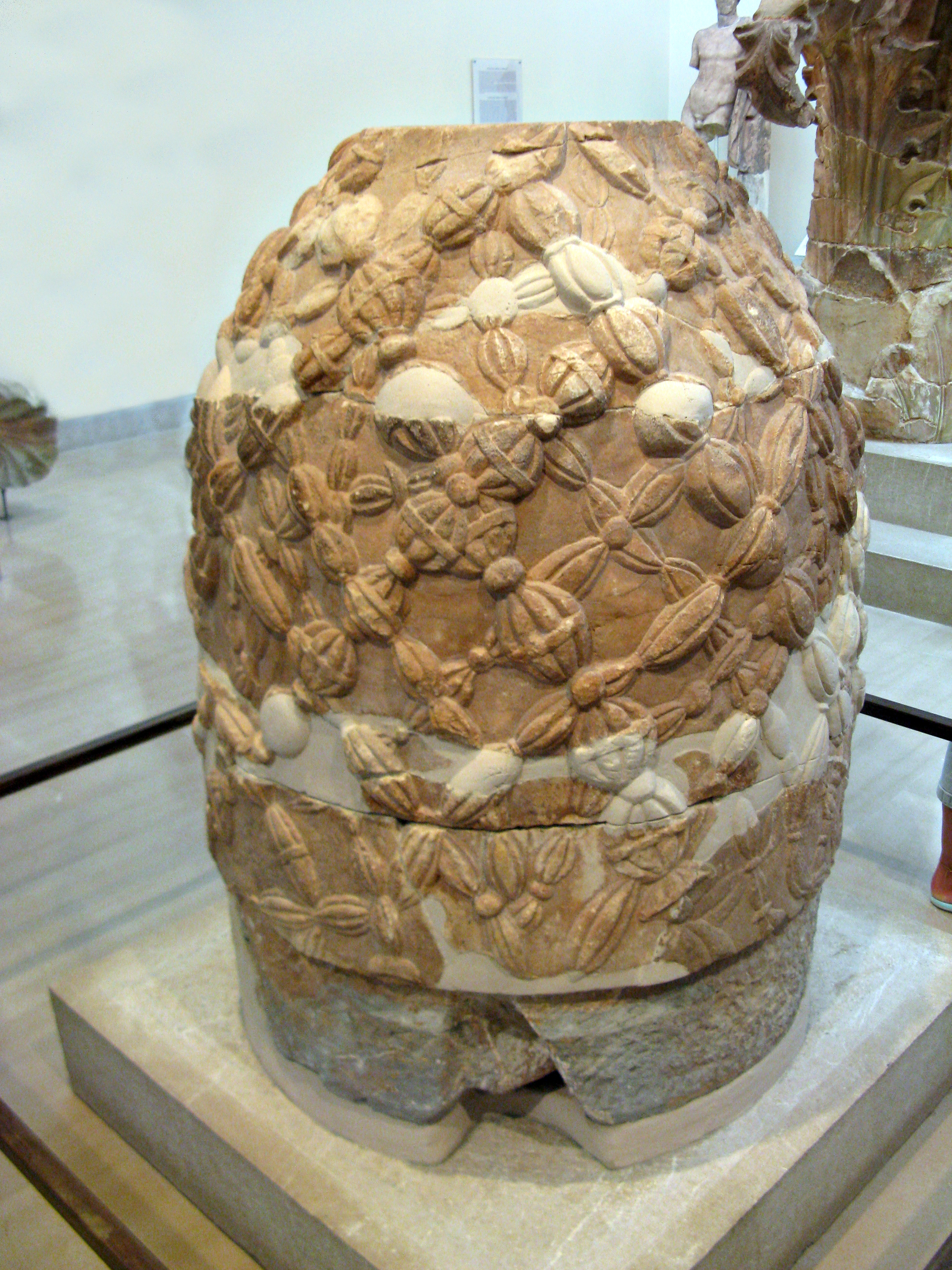
Cronus, the leading Titan and second overall ruler, married his sister Rhea, and inherited the behavior of his father, as his parents warned him that "it was fated for him to be defeated by his own child" (464-465); Uranus, apparently, bore no grudge. He swallowed his eldest five children as they were born: Hestia, Demeter, Hera, Hades, and Poseidon. Rhea, feeling as her mother did, received help from their parents in tricking Cronus into swallowing a stone instead of Zeus when her youngest was born. Thus, Zeus was raised clandestinely in Crete, until he was of age to, with aid from Gaia, induce the vomiting up of his siblings, with the stone put at the site that will be the Delphic oracle. Zeus released the monstrous brothers of the Titans, who proved decisive themselves and with their gift of lightning in the long battle Zeus and his partisans fought for supremacy against the Titans. In time, the Titans – or some of them, anyway – were locked in Tartarus.
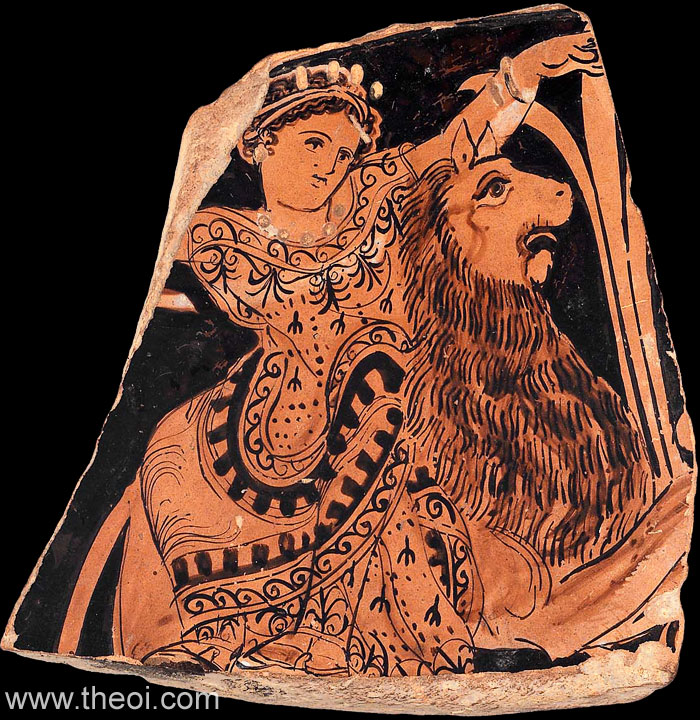
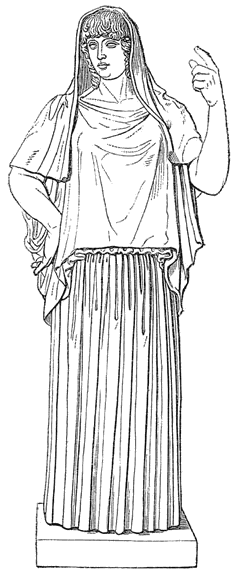

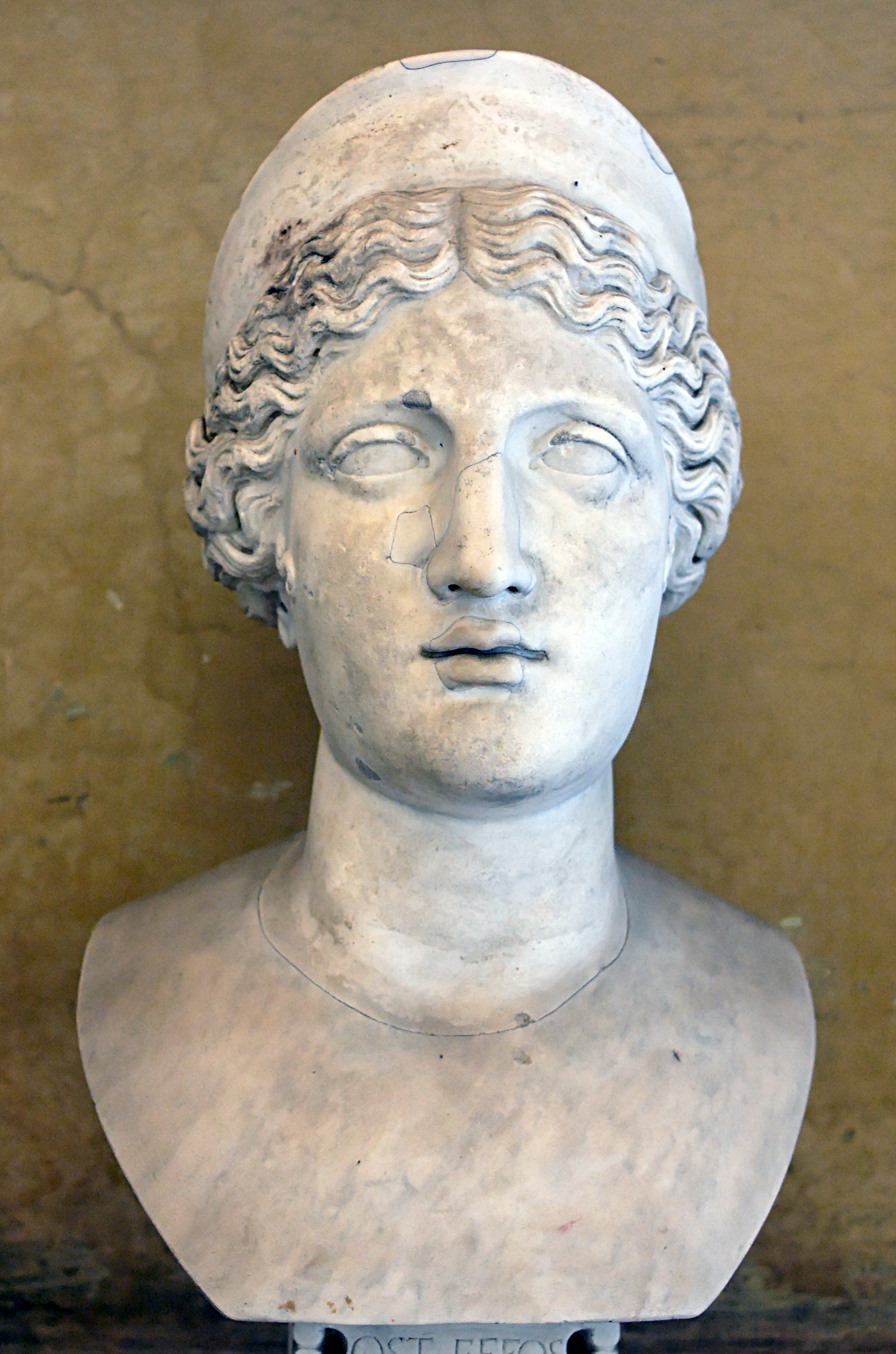


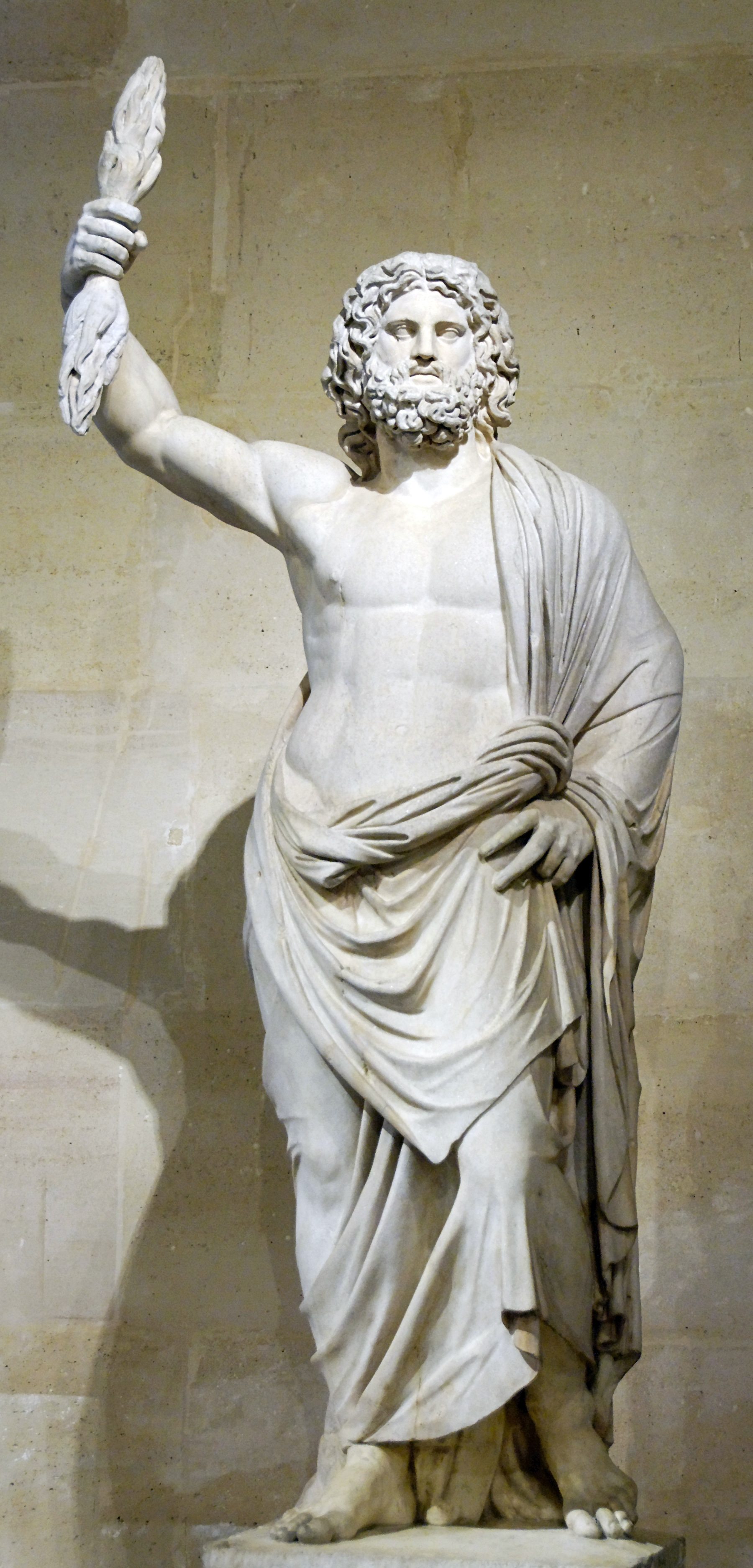

Zeus, thus, became the third king of the g-ds. He retained dominion over the celestial, or heavenly, realm, while allotting water to his brother Poseidon, and the underworld to his brother Hades. Theoretically, the earth was held in common, but Zeus had superiority, Poseidon's powers include "earth shaking" (e.g. 456), and earthly matters were considered chthonic like Hades' subearthly realm was.
Zeus was not yet destined to be the last king. He took as his first wife Metis, an Ocean Nymph; Gaia and Uranus gave warning to Zeus as they had his father that his second child with Metis would be a son who would overthrow him, but this time they also give him the appropriate means to forestall this destiny. Hence, Zeus swallowed a pregnant Metis – who becomes his conscience, more or less – and Athena is "born" from Zeus' head. Next he married Themis, a Titan, and they have the Horai – the Seasons, Lawfulness, Justice, and Peace, as well as a reference to the Fates (who were already born of Night). Eurynome, a sister of Metis, became his third wife, and together they had the three Graces. Then Zeus mated with his own sister, Demeter, to have Persephone, who was later stolen by Hades to become Queen of the Underworld. His fifth wife was Mnemosyne – Memory – another Titan, who gave birth to the nine Muses. Leto was his next wife, who bore the twins Artemis and Apollo. Zeus' final wife, according to Hesiod, was Hera, and their children were Hebe, Ares, and Eileithyia. Although, chronologically, it appears that Hera was not yet with Zeus when he had Athena, Hesiod considers Hera's parthenogenic – well, not quite if she was already married with children – birth of Hephaestus an act of revenge. Poseidon married the Nereid Amphitrite, and their son was Triton. The poems ends with affairs of Zeus and other g-ds with immortal and mortal women, and the children produced thereof. Presumably, this leads directly into the Catalog of Women, giving the adventure of such children as Heracles.
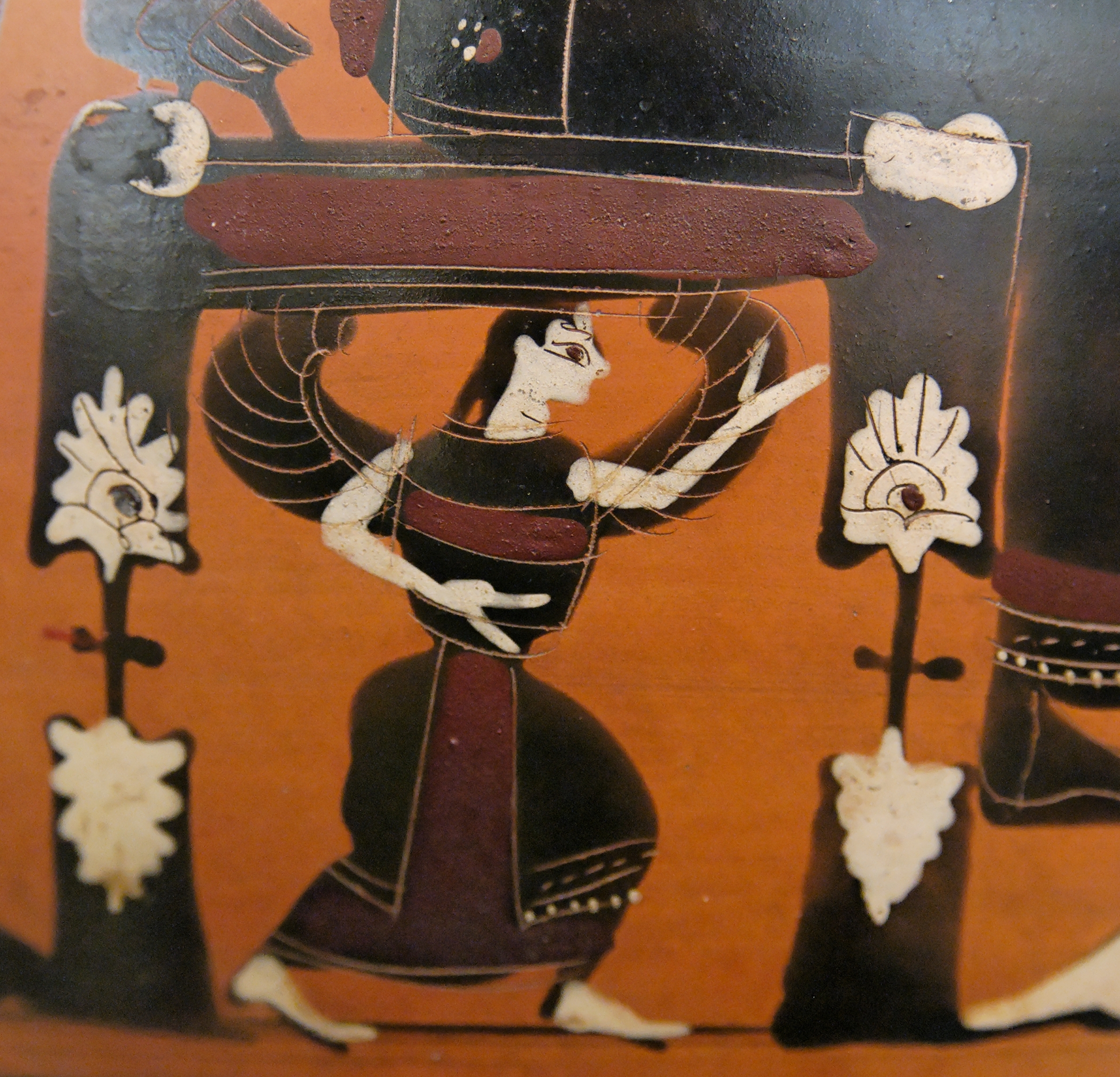


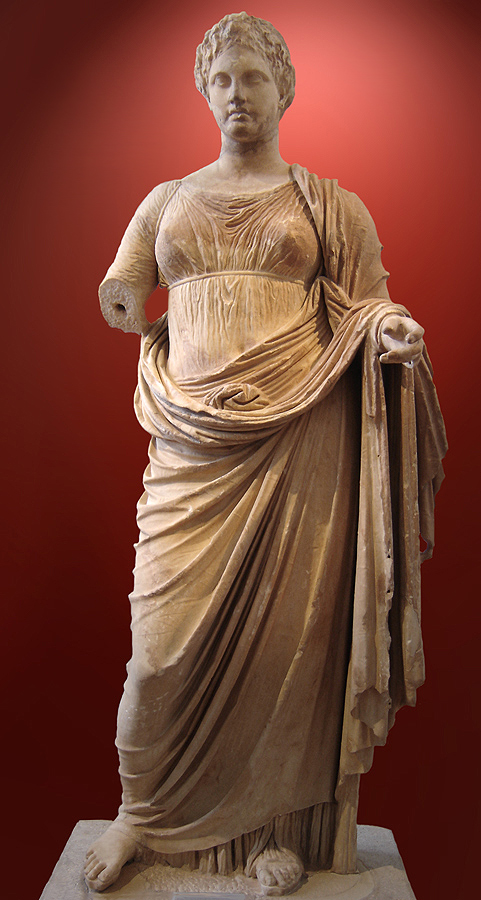
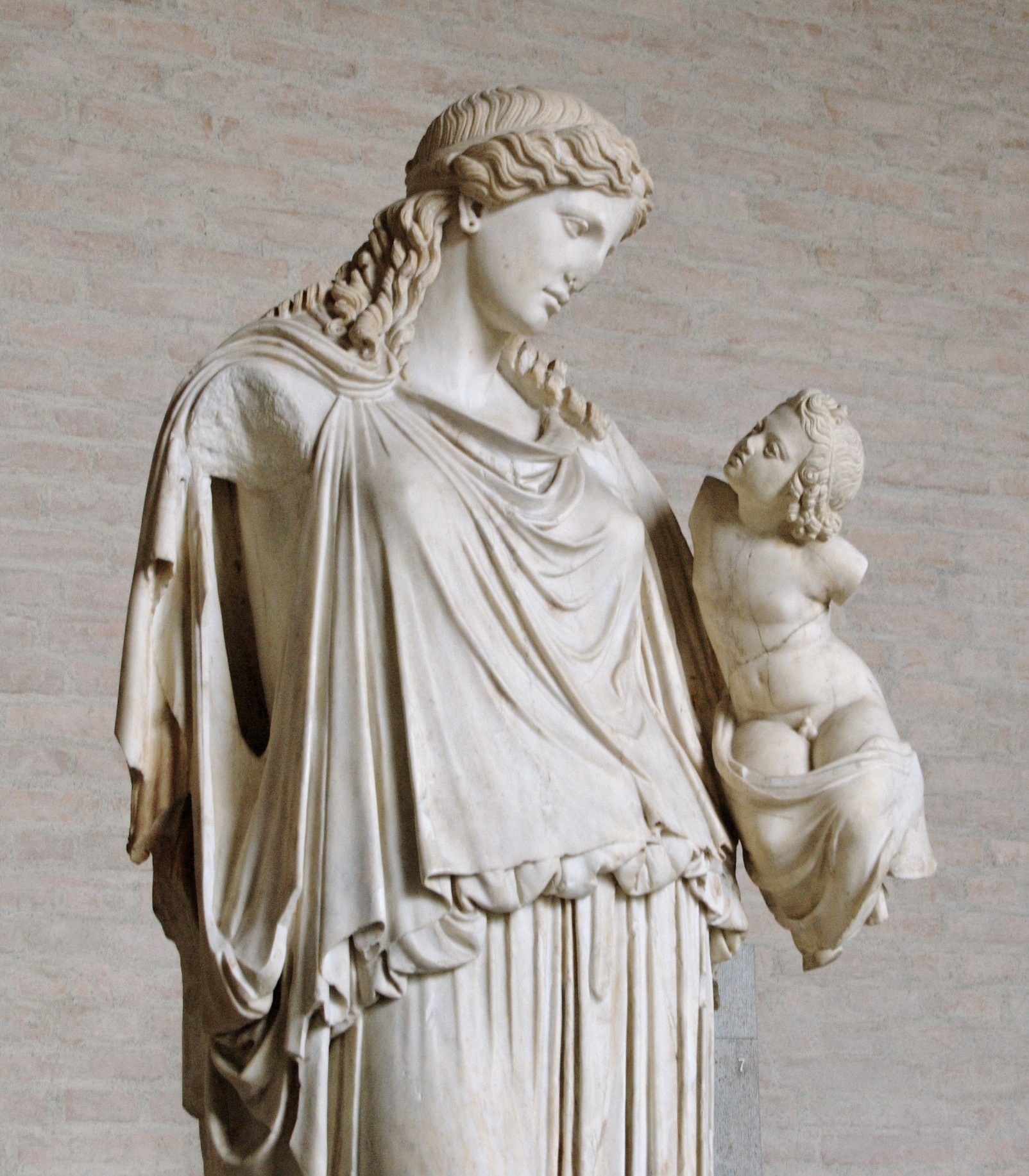
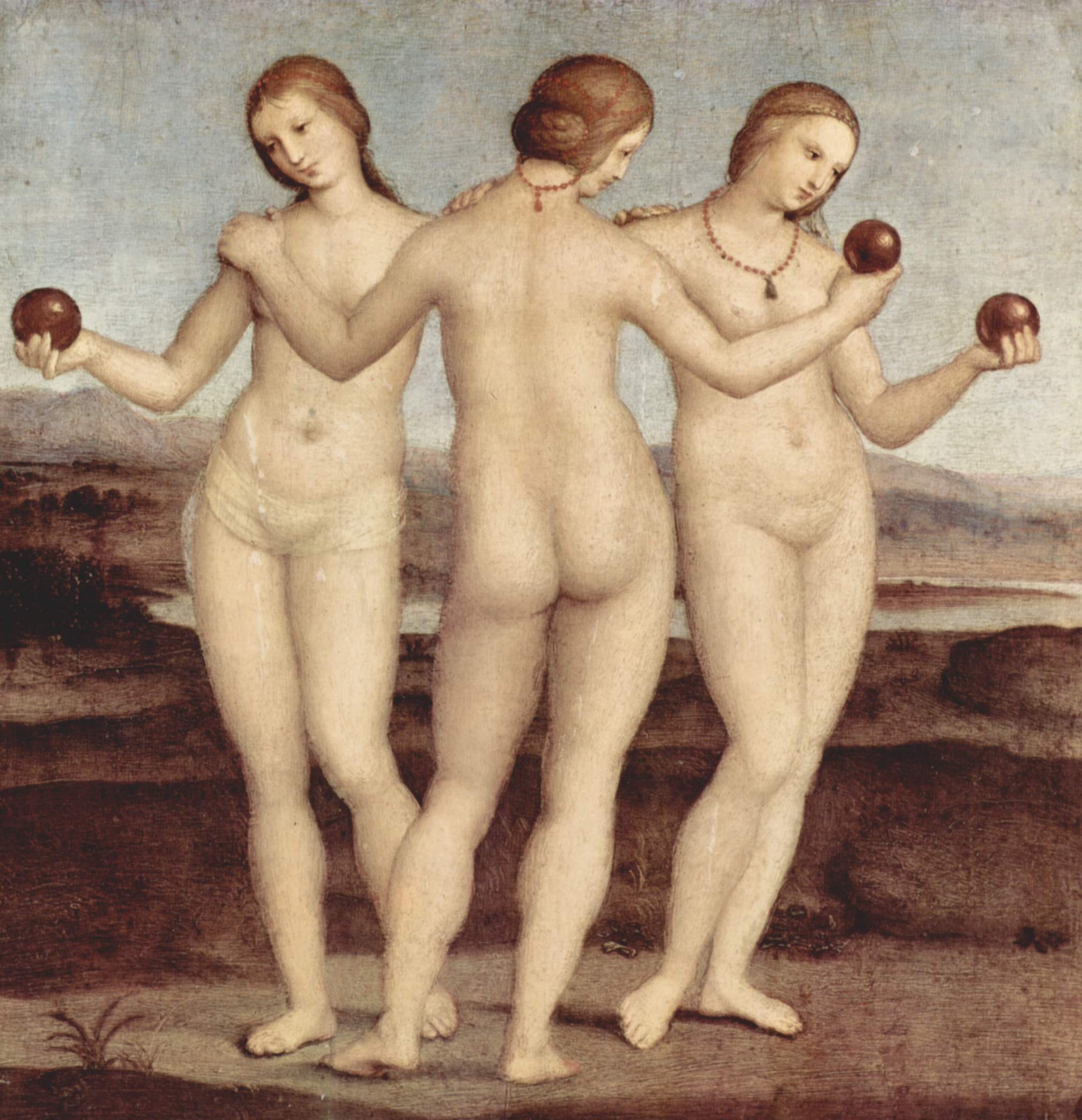


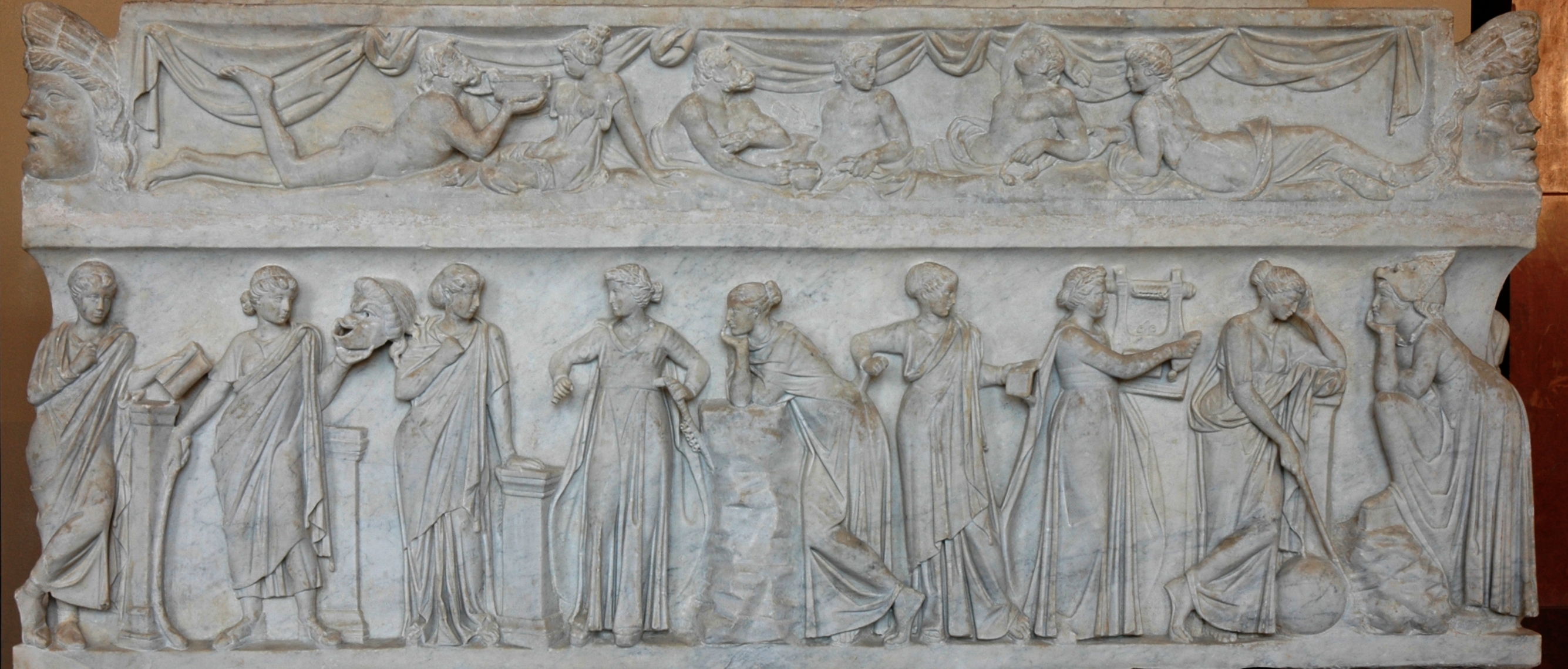

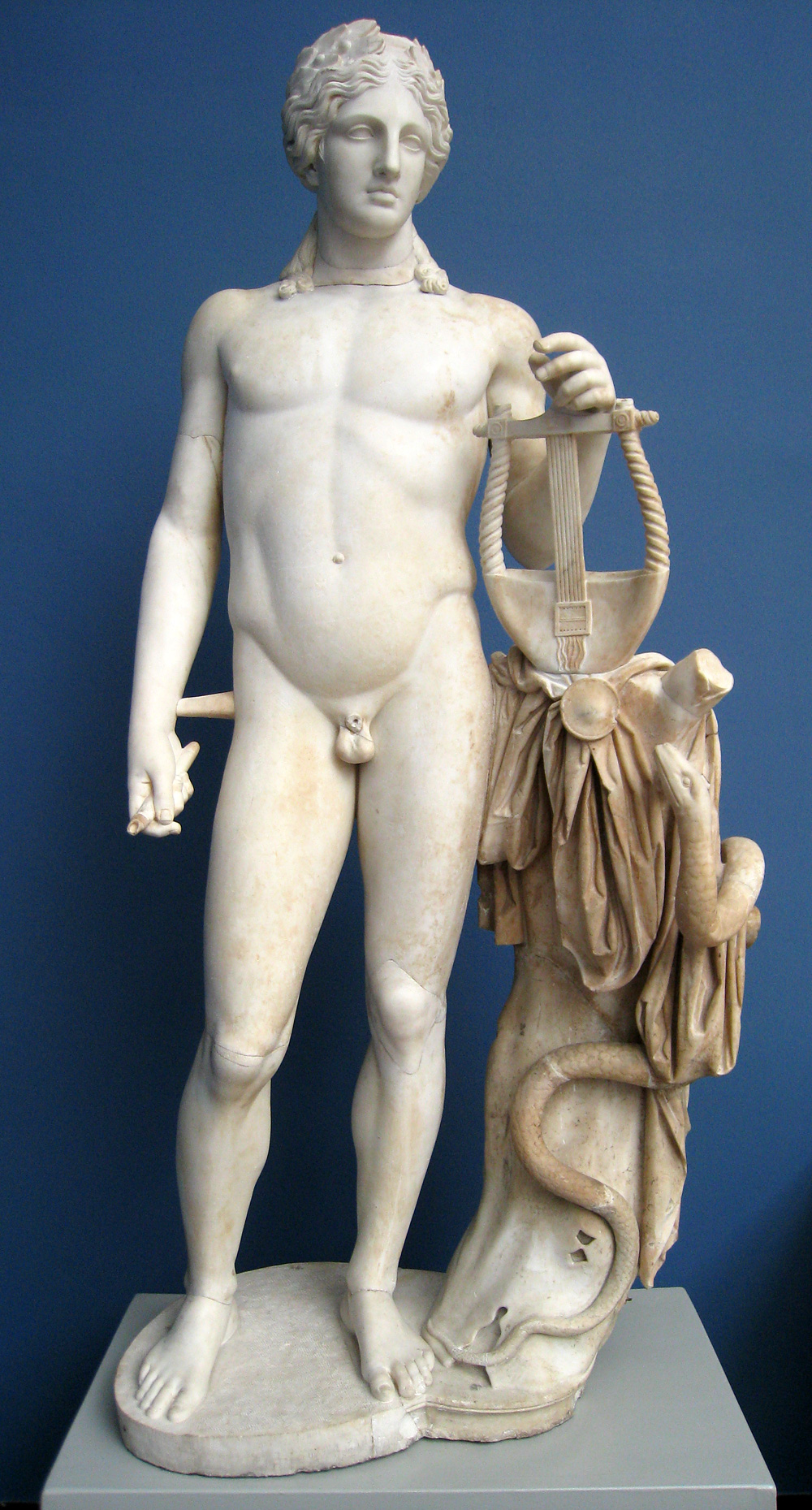
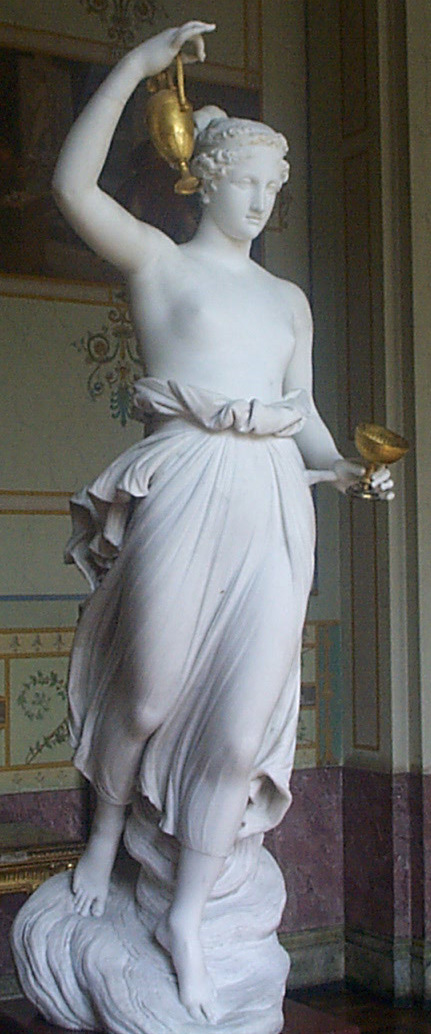
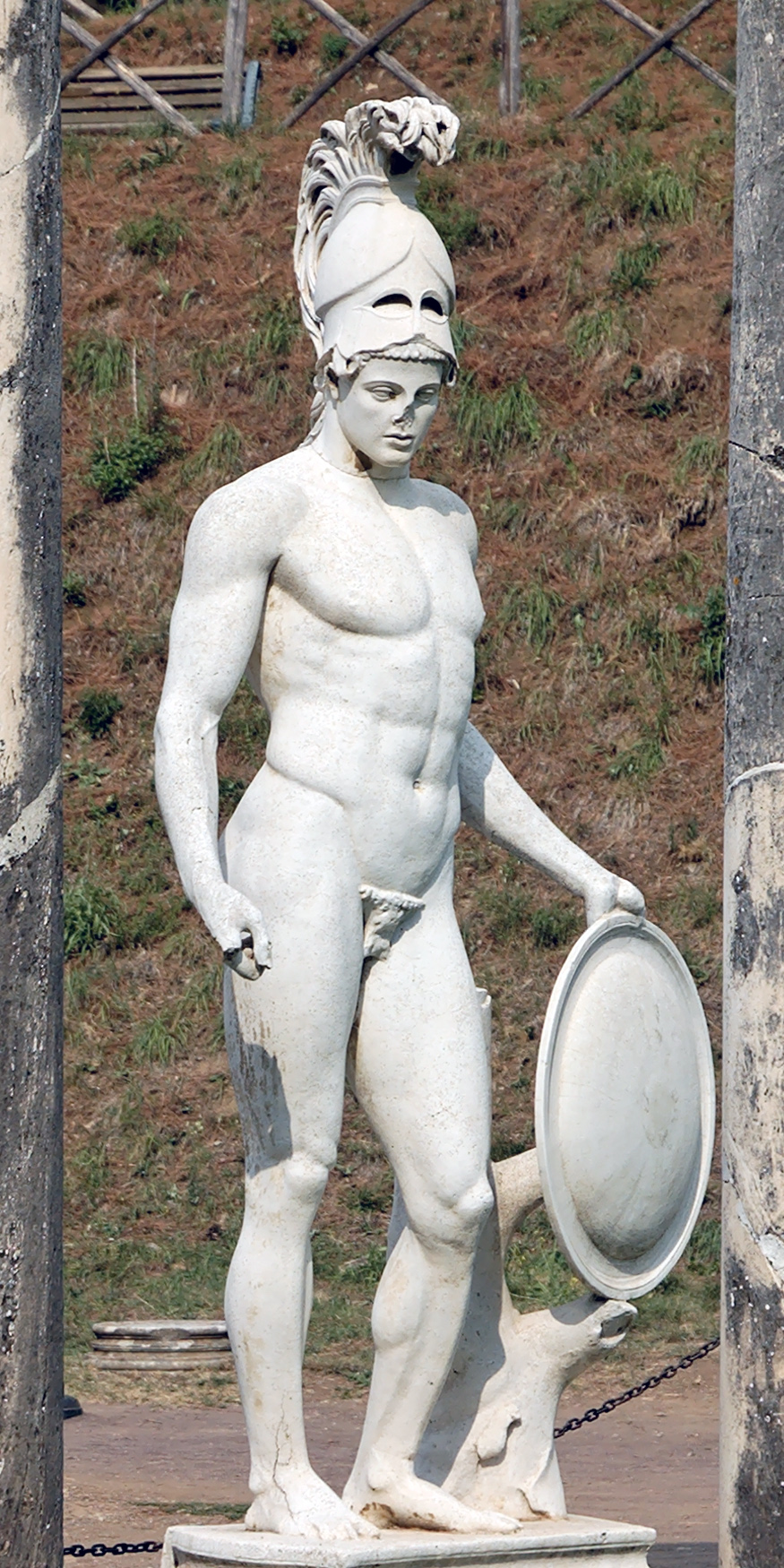

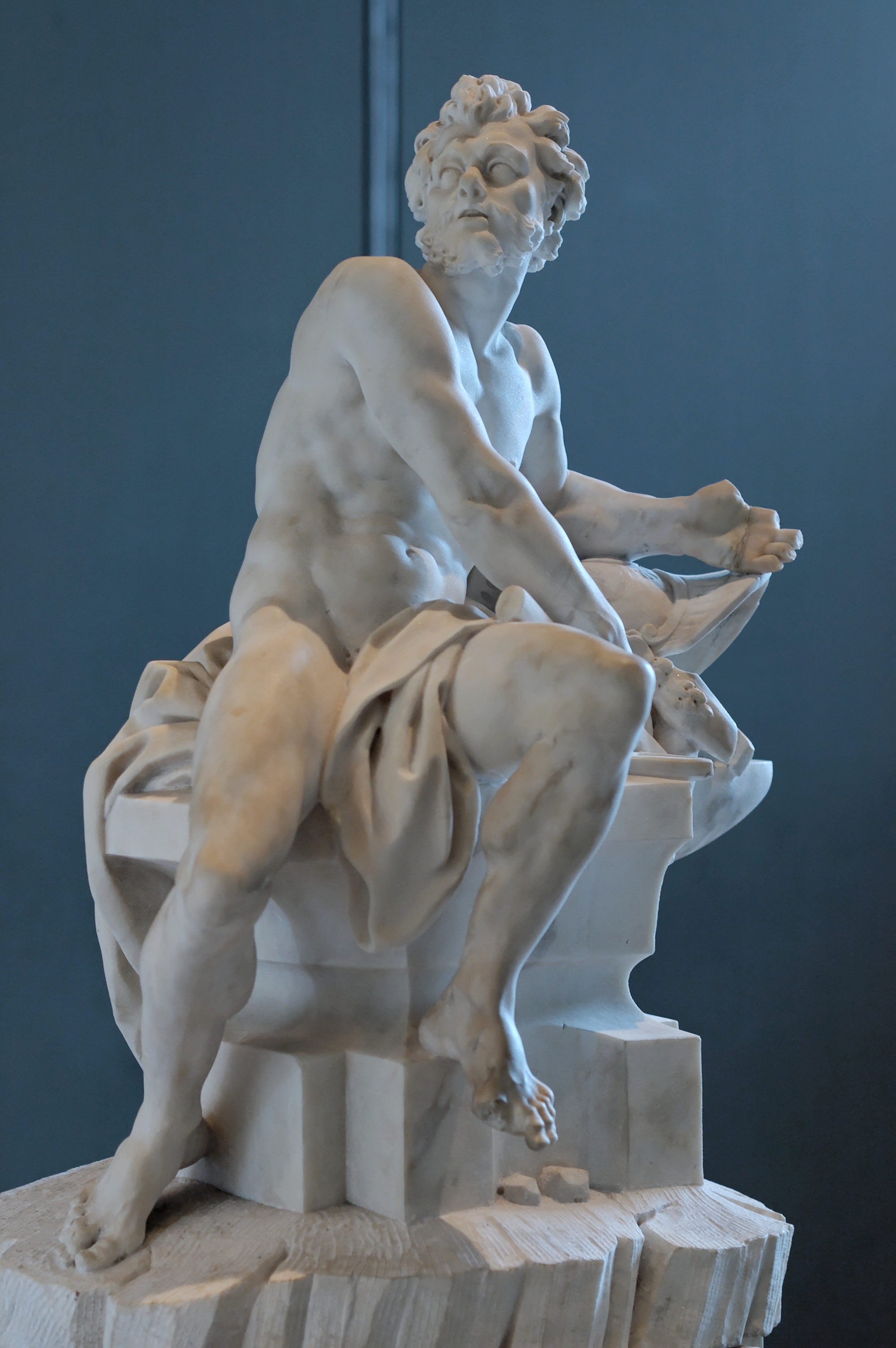


Just as with Eros, other traditions, including Homer, say that Aphrodite was not born from Uranus' castration, but was the daughter of Zeus and an Ocean Nymph named Dione; Dione is linguistically the feminine equivalent of Zeus, thus indicating their non-Hesiodic union was of very old provenance. Many consider Hepahaestus a son of Zeus as well as Hera, and Homer has him married to Aphrodite, while Hesiod has him married to one of the Graces.
The emphasis on genealogy has parallels in both the literature of the Bible and history. It helps to give some sense of timing to the events, even if the immortality of the figures obscures it. While he sneaks it in with his comments on Pandora, Hesiod does explain the birth of humanity and the human necessity of having to work, and have children to support them in old age.
In a later post, we will see how later writers characterized the three reigns of Uranus, Cronus, and Zeus. For now, it is enough to say that Hesiod characterized a cyclical view of history, but also a sense that the current order was more stable than what had been in the past. It is also important to see from here that the ancient Greeks were pantheistic – they imbued everything, seen and unseen, with a sense of the divine – and this informed the way they saw events during historical times.
A different translation than the ones I used can be found at many locations on the internet, including the Internet Sacred Text Archive.
Sunday, September 12, 2010
John of Nikiu: Without Foundation
I wrote my last post before I began reading the Chronicle of John, Bishop of Nikiu (as translated by R. H. Charles, and republished in the Christian Roman Empire series). Over the next day and a half, I read the first half the book, another one that will be entering my "rotation". John's writing demonstrates the great – and silly – pitfalls that come from being without the foundations I was explaining the need for.
John lived in the late seventh century in Upper Egypt, the first generation following the Arab conquest of that country. His work is in the Byzantine chronicle tradition (of which another example to come soon) that I wrote of a few days ago in which all world history is combined into a whole narrative, although some national pride comes through with some focus on Egyptian affairs. According to the introduction (p. iv, §2), the John wrote his Chronicle in Greek, and possibly (in part or in full) Coptic – an Egyptian language written in Greek letters – as well. At some point in time, the text was translated into Arabic, and then in 1602 from Arabic into Ethiopic (p. v). It is only two manuscripts (§3) from this final language that Europeans discovered in the 19th century, and from which the translation to English was made. Thus, it's quite possible that some of the oddities of the history are due to the numerous translation and not John himself; as Charles explains (p. vi, §4), "the Ethiopic translators were…largely ignorant of the historical persons and events described." On the other hand, the notes points to comparisons with other chroniclers, so neither John nor his genre can be completely innocent.
I plan to take a few posts to go over some of the issues I have found with John's Chronicle. The important foundations of history I described were the Jewish and the Graeco-Roman. As a Coptic Christian, John believed in the Coptic tradition, and as an Egyptian he was a cultural heir to the Greek tradition, via the Byzantine Empire, via the Roman Empire, which imported Greek Hellenistic culture, which itself involved both ancient Greek and Egyptian traditions. Anyhow, at the very least he should have had access to some of the Greek literature we have, in addition to the Bible. Yet, he combines mythology with religion in some very weird ways.
In the second chapter, he explains that Adam's son Seth named the five known planets (excluding Earth); while the notes and the many translations put this into question, it appears that John was suggesting that Seth gave them the Greek version of the names that we use, which is to say the names of Greek and Roman g-ds. Thus, the planets would be Hermes (Mercury), Aphrodite (Venus), Earth, Ares (Mars), Zeus (Jupiter), and Cronus (Saturn). It is later, according to John (Chapter 6), that Cronus, "a giant," who was a descendent of Noah's son Shem – and thus at least ten generations later than Seth – was named after the planet. I don't know whether the stories of mythologies developed before or after the identification of the g-ds with the planets, but even John can't really believe this order of things. Indeed, in the previous chapter, he explains that the Persians worshipped the Biblical giant Nimrod of Babylon, and identified him with the constellation Orion. John further places Cronus in "history," calling him the first king of Persia and Assyria (his distinctions between the two are never very clear). He married Rhea, as in mythology, but here an "Assyrian woman," and they have two sons: Zeus (also called "Picus") and Ninus. Zeus, of course, was Cronus' youngest son with Rhea in Greek mythology, while Ninus (as John explains) was the founder of the Assyrian capital Nineveh. The names, I believe, are identical in Greek, and while John didn't invent him, he may well have been a Greek personification of the city rather than a figure of Assyrian history or lore. Back to following the mythology, Cronus moved "to the west" to rule there, but still Zeus-Picus killed his father "because he devoured his children"; presumably these are the not here named Poseidon, Hades, Hera, Demeter, and Hestia. In myth though, Cronus moves from Greece to Italy after he has been defeated by his son. Based on Chapter 9, it seems that Zeus ruled in the west, as well.

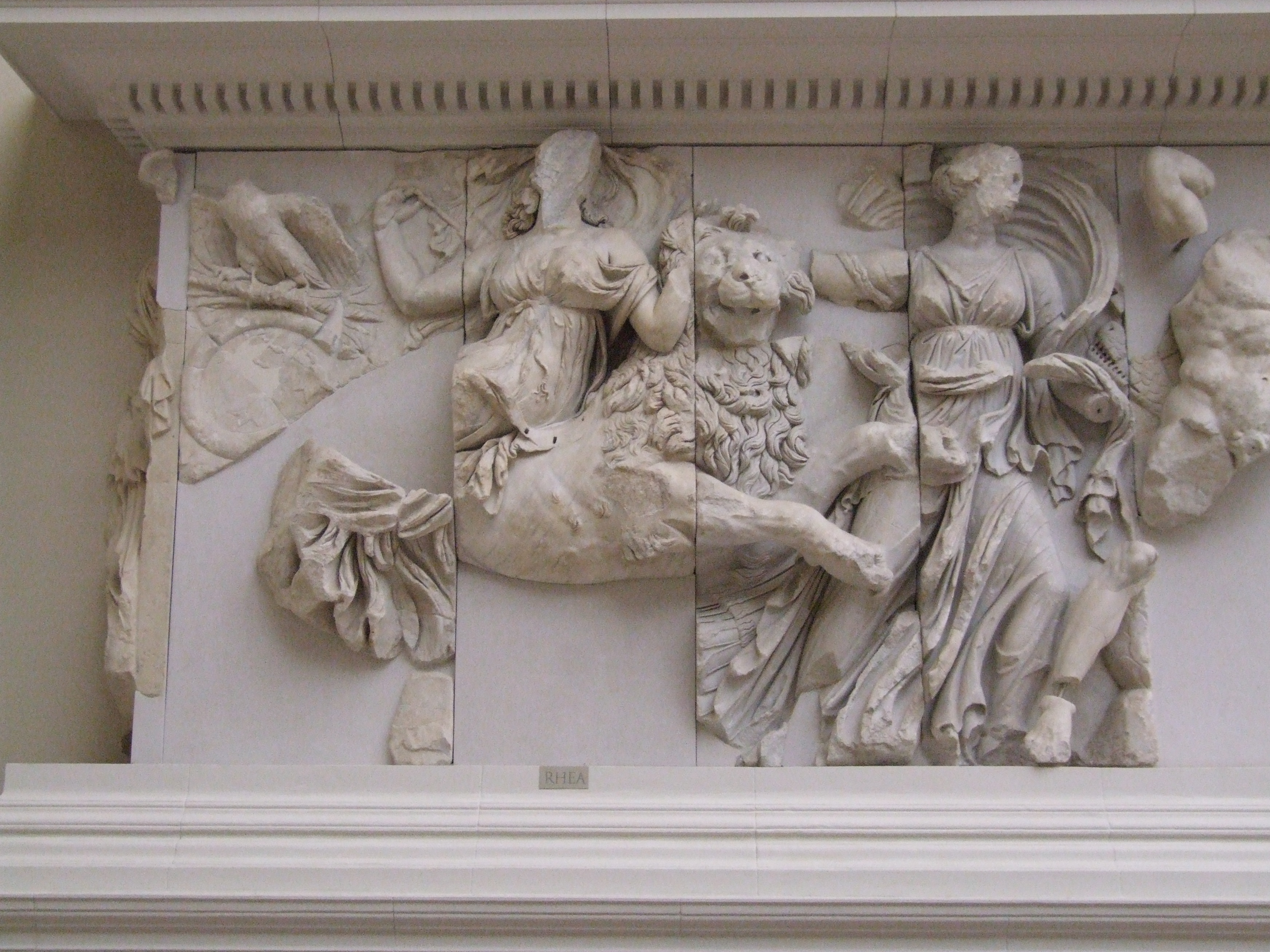



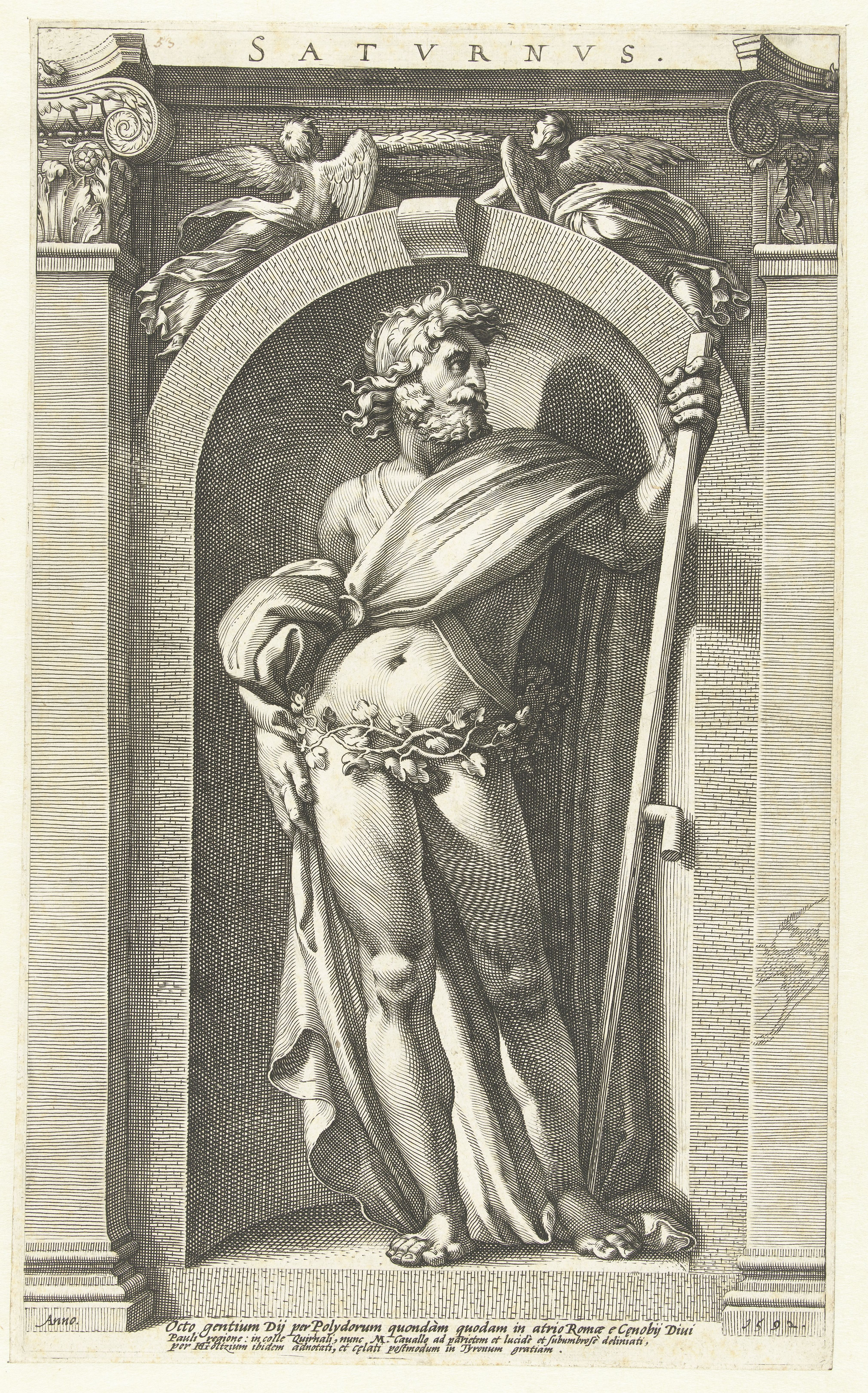
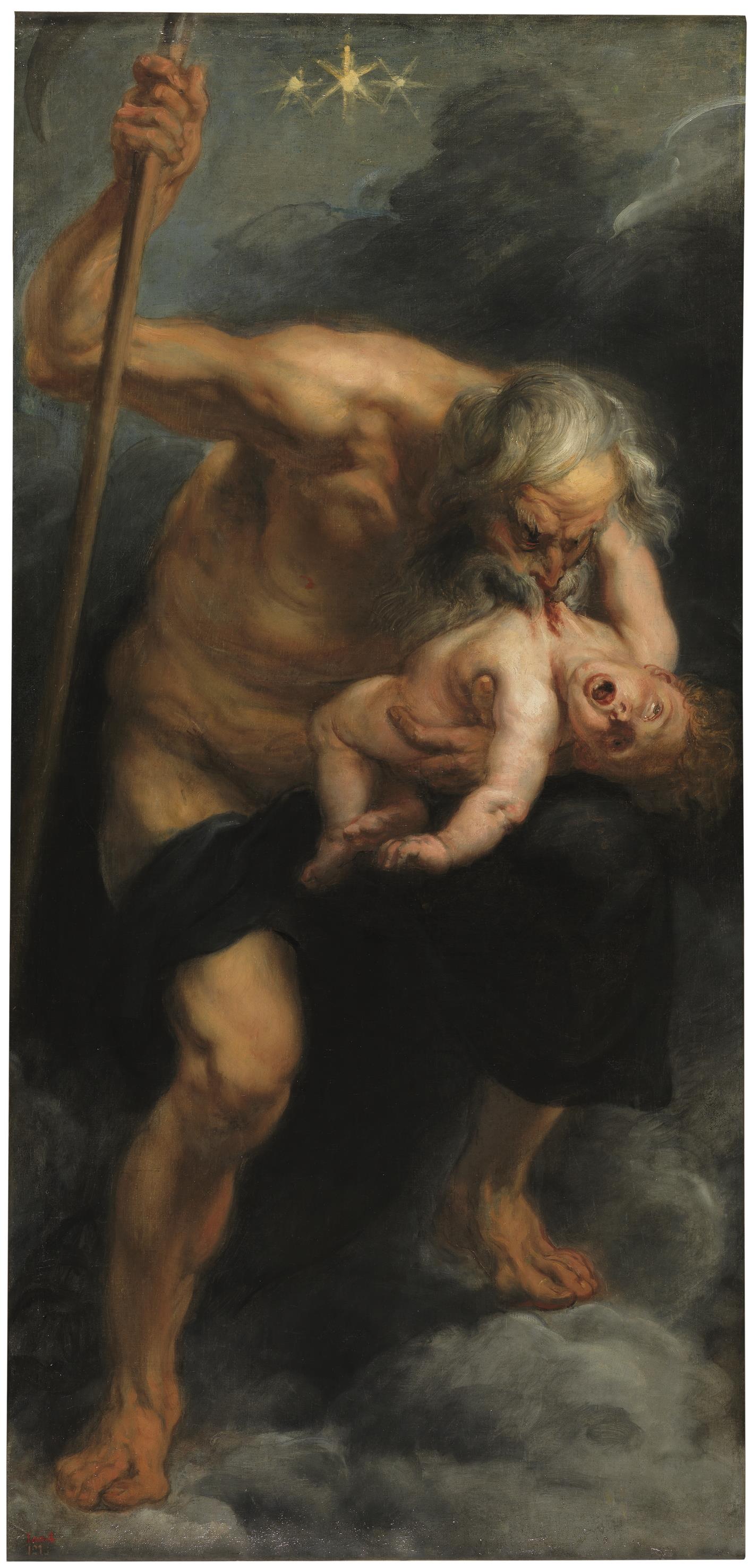

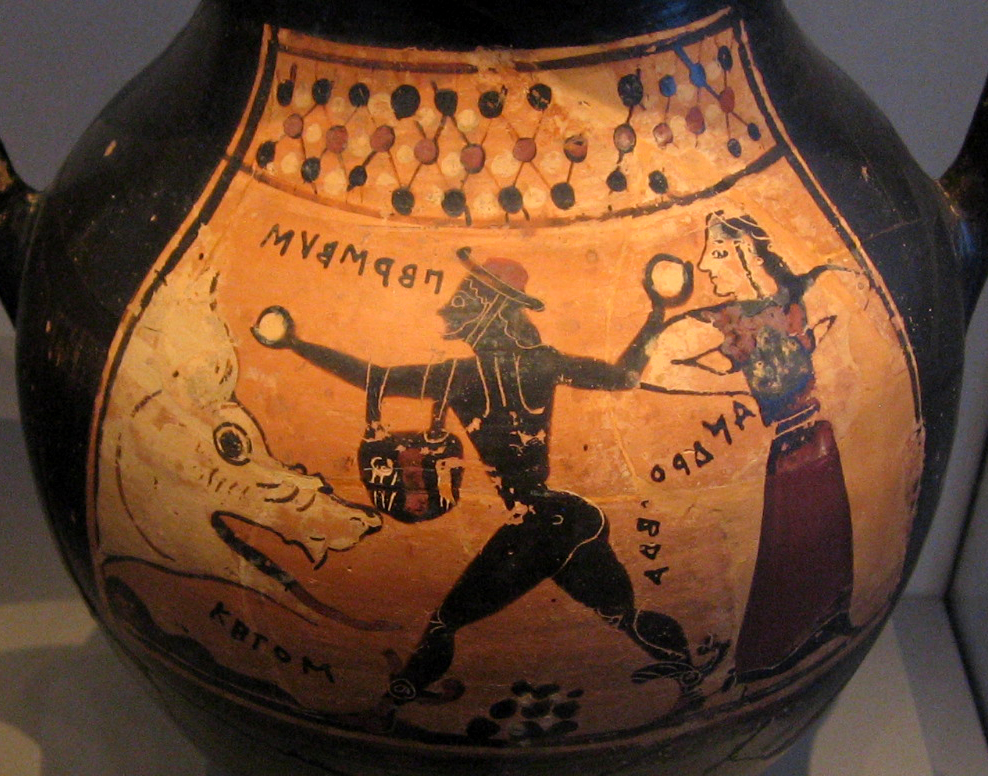
The next chapter has Zeus marrying both his mother Rhea and his sister, who still is not named. In the mythological tradition, Rhea was also overthrown in Zeus' rebellion, but he did marry his sister Hera – and have a daughter (Persephone) by Demeter. "[H]e begat by her a son named Belus": who the mother is is not clear, but I presume it's Hera. Belus, Greek for the Semitic idol Baal, does not match well with either of her sons, but was identified with the Sun (Helios), and eventually Zeus/Jupiter in Hellenistic and Roman times. Belus succeeded his father as king of Assyria, and was followed by Ninus (Chapter 8), who also married his mother, who in Chapter 6 was the same Rhea but now in Chapter 8 is Semiramis, the famous Assyrian queen of legend. Perseus comes to challenge Ninus' sons in Chapter 21; while the mythical Danae is forgotten as his mother, Zeus seems to remain as his father who helps him develop magical powers through the Gorgon (Medusa in mythology), to defeat Sardanapalus, presumably the reigning son of Ninus. Sardanapalus was a name like Semiramis in the legends of Assyria. As the new king, Perseus gives his name to the country, i.e., Persia.


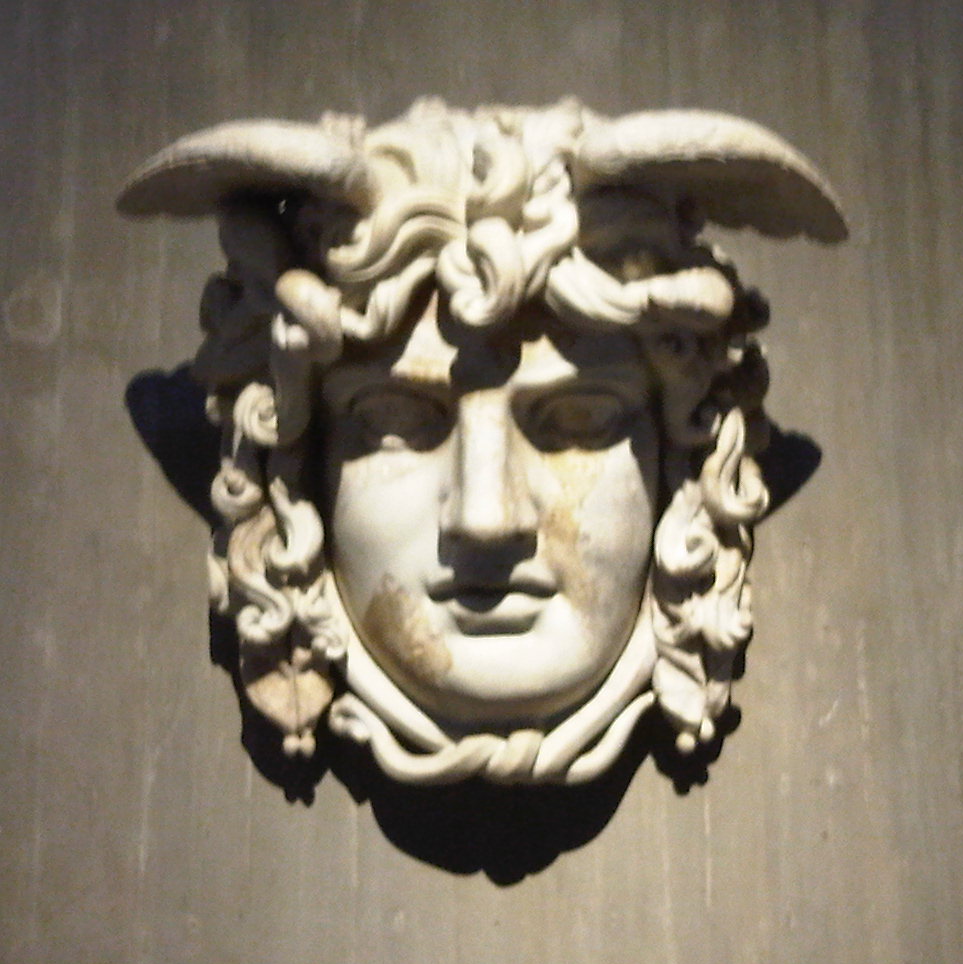
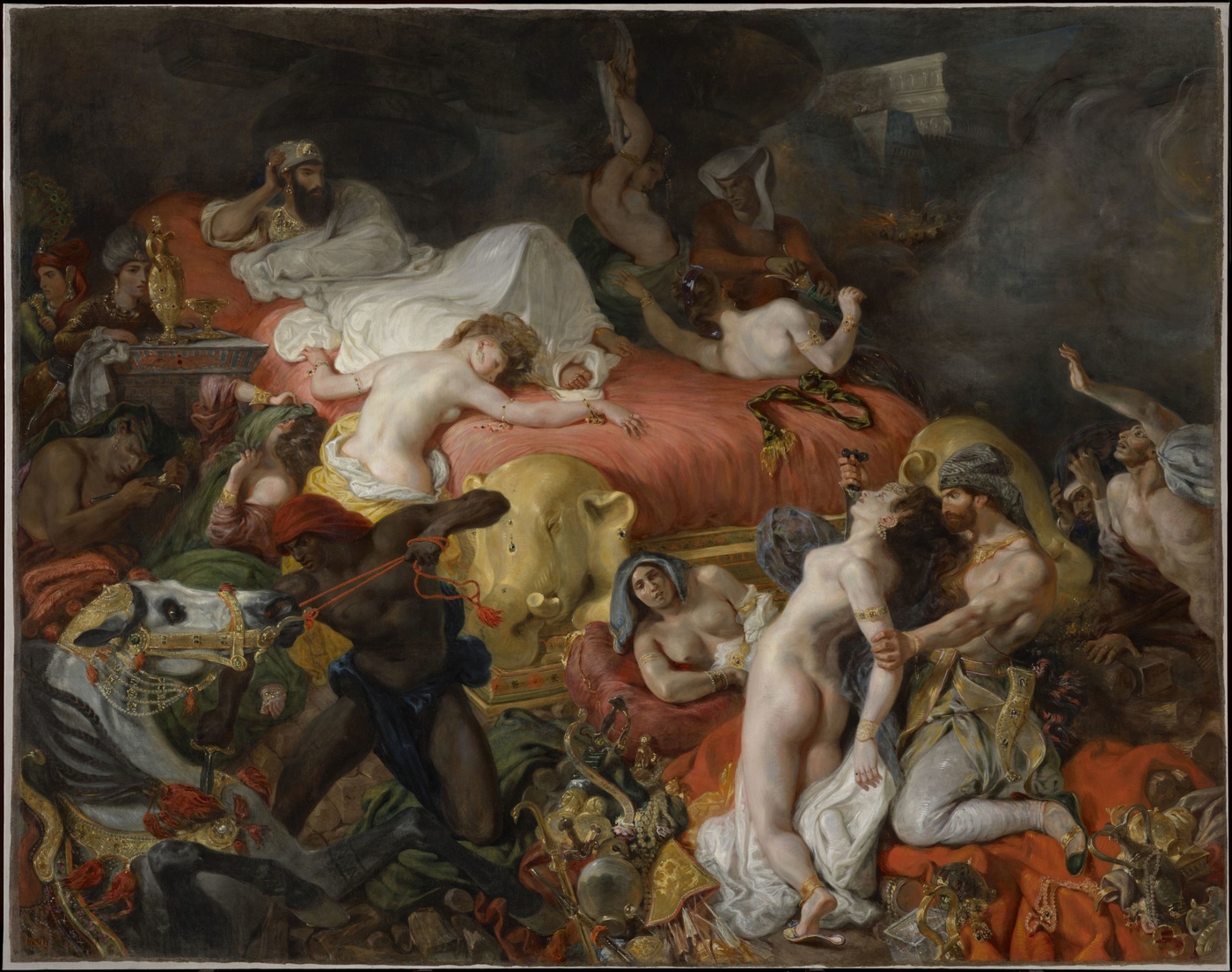
In Chapter 9, Hermes follows Zeus in the west, with an alternate name of Faunus. (Traditionally, the former is the name of the messenger of the g-ds, while the latter is a Roman deity of wildlife [the "fauna" of "flora and fauna"], who was sometimes identified with the Greek Pan, son of Hermes.) As a worker in gold and silver, he drew envy from his brothers and fled to Egypt. His story is reminiscent of the Biblical Joseph. John returns to Hermes in Chapter 15, calling him a sage who explained the doctrine of the Trinity. Chapter 11 explains that Hephaestus was a king in Egypt; otherwise his character follows mythology. Chapter 12 adds that both he and his son who succeeded him were worshipped as the Sun. The next chapter gives Dionysus rule over Egypt as well; both it and the fourteenth name cities in Egypt built by Dionysus and Osiris as identified with Apollo. Heracles (Hercules) was a philosopher of Tyre in Phoenicia who discover silk (Chapter 20).


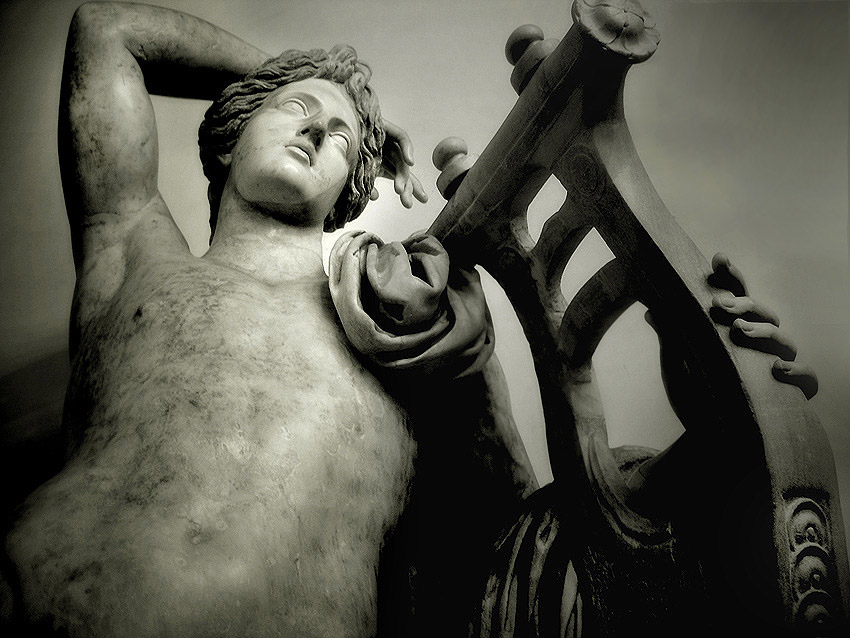
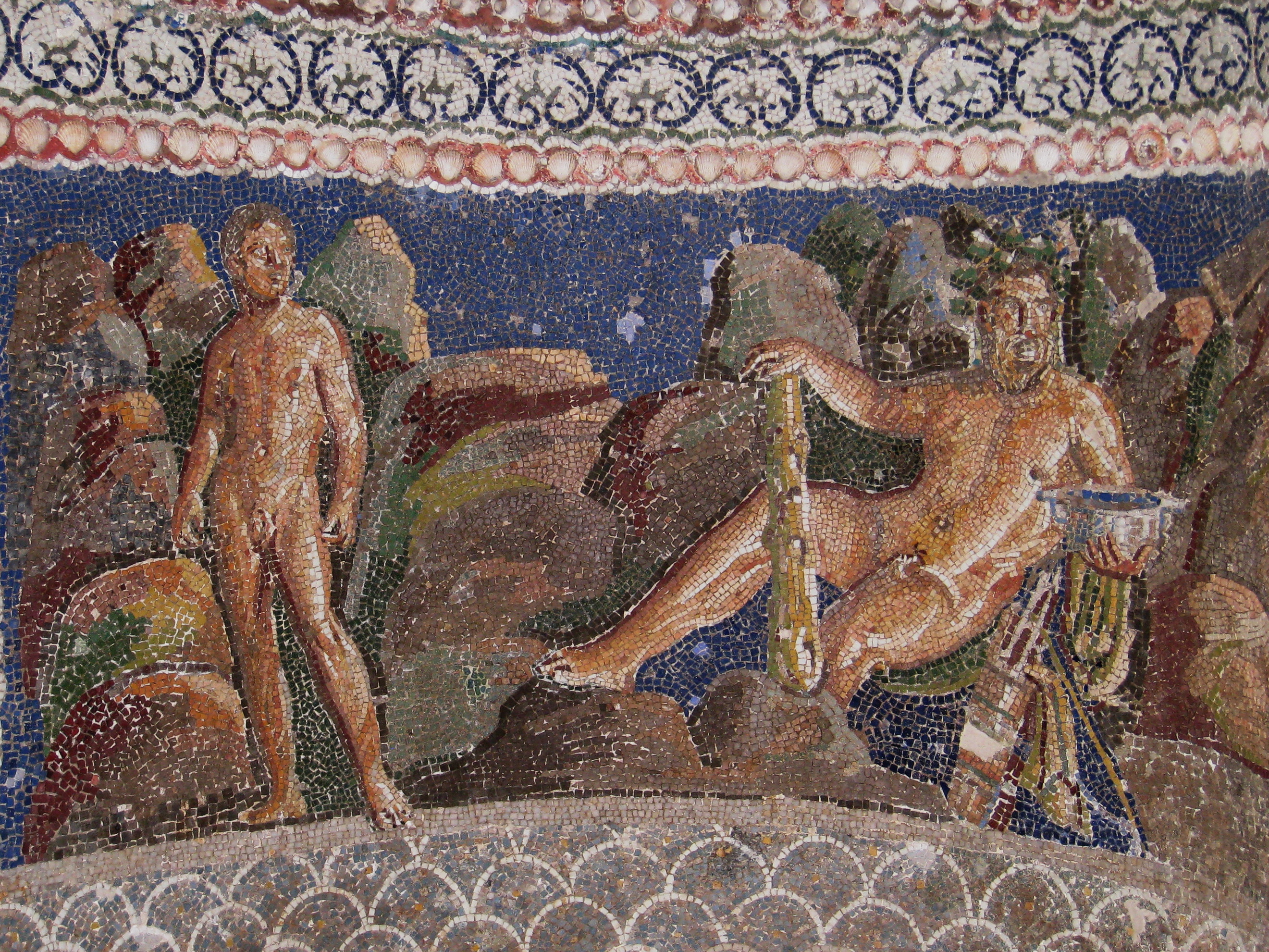
There is too much about John's Chronicle to put in one post, but as my next post will get into the right way to read foundations to Greek prehistory, I will just add that in Chapter 28, Hesiod is named as a descendent of Noah's son Japhet, and called the inventor of Greek writing.
An internet version of Charles' translation can be found at the Tertullian Project.
Wednesday, September 8, 2010
Foundations of Prehistory
I mentioned twice starting with Herodotus and Livy. Conceptually, though, it is important to have a grounding in prehistory, as well. By "prehistory" I mean two things: a) that which one should understand before reading history, and b) that which occurred before people began to write history. The second point would refer to anything that happened before the events Herodotus wrote about; while there are certainly recordings of prior times, they were either transmitted orally or not written as history but for another purpose. Far from making these events historically remote, the versions that were written – and survived – are of the greatest significance in understanding the ways people of historical times thought. Until rather recently, the authority of tradition had few challenges. For my purposes there are two and a half traditions to look at for the foundations to prehistory.
The first is the Jewish tradition, and is based upon reading the Tanach (Jewish Bible). Exact historical accuracy is not the point, and I don't really want to get into arguments about that. Instead, what matters is that for over three millennia, Jews, and to a lesser extent Christians, and to an even less extent Muslims, have lived within a culture and context of the Tanach holding moral truth to them.
The second tradition is Greek mythology, and the final half includes any variations in Roman mythology. While the relationship of mythology to pagans is not the same as the Bible to monotheists, it still provided a context and explanation for why things existed as they did. I will be getting into the Archaic and Classical literature is most relevant for such foundations in the future. In addition, the transitions from legend to history tell us something about when the Classical writers themselves saw pre-historical times, rather than times that seemed very similar to their own.
We all know the advice about learning from history to avoid repeating mistakes. It is fair to say that even if, today, we don't necessarily see the stories in these traditions as historical, ancient people were even more likely to turn to them for help in their own lives.
I think these threads are the most important for understanding the history of Western Civilization. Obviously, Christianity plays an outsize role as well, and I have included it in my reading (as here and here). That religion, of course, developed during historical times, and so requires no prehistory beyond the Jewish tradition. Egyptian, Mesopotamian (Sumerian, Chaldean, Assyrian, Babylonian), and Iranian (Medean and Persian) traditions have also played some significance. However, until much more modern times, most of the Western understanding of these cultures has been mediated through the other traditions – primarily Greek, but also the Bible. At the end of antiquity, Germanic/Norse peoples conquered much of Europe. My reading is increasingly bringing me into contact with them, but for the most part the growth of literacy (even for a tiny, educated minority) was coeval with the proliferation of Christianity. Just as with any other nations, writers will tend to explain more or less of their background depending on how exotic he finds them.
More on Oedipus and the Sphinx
A few more thoughts inspired by Philostorgius' explanation of the legend of Oedipus and the Sphinx. He believes that the story derives from an exotic ape that found its way to central Greece. It is likely, however, that the concept of the Sphinx developed elsewhere than Greece (Egypt, perhaps), and was later imported to Boeotian Thebes, like so much else in Greek mythology.
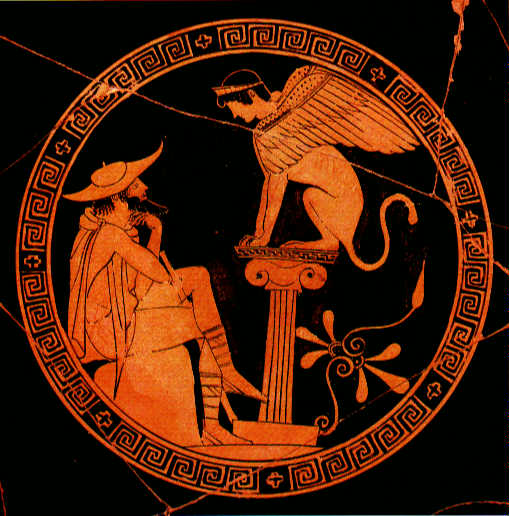

The issue of the riddle goes a bit further. The famous answer to the enigma doesn't just illustrate Oedipus' wisdom, but it applies to him more specifically than to most men. As Apollodorus puts it in Book III, Chapter 8 of his Library of Greek Mythology (Robin Hard's translation for Oxford World Classics), "The riddle ran as follows: what is it that has a single voice, and has four feet, and then two feet, and then three feet?" As a baby, Oedipus' ankles were pierced, so he had to crawl longer than normal. As an adult, he was a king and stood up with pride, but very straight due to the old injury. As an old man, he was blind and so relied on his walking stick more than others.


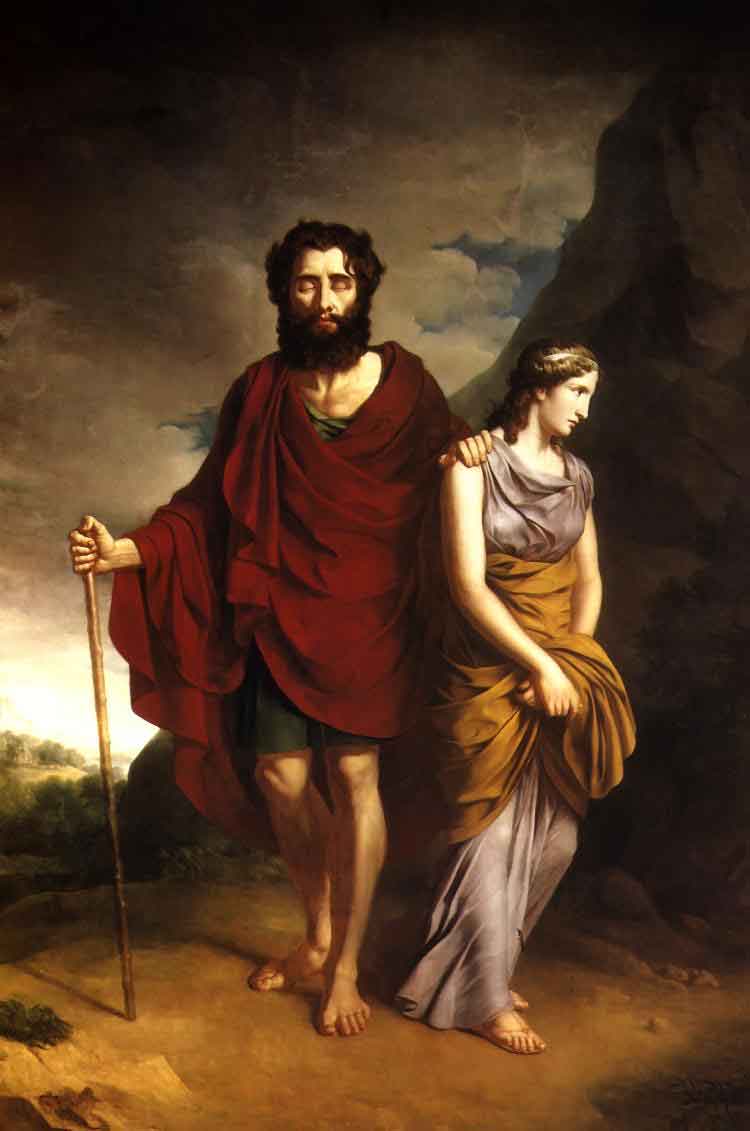
While, in this case, I assume that the stories of Oedipus and the Sphinx developed separately, then came together, and then later the riddle was introduced, it is interesting to think if something like Philostorgius' chronology is possible (with this story, or any other), such that maybe a non-descript man killed the ape, then the noises were turned into the riddle, and then the riddle becomes the story for the man.
Subscribe to:
Posts (Atom)