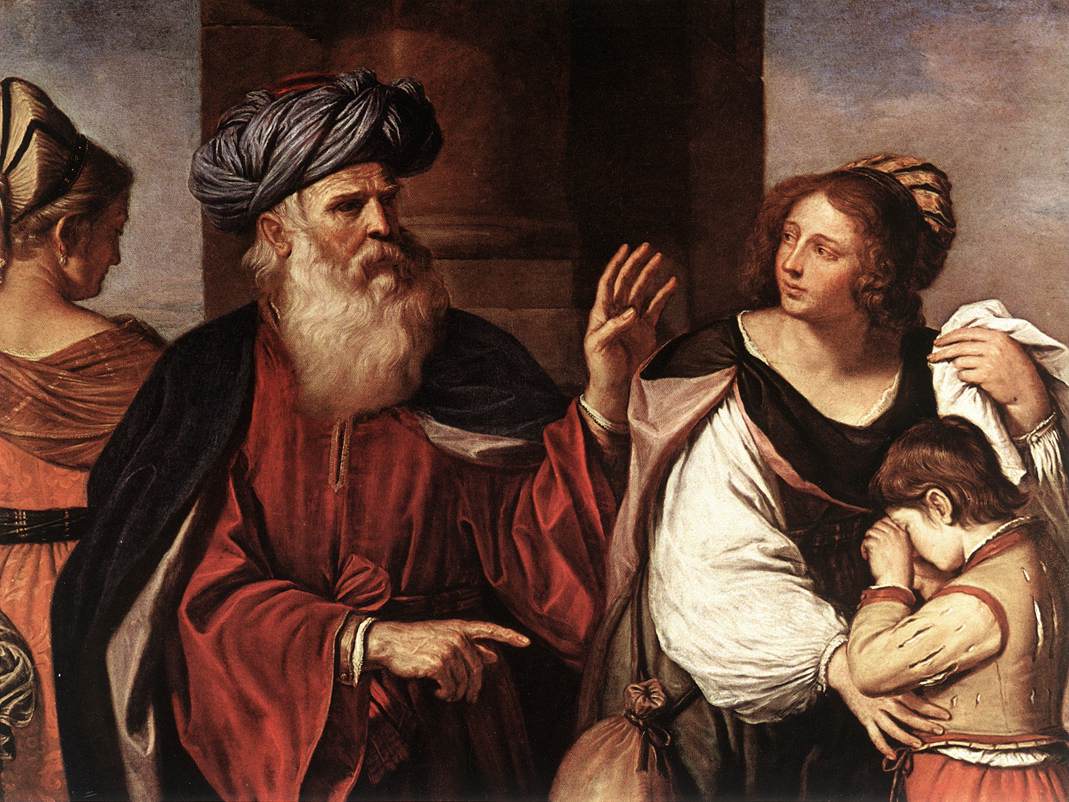
For Orosius, being a Roman was nearly as integral a part of his identity as being a Christian. After all the wars – foreign and domestic – of the first century BCE (not to mention those of previous centuries), "in that year in which, by the ordination of G[-]d, Caesar achieved the strongest and truest peace, Christ was born, upon whose coming that peace waited" (VI.22). Augustus was finally able to achieve unity and peace for the Empire, and this gives birth to Jesus (on December 25 (VII.2), I might add with some surprise). That Jesus was specifically a Roman is proved by being registered at the census from birth. In turn, Jesus gave Rome the "pinnacle of power, prosper[ity,] and protect[ion]" (VI.22), and peace (VII.3-4). His birth is also a mirror of Abraham's: one born in the 43rd year of Ninus, first king of Assyria/Babylonia, except maybe his father Belus, the other born in the 42nd – by a week – year of Augustus, first emperor of Rome, except maybe his adoptive father Julius Caesar (the point is certainly enhanced by beginning the reign of Augustus with the death of Julius Caesar, when his officially becoming the princeps or receiving the title Augustus came several years later). Later, he makes the – not unique, but likely spurious – association of the emperor Philip the Arab, reigning 244-249 CE, as a Christian, just to show that Providence desired the 1,000 year celebration for the city to occur under a Christian emperor (VII.20).
The development of Christianity in the Empire is seen more by its troubles than its successes for the first three centuries. Even here, Orosius sees vindication, finding a parallel between the ten imperial persecutions he identifies with the Ten Plagues preceding the Exodus from Egypt (VII.26-27). I will go through the ten:
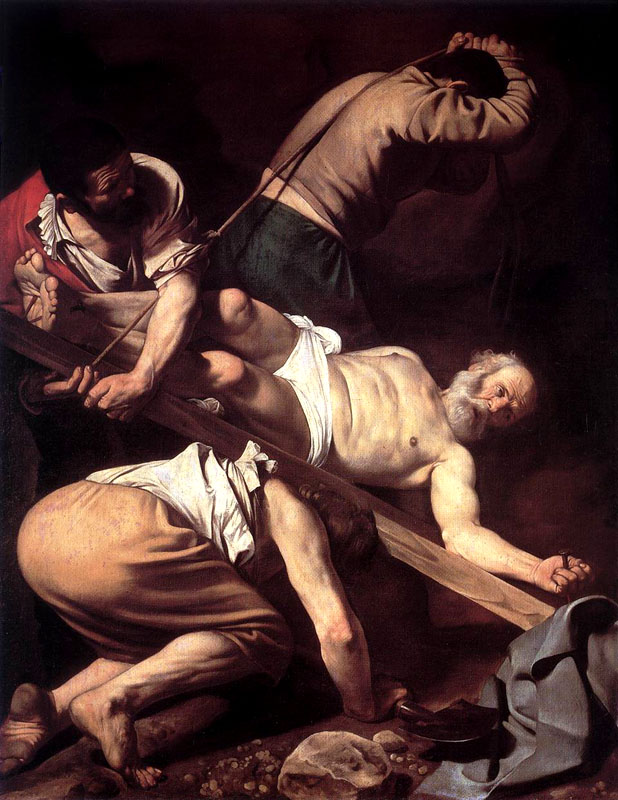
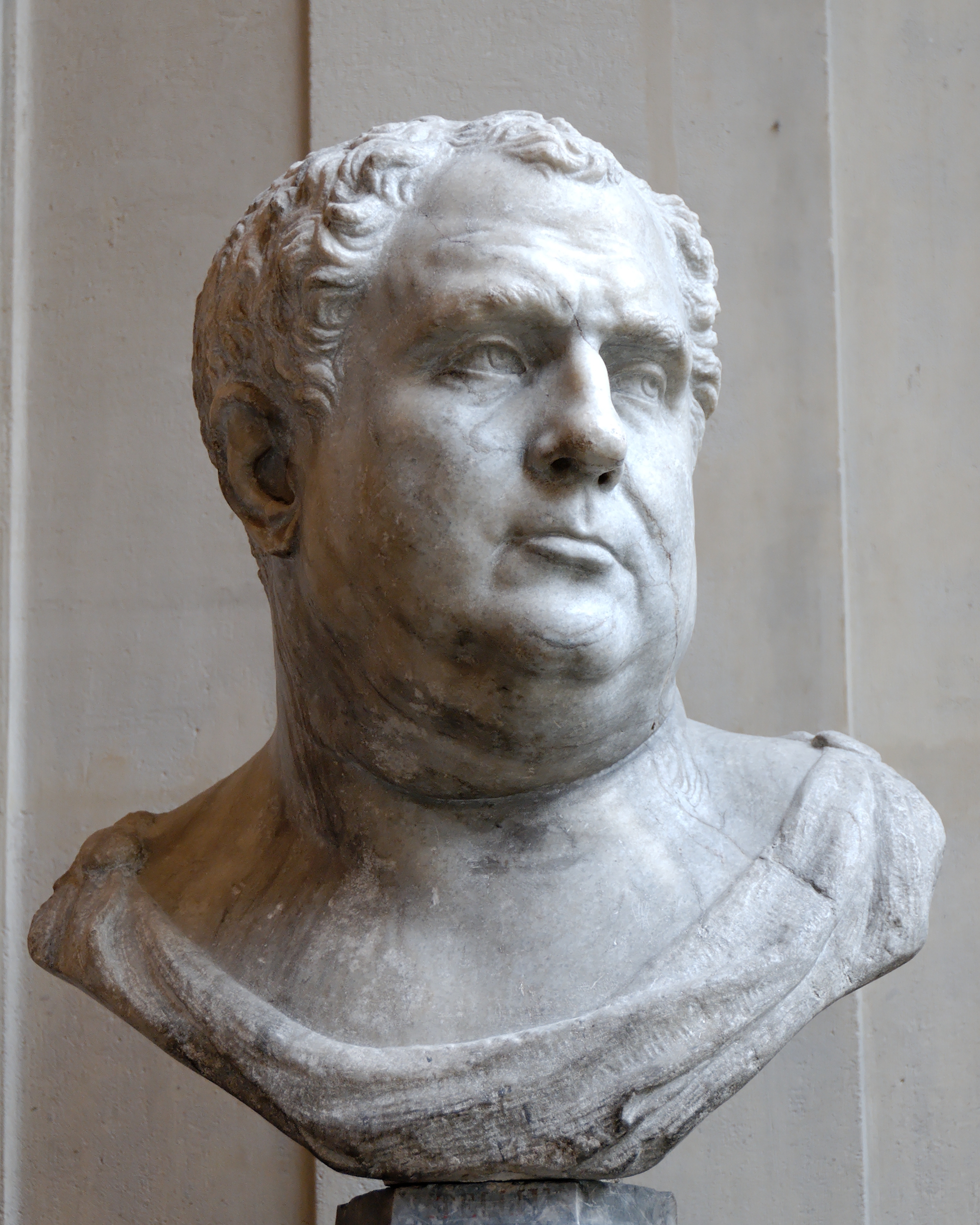
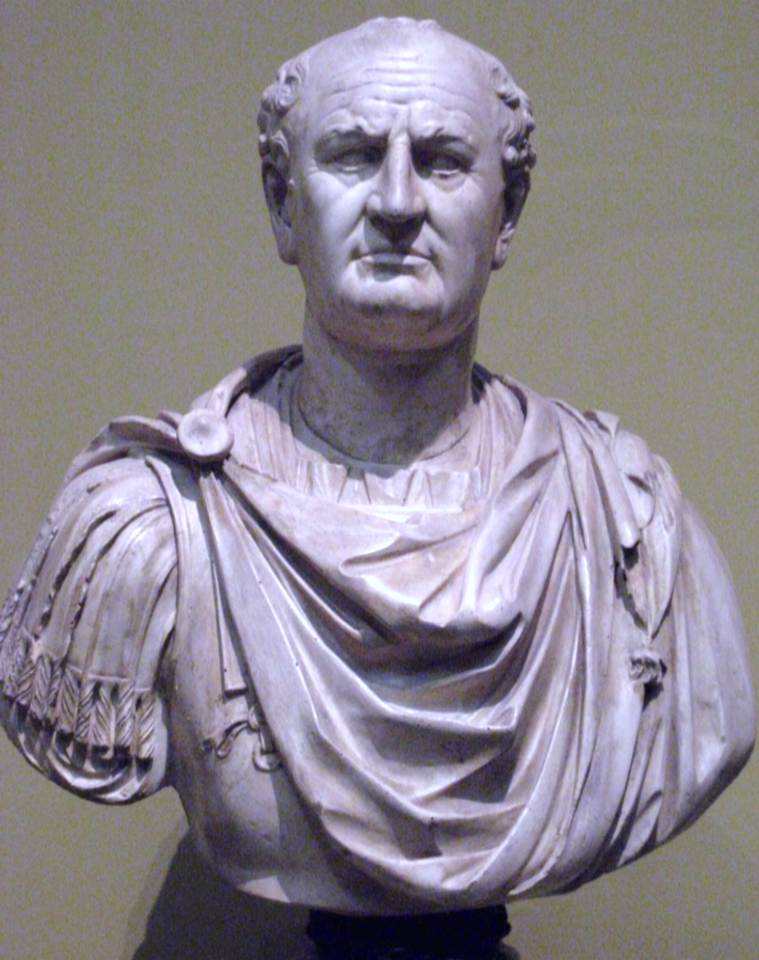
- In Egypt, the first plague was the Nile turning to blood. The first persecution, by Nero, led to bloodshed in war or from disease. Nero, reigning 54-68, killed Christians in Rome, including the apostles Peter and Paul, and throughout the empire. Then 30,000 died due to "pestilence" in Rome, and armies or cities were lost in war in Britain and Armenia (VII.7). In the year following Nero's overthrow, Galba was assassinated, Vitellius made civil war on Otho, and Vespasian made civil war on Vitellius (VII.8).
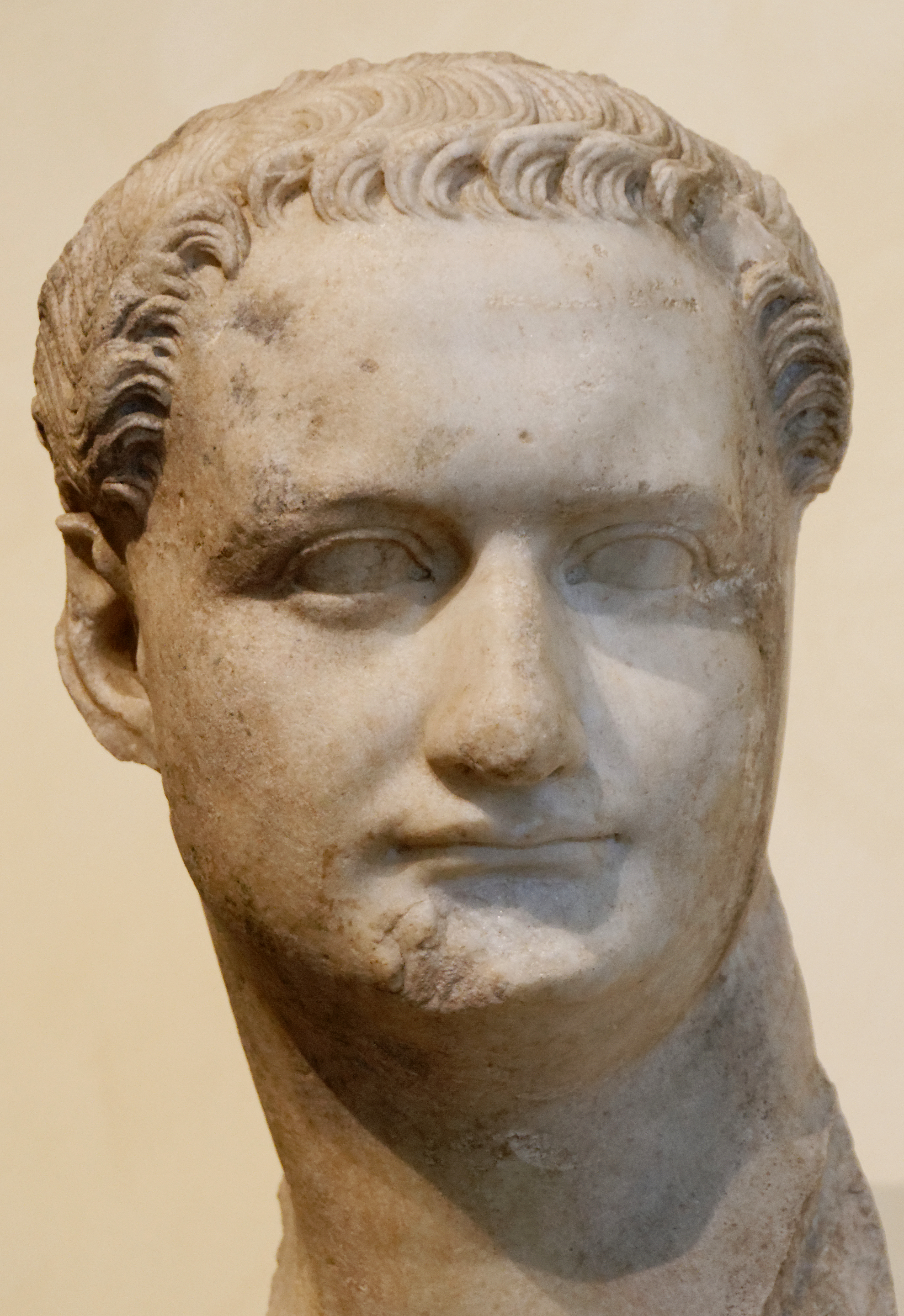
- In Egypt, there were frogs. Following Domitian's persecution, the Roman pagans were terrorized by the emperor's tyranny. Throughout Domitian's reign, from 81 to 96, attempted to end Christian worship out of megalomania that he deserved it himself, and the apostle John was exiled. At the same time, many of the leading men in Rome were killed at the emperor's order, and disastrous wars were fought in northern Europe (VII.10).
- In Egypt, there were flies. Following Trajan's persecution, there were Jewish rebellions in many provinces. Trajan, reigned 98 to 117, ordered Christians to make offerings to idols on pain of death, then Jews began fighting Libyans, Cyrenaeans, Egyptians, Alexandrians, Mesopotamians, and Cyprians, destroying a city on that island (VII.12).
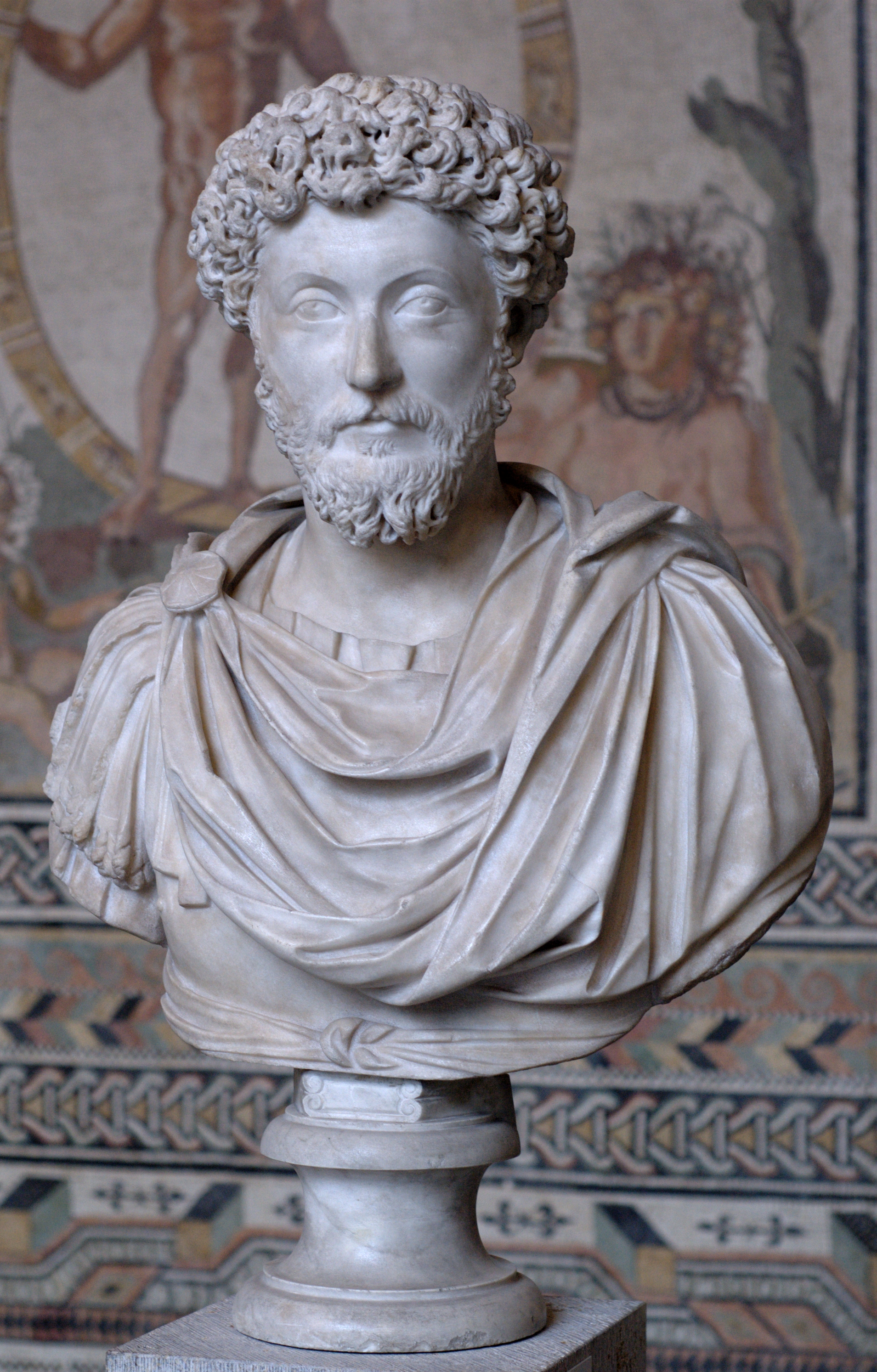
- In Egypt, there were "dog flies, truly the offspring of putrefaction and the mother of worms." Following Marcus Aurelius' persecution, disease led to "death…putrefaction and worms." Marcus ruled 161-180; in the 170s Christians were "martyr[ed]" in Gaul and Asia. A plague killed so many in the country and the army, necessitating a 3-year levy of new soldiers (VII.15).
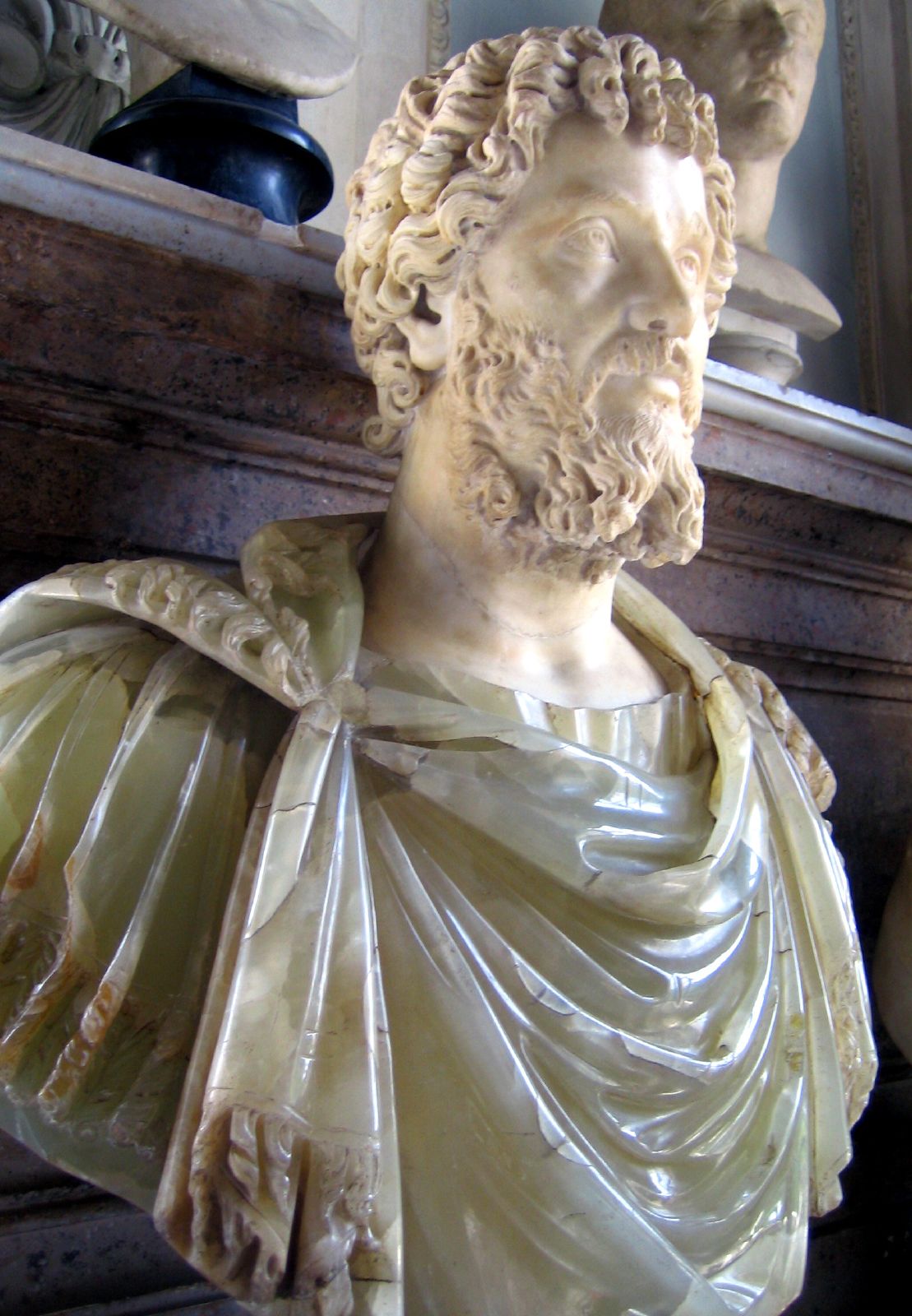
- In Egypt, there was the death of livestock. Following Septimius Severus' persecution, soldiers and civilians in the provinces were destroyed in many civil wars. During Severus' reign 193-211, "a great many saints received the crown of martyrdom." In 196, Clodius Albinus' army proclaimed him Augustus in Gaul, leading to civil war in that province followed by rebellions in Britain (VII.17).
- In Egypt, there were sores and ulcers. Following Maximin's executions of the clergy, "seething anger and hatred" led to "the wounding and killing of the chief and powerful men." Maximin became emperor on the death of Alexander Severus in 235; Orosius claims that Alexander's mother Mamea was Christian – almost certainly a false claim considering that she was the aunt of her son's predecessor Elagabalus, who was a great enthusiast for the worship of the Syrian idol Baal (the sun) for which their family had traditionally been priests – and so Maximin went after the clergy, especially Origen, Mamea's supposed teacher. Very soon, Maximin, himself, was killed in 238 (VII.18-19).
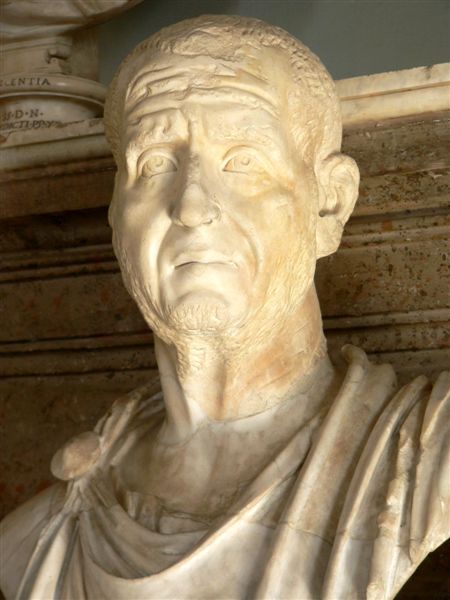
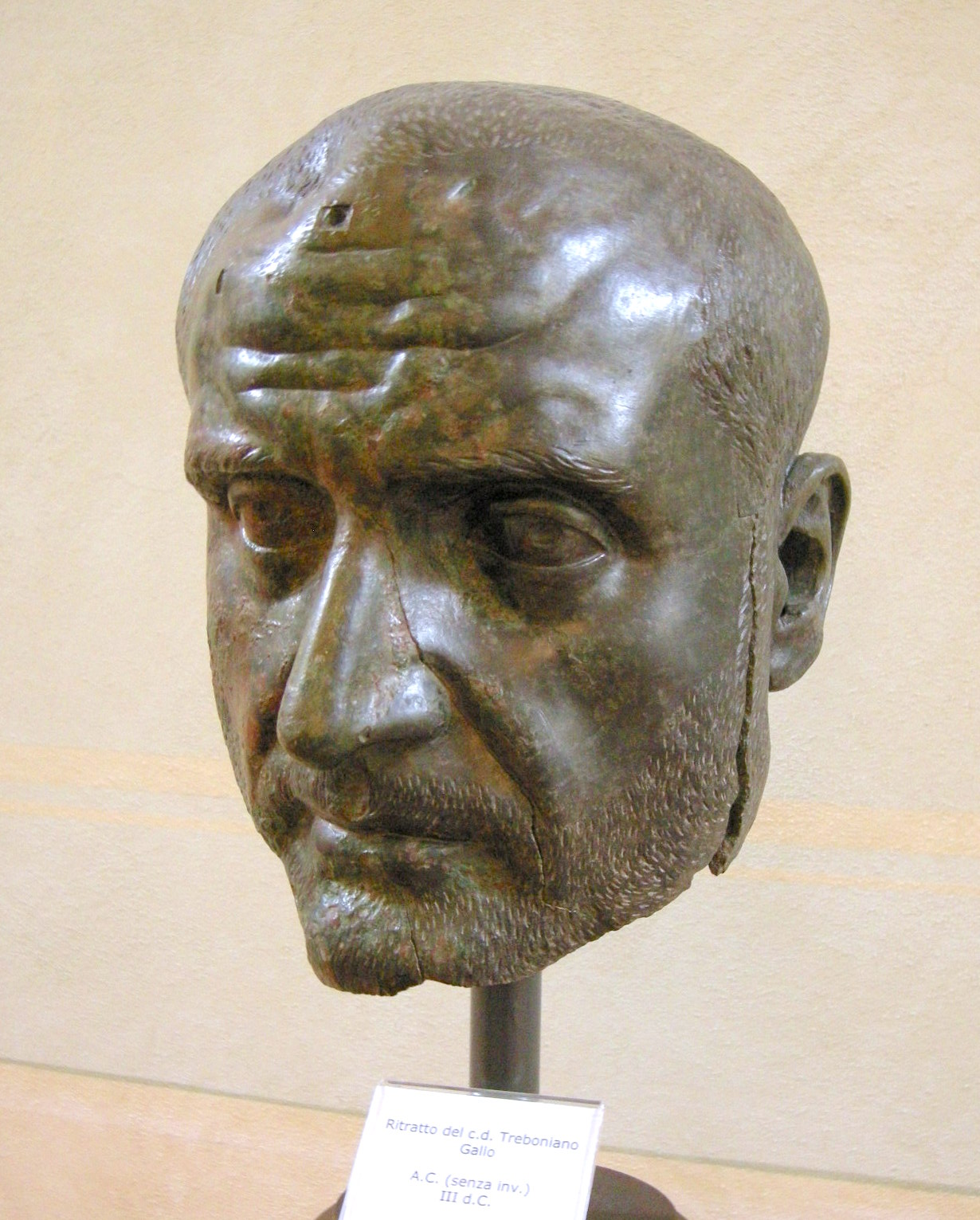
- In Egypt, there was hail. Following Decius' persecution, the air was poisoned under Gallus and Volusianus. Orosius supposes Decius undid and killed Philip the Arab out of hatred of Christianity in 249, and then expanded the persecution as emperor. While Gallus and his son Volusianus reigned 251-253, "a pestilence of incredible disease extended…" to practically every "house" throughout the Empire (VII.21).
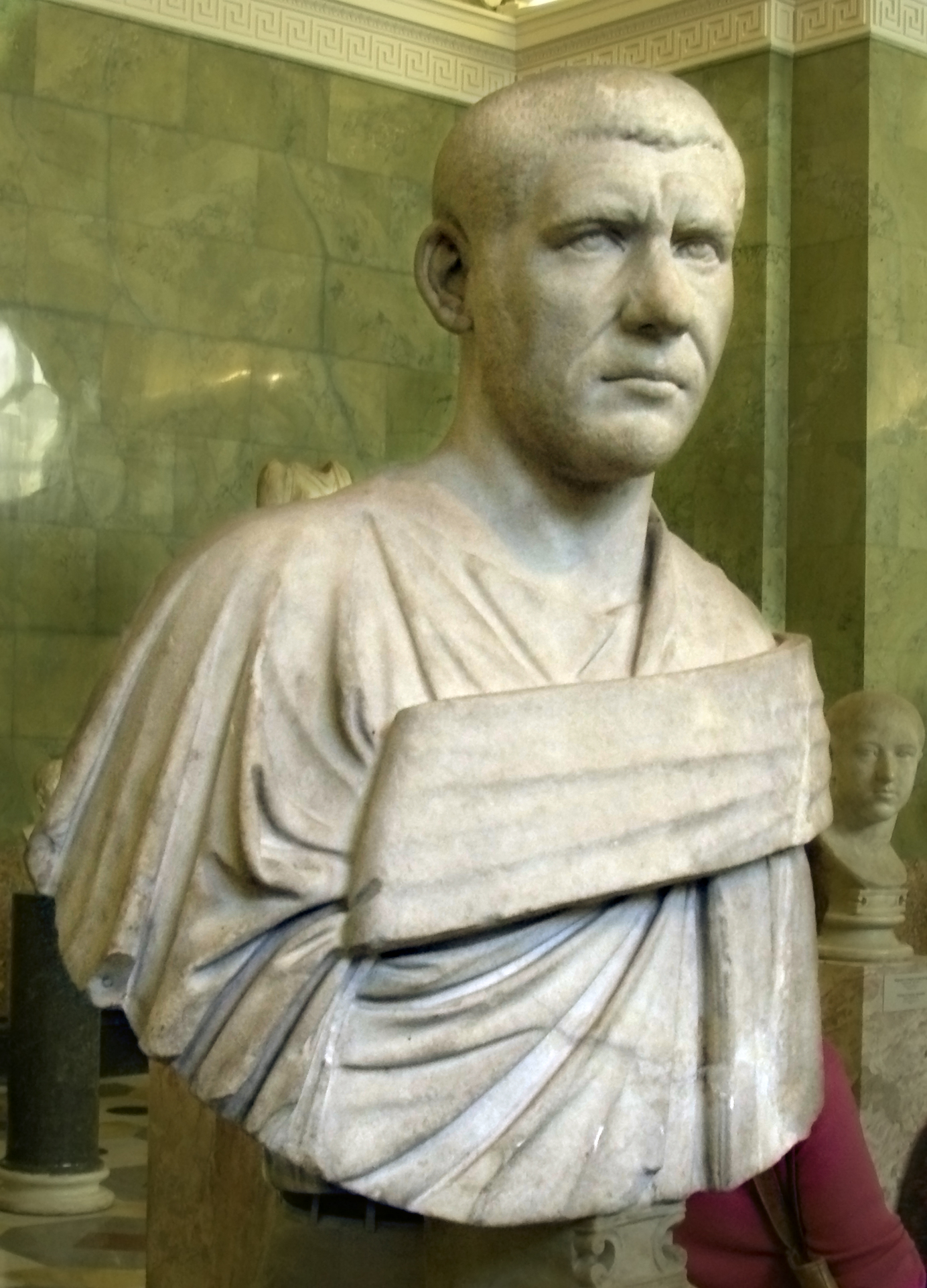
- In Egypt, there were locusts. The Roman Empire was invaded by foreign armies. Decius himself, along with his son, were "killed in the very midst of the barbarians" in 251 (VII.21). Valerian, emperor from 253 to 260, also commanded Christians to worship idols by force, leading to torture and death, and was captured by the Persians in 260. Under his son Gallienus, who reigned until 268, the Germans crossed the Alps into Italy, Alemanni invaded Gaul, Goths invaded Greece and Asia Minor, territory beyond the Danube was lost, "further Germans" took Spain, and the Persians captured Mesopotamia and harassed Syria (VII.22).
- In Egypt, there was darkness. Following Aurelian's persecution, three emperors were killed in six months. Aurelian was emperor 270-275; soon after his persecution "he was killed while on a journey" (VII.23), then both the Emperors Tacitus and Florian were killed as well before twelve months had passed (VII.24).
- In Egypt, there was the death of the first born. Following Diocletian's persecution "was the destruction of the idols." I've already
discussed the persecutions of Diocletian and his colleagues in 303-305. Clearly, Orosius sees a direct link between that and the religious program of Constantine that eventually – although many generations later, and after Orosius' death – led to the end of idolatry.
Pharaoh finally relented and let the Jewish people "go free"; the Augustus became Constantine and he let the Christian people "be free." Certainly there are some contrivances in this system. John, for example, had correctly exonerated Marcus Aurelius of official persecution, and the idea that Philip was Christian was probably more a consequence of Decius' persecutions than the reason.
Orosius is also less anti-Jewish at places than many of his Christian contemporaries and followers. The continuity between the two religions is highlighted, as in the plague idea above, but he uses language about the Jewish experience that is typical of his own times rather than Biblical times – using the word "synagogue" for example. Unlike John, he doesn't tell the story of Julian allowing the Temple to be rebuilt in Jerusalem; rather, he thinks that Julian built an amphitheater in the city to show Christians being attacked by beasts (VII.30). I checked back to see if the Temple story had existed in the Latin historical tradition, and found that while Ammianus Marcellinus does include it, Eutropius does not – those two historians were both about a generation older than Orosius, but it seems likely that Orosius only knew Eutropius.
What's more striking is how cosmopolitan Orosius sees the experience of being part of the Roman Empire, even in its decline. Remember, he was constrained to move from what's now Portugal to what's now Tunisia or Algeria because of invasions against his native land, but it doesn't change his fundamental Roman identity. Book V, coming at a point after the Punic Wars have ended and Rome has, if not assumed sovereignty, at least proven hegemony over the entire Mediterranean, begins by making this point. In his time, "everywhere there is native land, everywhere my law and my relgion…this Africa has received me to her open peace" (V.2), unlike the past when xenophobia led to the death of foreigners in both mythical times and all the way to the historic Pompey (V.1). He is very strongly identifying, even claiming, Roman imperial unity with Christianity. At the same time, he is not myopically Roman in history, recognizing that Rome's military successes had come at the expense of other people – mainly other people who are now Romans themselves. This, too, is to show that the pagan g-ds could only benefit one nation, but cause problems for others; Christianity allows for the brotherhood of all. Apparently, literal Christian brothers like the emperors Constans and Constantine II – neither of whom I've seen ever accused of heresy by any orthodox writer – can actually make war on each other, leading to a fratricide (VII.29), even in this state of blessing.
The next book that I am bringing "into the mix" is the anonymous Chronicon Paschale as translated by Michael and Mary Whitby for the Liverpool University Press and its Translated Texts for Historians series. This work, of the same genre as the John of Nikiu's, was written about half a century earlier, around 630 CE in the city of Constantinople by an anonymous priest. The book is so called because of its emphasis on calculations for the Easter festival. The Whitbys decided to only translate the portion of the chronicle that begins with Diocletian's reign in 284 CE, until it ends in 628. Given the lack of credibility in John's Chronicle for nearly everything up to this point, I can certainly understand why they would think that the earlier portions are of little historical value; in their introduction they certainly suggest that this is the case. On the other hand, it would be interesting to compare John's fantastic tales with what this Byzantine author wrote on antiquity as they both emerged out of a similar chronicling tradition.
This history has a great deal of structure that John's lacks. In addition to the chronicle tradition, it is annalistic in that the author gives a mention to every year. Years are identified by consuls, imperial years (how many years since the beginning of an emperor's reign), and indiction years (a 15-year tax cycle somewhat akin to the American 10-year census cycle). Beyond these, years are grouped by Olympiad and emperor. Specific dates within a year are given based on the Roman (Julian), Greek, Syrian, or Egyptian calendar, depending upon the source of the material. Very helpfully, the translators have added the year of the common era and Roman month if necessary. Thus, anything specific I write will be based on the year (and date, if applicable) that we would use, with no other citation. With each emperor, the author also keeps track of the years since creation. In year 325, after telling of the celebration for Constantine's twentieth year in power, he gives his calculation for what the translators say is the second time – the first was for Jesus' baptismal year and beginning of his ministry. The note suggests that because the vicennalia was the end of Eusebius' Ecclesiastical History, he is importing it from that source. The important people or events by which he calculates are:
Altogether, this means that, in the author's view, the world was created 5,833 years earlier; put into our terms, he thinks the world was created in the year 5509 before the common era. The Chronicon also occasionally dates an event in Christian years, but from Jesus' death (placed in 29 CE) than his birth as our system was designed to do.
I would also note that the identification of the year is sometimes all he has to say about it. While he is certainly more detailed than John, it is with Diocletian that the latter at least starts to include every emperor. The renewed interest in the empire and the relative modernity of history starting with Diocletian for both writers has some sense to it for two reasons: 1) Diocletian divided the Roman Empire between East and West in a way that was not yet quite permanent, but close enough from the perspective of the 7th century, and 2) the persecutions under Diocletian in 303-305 (important also for Optatus) seemed to lead directly to Constantine's accession to become Augustus in 306, following which the empire slowly began to develop an officially Christian character that was probably more resonant to the Byzantines than the old Roman institutions.
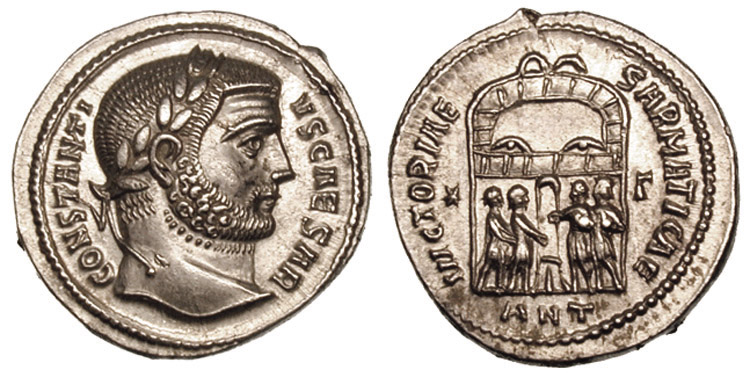
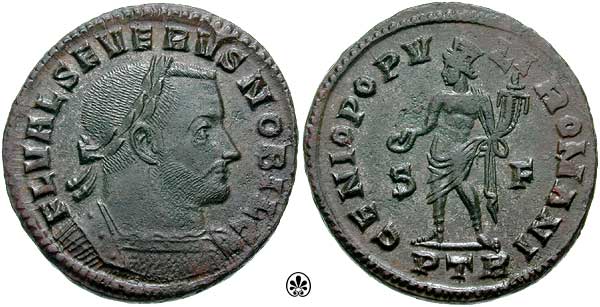
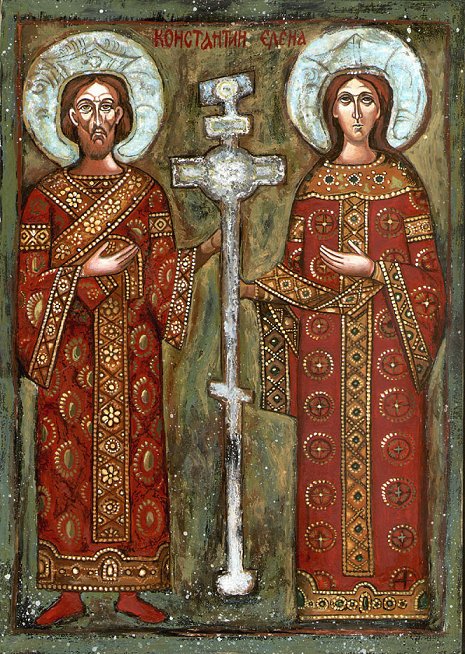
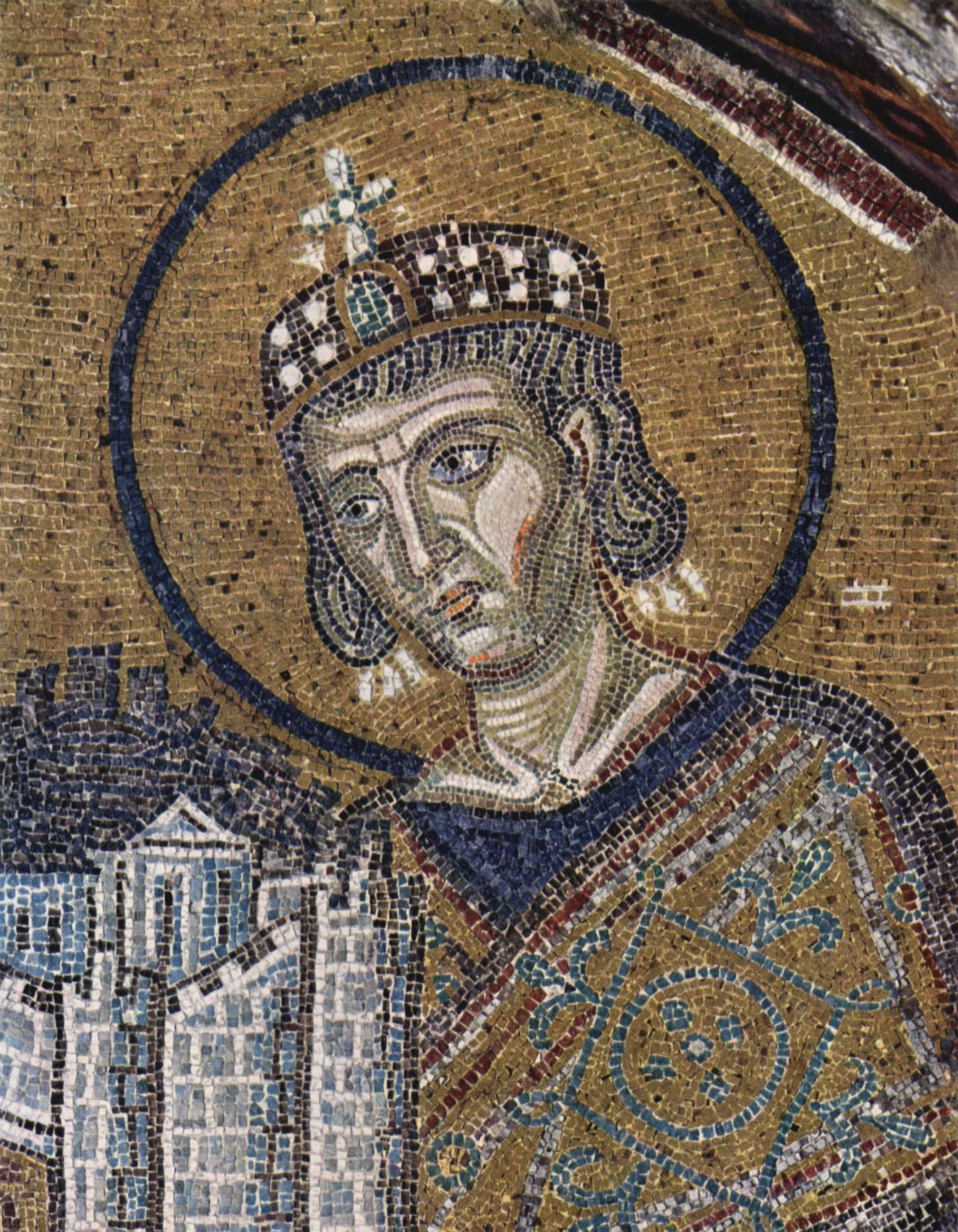
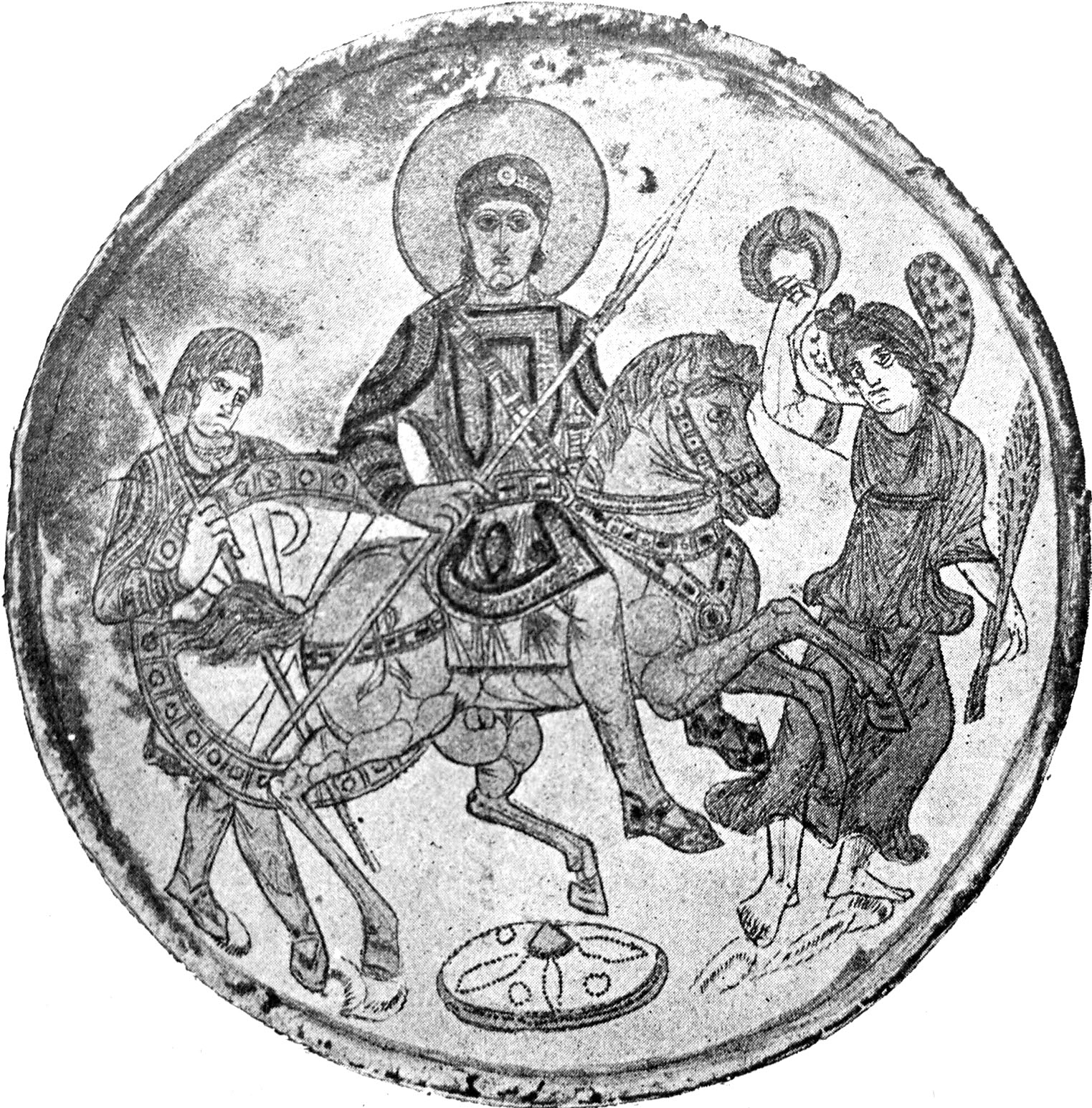
Diocletian and his colleague Maximianus voluntarily (or at least Diocletian volunteered) abdicated their power in 305, leaving their Caesars to become Augusti and nominating new Caesars. Thus Constantius I gained full power in the West and remained where he had held subordinate power in Britain and Gaul. When he died a year later, his armies declared in favor of his (illegitimate) son Constantine to succeed him (at what is now York, England), despite the existence of Severus as Caesar and legal heir. This led to a series of civil wars for power against various Caesars, Augusti, and usurpers that lasted until 323, and for Constantine to find the Christian faith of his mother Helena. Not surprisingly, the Byzantine author pays a lot of attention to the (re-)foundation of Constantinople, while John hardly pays any.
Constantine left the Empire to his three sons Constantius II, Constantine II, and Constans when he died in 337. Following the behavior of their father, they eliminated threats methodically, in their case at first from cousins; then Constatine II and Constans fought each other, as John relates in Chapter 78, while the Chronicon Paschale omits such fratricide, only alluding to Constantine's death. After that, from 340-350, the rough East-West split returned with Constantius II in the East and Constans in the West. While they were able to maintain a rough peace, religion divided them as much as power politics. After Constans was killed in rebellion, Constantius II ruled the entire Roman Empire; however, with internal rebellions challenging his power and war with Persia in the east – though the Chronicon Paschale believes that the city of Nisibis was miraculously protected in 350 in the emperor's merit (despite his Arianism) – Constantius named his cousin Gallus as Caesar to hold power in the West. However, he never really trusted Gallus, who was put to death after a few years.
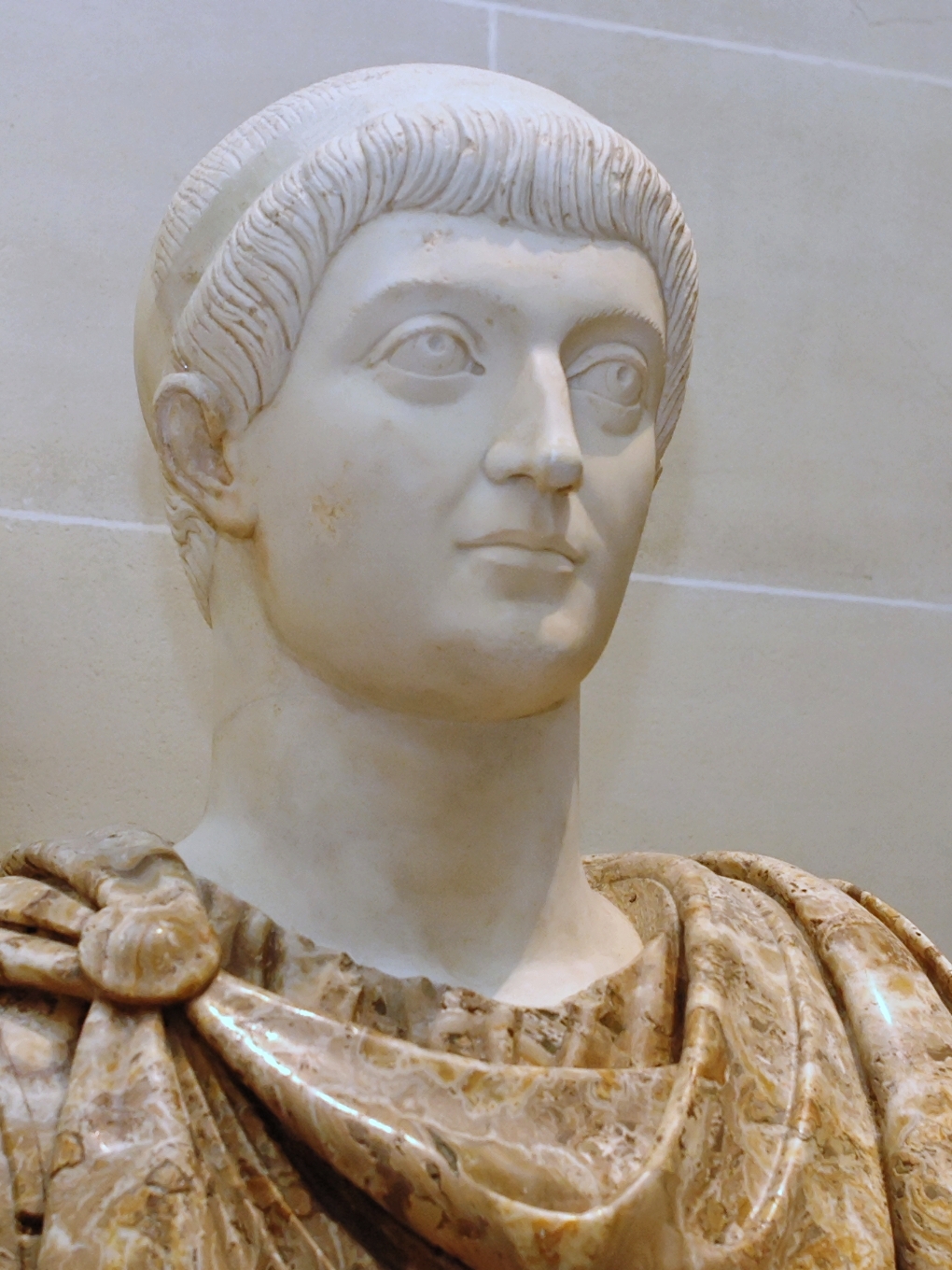
Soon, Constantius chose Gallus' brother Julian to take over as Caesar, as he still needed help. He trusted Julian even less, but Julian was smarter. Neither chronicler discusses Julian's military successes in northwestern Europe, thus giving rise to an implication that he rebelled due to his apostasy, for he had been raised a Christian but turned pagan. Anyhow, Constantius II died in 361 before the rift had turned to battle, and Julian became the legitimate Augustus of the entire Empire. While the two orthodox (or nearly so from the perspective of the 4th century) writers condemn Julian's persecution of Christians, they cannot but admit that he actually reversed some of the anti-orthodox decrees of Constantius because that allowed Athanasius to return from exile. Julian did give in to some pagan excesses (which the Christians historians make much of), but he was probably more tolerant than the Christian emperors of his era; at Chapter 80, John tells the story of how Julian allowed the Jews to try to rebuild the Temple in Jerusalem. Julian made war on Persia, but died in battle in 363 – both authors see this as divine punishment.
Jovian was emperor for less than a year. In praising him for his orthodoxy, the chroniclers try to cover up the surrender he agreed to the Persians on very unfavorable terms. Next was Valentinian, who chose his brother Valens as a colleague; the former took the West and the latter got the east. Again, there was a sectarian disagreement between the brothers, with Valentinian holding the orthodox position. Thus, whatever Valentinian did was good, and whatever Valens did was bad. Valentinian died in 375 and was succeed by his sons Gratian and Valentinian II, who had different mothers. Both writers completely omit the first great loss by the Romans to the Goths (or any other barbarian) inside the empire's borders at Adrianople in 378, where Valens died. They elide straight to the elevation of (the orthodox) Theodosius (chosen by Gratian). The Chronicon Paschale mentions intrigues attempted by Valentinian II's mother Justina, an Arian, against her step-son Gratian in 380, supposedly leading to his death. John, however, has it correct that it was an assassin acting for the British usurper Maximus who killed Gratian in 383. And that, as I have mentioned elsewhere, has caught me up to my reading in other histories.
I do not believe that there is a freely available translation of this portion of the Chronicon Paschale on the internet.
Now that we have separated the mythology of Greece from the legend of Assyria, I will continue my discussion of the Chronicle of John, Bishop of Nikiu. So far, John has written of Mesopotamian/Iranian "history" and some Egyptian "history." Next, he comes to legendary Greek history. Again, he conflates it with legend.
In Chapter 22, he writes of Inachus as a descendent of Noah's son Japhet; to the Greeks he was a deified/personified river (one of the many sons of Oceanus and Tethys), and he stands at the head of the genealogy of Argive mythology. John says he instituted worship of the Moon as Io; while this is a traditional identification, Io was considered a daughter or otherwise descendent of Inachus who was seduced by Zeus. John may have this in mind in the next chapter as Zeus has a daughter Libya with a woman that might refer again to Io; Libya married Poseidon (his first mention), and "named the country over which he ruled after" her. Among their sons were Belus and Agenor. Agenor moved and founded Tyre, and his sons were the eponymous founders of Syria, Cilicia, and Phoenicia. A Cretan king, in Chapter 24, attacked Tyre and stole away Europa to marry her; John considers her of the race of Zeus. In mythology, she was a princess of the line under discussion, but her seduction was also by Zeus. The following chapter again misses the connection—John mentions the Theban Laius and Oedipus, without explaining as in myth that their antecedent Cadmus arrived there while searching for his sister, Europa.
At Chapter 27, he turns to the Biblical Melchizedek, king of Jerusalem. He calls him "holy though of gentile origin," which is silly because he was a (seemingly older) contemporary of Abraham, the first Jew. The gentile distinction should be obvious. He extrapolates an awful lot on the Bible's lack of history for him – Jewish commentary usually identifies him with Shem, while Christians often relate him to Jesus. Even more oddly, he spends much more attention on Melchizedek than on Abraham, and almost none for Isaac, Jacob, or his children (including Joseph). It is only at Chapter 30 that he gets to the Exodus from Egypt, and with characteristic perspective from the Egyptian side as the Jewish. Egyptian and Jewish affairs continue through the time of David and Solomon.
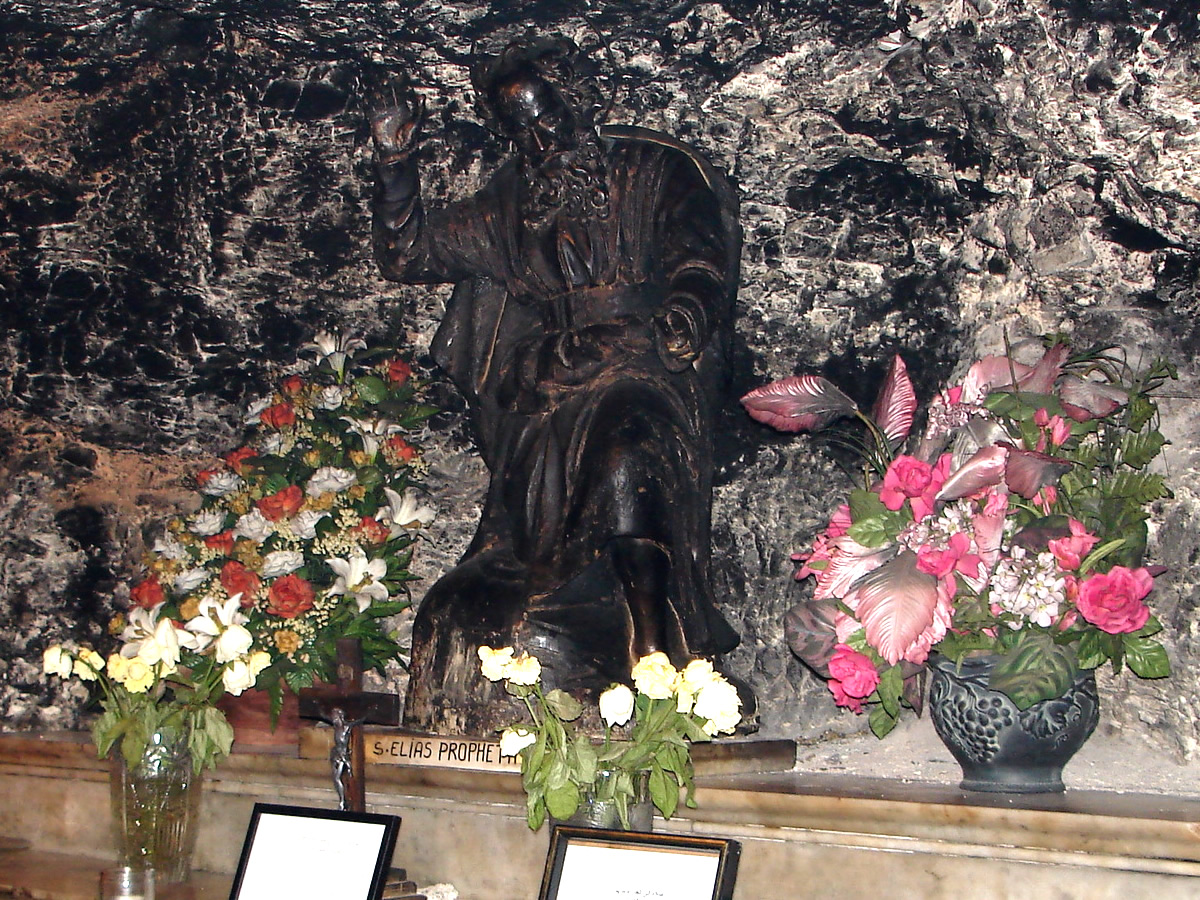
The chronology here is quite jumbled, with Greek events being equated in time with Jewish history, jumping from the time of Joshua, or the Judges, before the Exodus or after the institution of the monarchy. In Chapter 34, he says that "Prometheus and Epimetheus discovered a stone tablet with an inscription which had been written…in the days of the ancients…And Elijah the prophet interpreted the verses." As we had seen from Hesiod, Prometheus and Epimetheus were prior to mortal humanity, while Elijah lived well after the division of the Jewish kingdom in two. In Chapter 36, John says that Orpheus wrote a "Theogony." Heracles is again mentioned as part of the voyage of Jason and the Argonauts in Chapters 40-41. Chapters 45 and 47 discuss Troy a bit, although references to the Trojan War are very incidental.
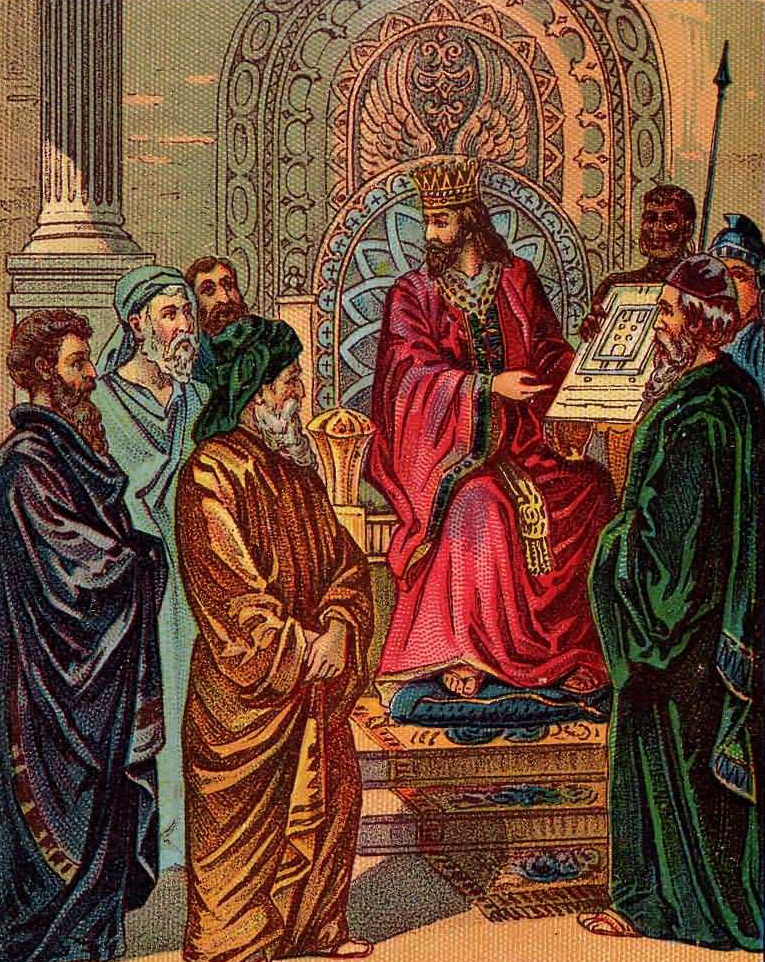
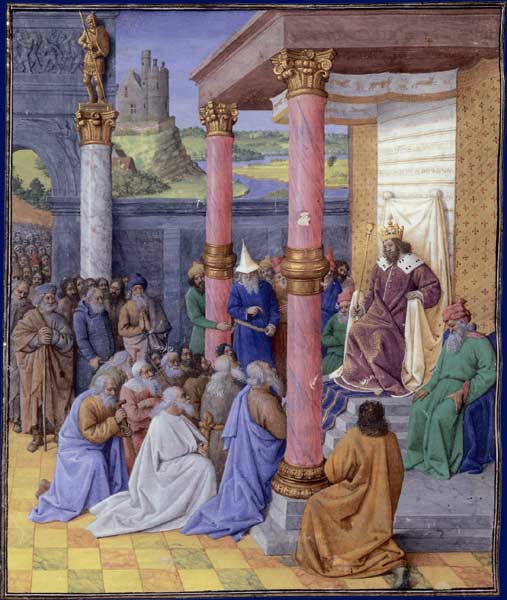
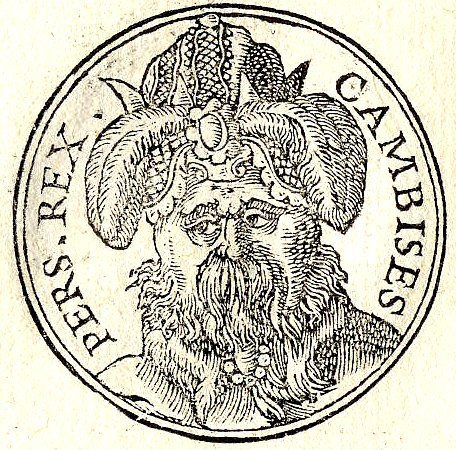
In Chapter 48, John moves directly from Solomon, who built the Temple, to Nebuchadnezzar, who destroyed it. John calls him a king of Persia, rather than Babylonia. After spending two more chapters on his conquests, using especially Apocryphal sources, he turns to Cyrus – who actually was king of Persia – in Chapter 51. John focuses on his relationship with Daniel, and his counsel aiding his victories. Cyrus' son and successor, Cambyses, reversed his father's pro-Jewish policies, and so had troubles in his conquest of Egypt, although he eventually emerged victorious. At the end of this long chapter, I think John has confused himself. He briefly mentions the final few Persian emperors before Alexander the Great, but it reads as if they directly followed Cambyses. This in follows neither the Bible nor Herodotus, and thus he skips over the Persian Wars against Greece completely. He has gotten himself even more out of place such that the Peloponnesian War is completely irrelevant to his purposes.
Looking at the events John chooses to recount, most of which do have plenty of parallels, it is interesting to think about the methodology (if one exists) behind that choice. He uses Greek mythology, fit within a Noahide (with all his emphasis on descent from Noah, however, he never actually wrote about the Flood!) genealogy, to give what really amounts to a geography lesson. He also is very Hellenistic in placing scientific or technological firsts in Greece. He also tends to see the Bible and kingship as the basis of history. Thus he writes about Melchizedek the king, but not Isaac and Jacob the patriarchs. Joseph, because of his relationship to the Egyptian pharaoh, is then an even more curious omission. Because the many Greek leaders in the Trojan War, though kings, function in a way we might recognize as democratic – and defeat the "Eastern" monarchy of Troy – he doesn't pay much attention. When the democratic/oligarchic/timocratic Greeks defeat the Persian Empire, or fight amongst themselves – even though by this point we are at very clear and historically attested material – John doesn't even say anything.
In my next post, I will continue with his take on Rome and Macedonia.
I mentioned twice starting with Herodotus and Livy. Conceptually, though, it is important to have a grounding in prehistory, as well. By "prehistory" I mean two things: a) that which one should understand before reading history, and b) that which occurred before people began to write history. The second point would refer to anything that happened before the events Herodotus wrote about; while there are certainly recordings of prior times, they were either transmitted orally or not written as history but for another purpose. Far from making these events historically remote, the versions that were written – and survived – are of the greatest significance in understanding the ways people of historical times thought. Until rather recently, the authority of tradition had few challenges. For my purposes there are two and a half traditions to look at for the foundations to prehistory.
The first is the Jewish tradition, and is based upon reading the Tanach (Jewish Bible). Exact historical accuracy is not the point, and I don't really want to get into arguments about that. Instead, what matters is that for over three millennia, Jews, and to a lesser extent Christians, and to an even less extent Muslims, have lived within a culture and context of the Tanach holding moral truth to them.
The second tradition is Greek mythology, and the final half includes any variations in Roman mythology. While the relationship of mythology to pagans is not the same as the Bible to monotheists, it still provided a context and explanation for why things existed as they did. I will be getting into the Archaic and Classical literature is most relevant for such foundations in the future. In addition, the transitions from legend to history tell us something about when the Classical writers themselves saw pre-historical times, rather than times that seemed very similar to their own.
We all know the advice about learning from history to avoid repeating mistakes. It is fair to say that even if, today, we don't necessarily see the stories in these traditions as historical, ancient people were even more likely to turn to them for help in their own lives.
I think these threads are the most important for understanding the history of Western Civilization. Obviously, Christianity plays an outsize role as well, and I have included it in my reading (as here and here). That religion, of course, developed during historical times, and so requires no prehistory beyond the Jewish tradition. Egyptian, Mesopotamian (Sumerian, Chaldean, Assyrian, Babylonian), and Iranian (Medean and Persian) traditions have also played some significance. However, until much more modern times, most of the Western understanding of these cultures has been mediated through the other traditions – primarily Greek, but also the Bible. At the end of antiquity, Germanic/Norse peoples conquered much of Europe. My reading is increasingly bringing me into contact with them, but for the most part the growth of literacy (even for a tiny, educated minority) was coeval with the proliferation of Christianity. Just as with any other nations, writers will tend to explain more or less of their background depending on how exotic he finds them.