Showing posts with label Augustine. Show all posts
Showing posts with label Augustine. Show all posts
Wednesday, September 29, 2010
Saints and Sophists: 383-388
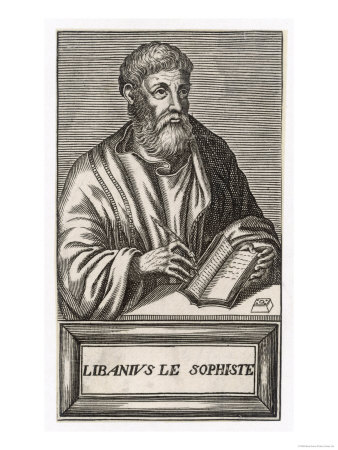
Having written about the high politics during the period between the deaths of Gratian and Maximus, I would like to focus a little more on the three personalities I called "private views" in that post. Except I suppose for the "modern histories" area, my choice here involves more discretion than those areas that are consciously written as histories. In the notes to some of the better annotated books, or in Gibbon, I often see references to other writers of the era, who might just as well have been a part of my reading. By this point in time, many letters and sermons by churchmen are still extent, including Ambrose. For the time being at least, the two Christian leaders I am reading are Jerome and Augustine; again they too have numerous writings, and I would have liked to read Jerome's historical writings if they were more easily available, but I am focusing on the two works I have already mentioned. The other writer I am reading is Libanius, who was a pagan teacher in Antioch, Syria. A. F. Norman translated the Autobiography and Selected Letters in two volumes and Selected Orations in another two volumes for the Loeb Classical Library. The legal code of Theodosius (which seems to have begun before his reign) is heavily referenced in the notes to Libanius, and in Gibbon, because it provides dates for a lot of events.
The years specifically under discussion here are the ones when Augustine converted from the profession of sophist, like Libanius, to a Christian thinker (and future saint of the church), like Jerome. While Augustine later had correspondence with Jerome—including through Orosius—I don't think he ever communicated with Libanius. Despite my criticism of Jerome's words on Syriac, he clearly had facility with several languages, while Augustine and Libanius were not very comfortable with the other's tongue (Latin for Augustine and Greek for Libanius).
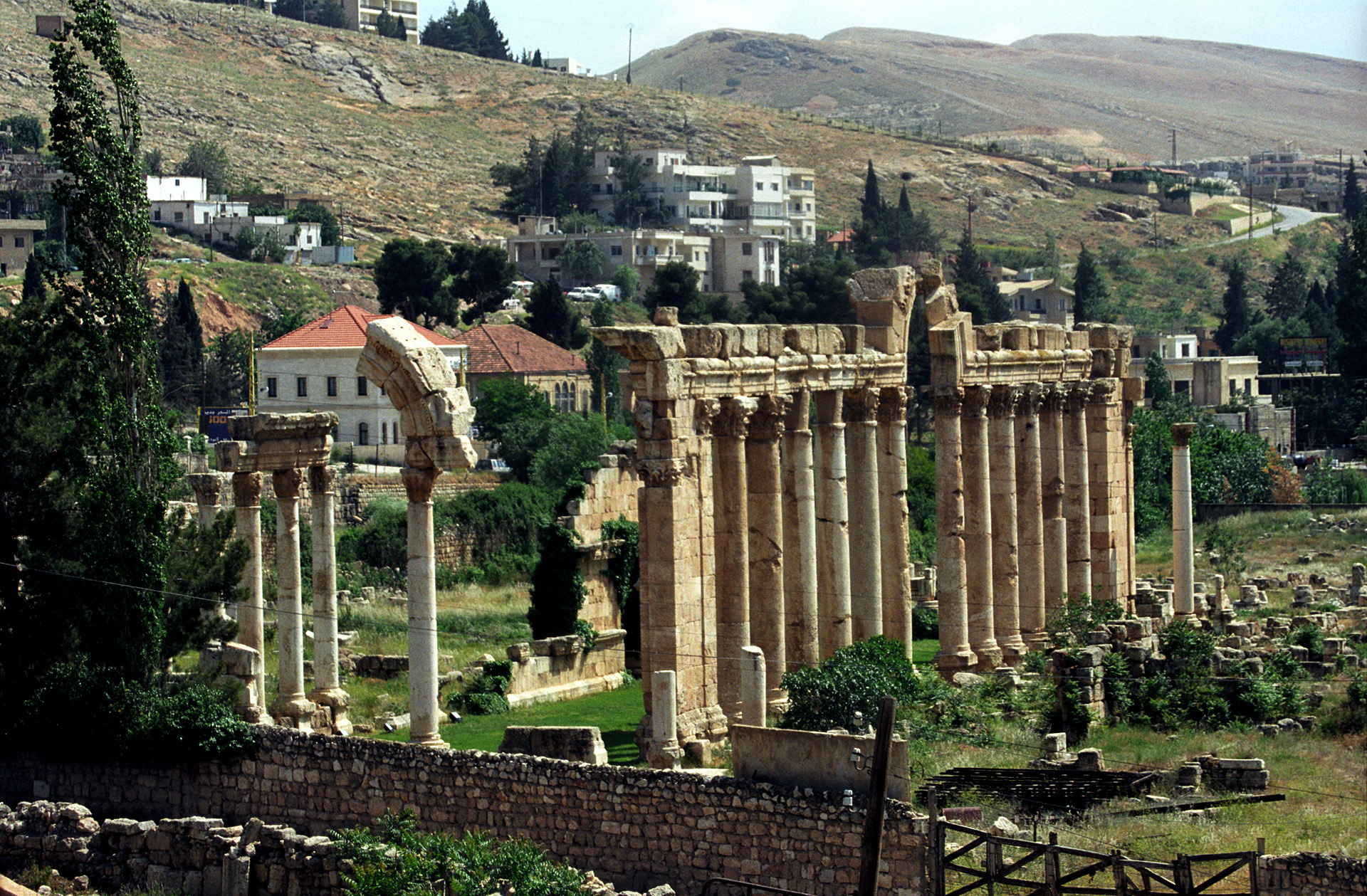
Antioch had been the capital of the Hellenistic-Seleucid Kingdom of Syria, and once fully absorbed into the Roman Empire in the 60s BCE, was a leading city of the eastern half of the empire. From the 50s BCE, under Crassus, and on through Julian more than 400 years later, the city maintained its importance as a kind of staging ground for the army before campaigning against Parthia or Persia, although its power was eclipsed once Constantinople become the second capital. Libanius came from an established family of the city, and after some experience teaching in some other Greek cities, had become the official sophist of Antioch by this time. Like the sophists Plato had Socrates rail against some seven or eight centuries earlier, sophists taught rhetoric, and were more concerned with persuasion—or manipulation—than truth. The position doesn't have an exact modern equivalent, but the closest analogy would be a superstar law professor, who also regularly had monologues on radio or television. In addition, he was something of an official spokesman for the city. Emperors from Constantius II to Theodosius paid attention to him; unsurprisingly, his best relationship was with Julian. By the 380s, he was an old man weighed down with migraines and gout, and his main concerns were the security of his illegitimate son, the welfare of the people and city of Antioch, and the protection of the rites of traditional (pagan) religion. His writing gives an interesting perspective of what life was like outside the imperial presence; as a judge of the major figures of his time, though, he consistently shows himself obsequious when they're in power, but much more critical when they're time has passed.
I should note that Antioch had been suffering from drought conditions—near famine if they had been isolated—since the summer of 381 or 382, and continued throughout the years under consideration here. Libanius' 50th oration was written about 384, and is entitled "For the Peasantry, About Forced Labor." I quite enjoyed this oration's message, in which Libanius complained that magistrates were impressing privately owned animals into carrying material without compensation. He is quite passionate about the importance of rule of law and private property—that if officials were allowed to do this for the government's service, nothing is stopping them from imposing even more onerous burdens—as well as a rather sophisticated idea of economic costs: even if these animals weren't carrying anything for their owners at the time, the animals are still weakened for future use. Like many of his speeches, it is written as an appeal to the emperor, though he almost certainly hoped that by using his name the closer officials would listen and make things right themselves. Oration 30, written about 386, is entitled "Pro Templis" and is a request that the emperor protect the ancient pagan temples. He holds a traditional view that worship of the g-ds had led to the greatness of the Roman Empire, the view against which Orosius argued. Thus, allowing harm to come to the temples would go against the emperor's political interests—even though Theodosius was a Christian and thus didn't believe in those g-ds—and, in addition, the temples were imperial property and should be preserved as art even if not for religion's sake. The threat was coming not so much from legal means—although the law was ever more constricting the scope of pagan religious freedom—but from the enthusiastic violence of monks.
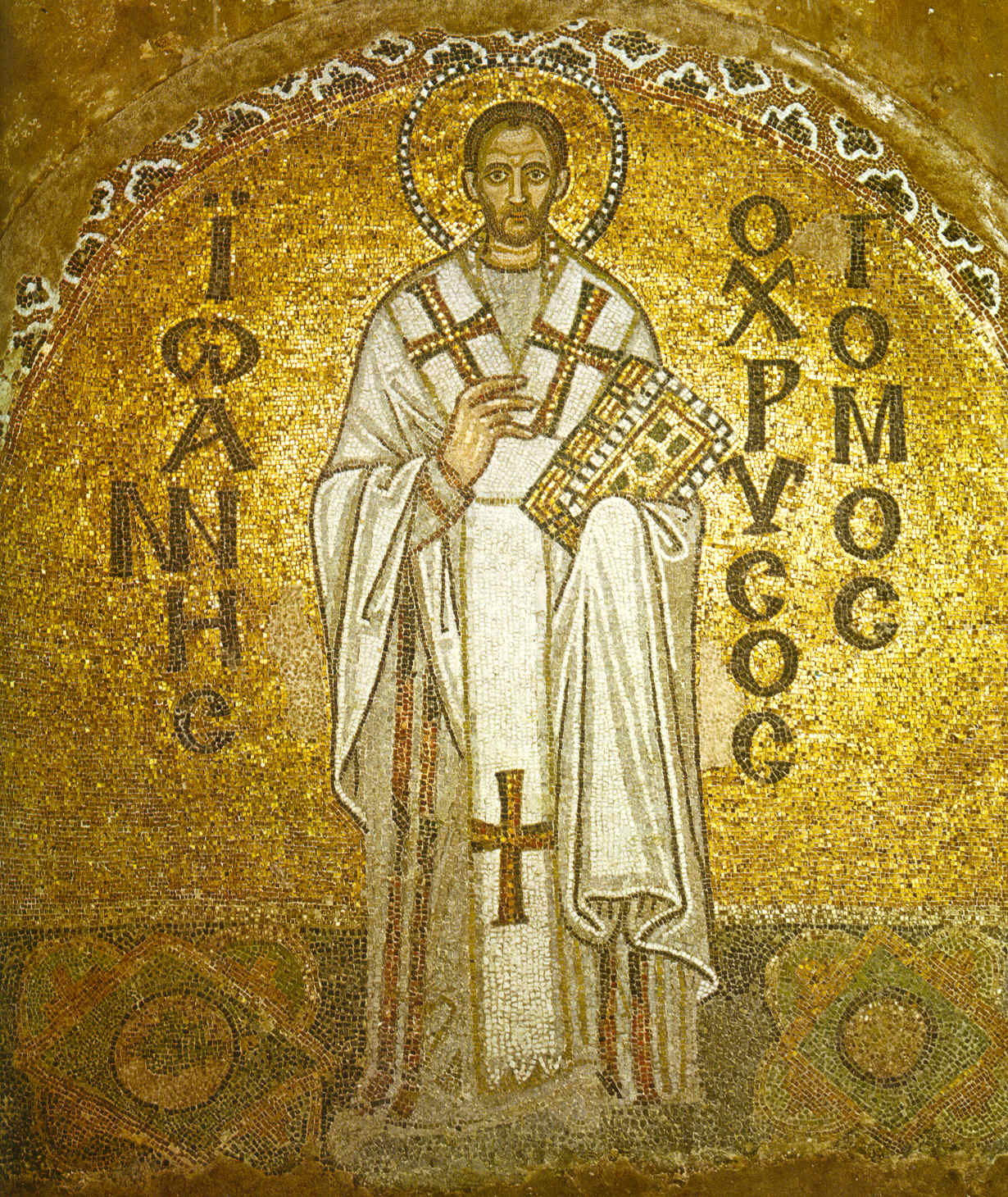
Orations 19 to 23 (the 23rd is actually the earliest) describe an event in Antiochene history important enough that Zosimus was confused by it, and Gibbon synthesizes a portrait meant to characterize the clemency (at least in this case) of Theodosius. In 387, Antioch was still suffering from the near famine conditions, but the imperial taxes were increasing due in part to the coming 10th anniversary of Theodosius becoming emperor (when he would be expected to give liberally to his soldiers), and also likely the preparations for the war against Maximus. Some men of Antioch, in frustration, had defaced statues in the city of the imperial family, an act akin to treason. As punishment, the emperor stripped Antioch of many of its privileges; fearing worse, many of the men and women of the city fled. Libanius chided the exiles for their pessimism, while appealing to Theodosius for rescinding the punishment. Along with John Chrysostom—at this time a Christian priest in the city whose sermons from the time survive, and later archbishop of Constantinople—his pleas were successful.
A very limited selection from Libanius' works are linked to at Wikipedia.
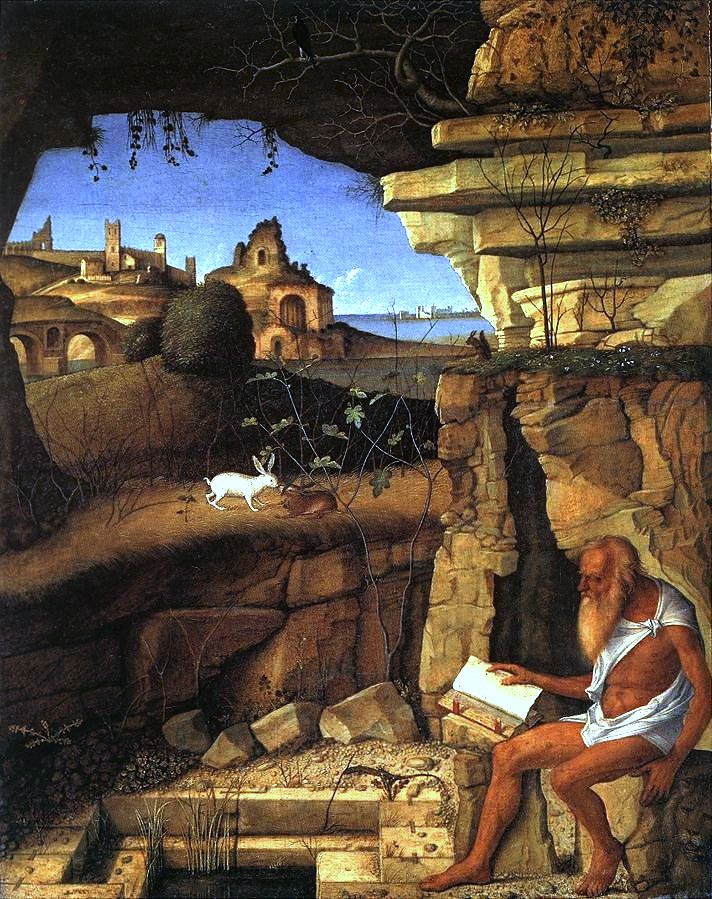
Jerome paints a far different picture of Christian zeal. The main idea he writes about in the letters I read from the mid-380s, especially in the very long Letter 22 to Eustochium, is asceticism, primarily through celibacy. Indeed, all the letters of the period in this Loeb collection are to women: he believes virginity superior to marriage, and widowhood superior to remarriage. In Letter 38 to Marcella, he commends reading constantly as a way to drive out sensual desires. In Letter 22, Jerome describes the rules that then existed for (male) monks, either as hermits or in groups, but the development of cloisters or convents for women happened later.
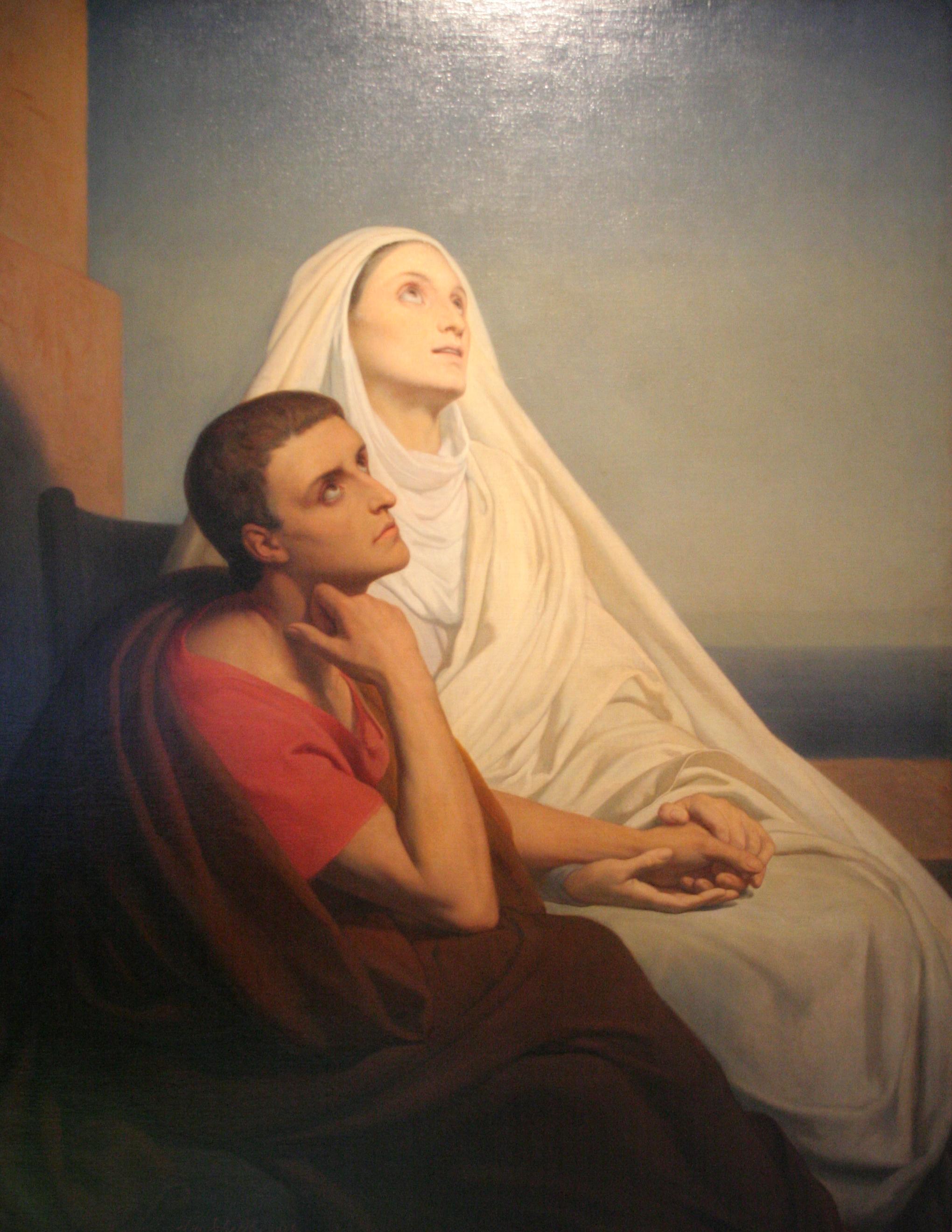
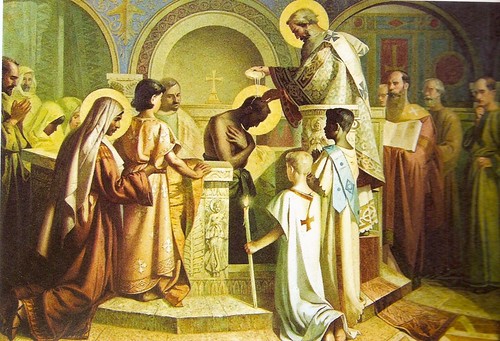
Augustine was, along with Paul and Constantine, the most significant of converts to Christianity. Like Paul, he furthered the development of Christian theology for future generations. Like Constantine, he had a Christian mother, Monica. However, unlike the other two, he did not claim a miraculous moment of epiphany that inspired his conversion. Instead, he describes his mental process over many years from Manichaeism to Neo-Platonism to Christianity. In addition, Augustine had been educated for and was now practicing as a teacher of rhetoric; also like Libanius, he had an illegitimate son—unlike Libanius, he believes this holds him back from his great temporal ambitions. In 384, he moved from Rome to Milan, which was arguably a step up because, as we saw in the post below, Emperor Valentinian II was staying at Milan. Soon, Monica arrived there from her home in North Africa, as well. It is she who emerges as the real hero of this portion of the Confessions, constantly praying for her son. Yet, even as Augustine admits to a changing understanding of Christian ideas, as he moved from being a Manichee "hearer" to a Neo-Platonist around the time he moved to Milan, he maintains an idea that to be Christian he must be an ascetic, like Jerome prescribes, and because of his lusts he cannot do that. It is hard to reconcile that need, however, because of the great importance of his mother, whose influence was through fertility not chastity. I cannot help thinking that rather than his eventual conversion suppressing his ambitions, as he wants us to think, they merely transferred them to a spiritual nature; Jerome, following Paul, had allowed that one needn't be celibate to be Christian, but Augustine knew that celibacy did make it a lot easier to be a saint. Eventually, he came to a state of mind that he no longer had the same sexual needs and had intellectual approval of Christianity—though still through a very Neo-Platonic lens—and Ambrose baptized him on Easter Day, 387. He resigned from his teaching post, where he had to tell lies, and soon after his mother passed away.




Monday, September 27, 2010
Revenge for Gratian: 383-388
Now that I have read my next segment in history, I am not entirely sure how I will blog it, especially considering my use of 16 different authors – mostly those listed in my previous rotation, plus those I have brought "into the mix." I will start by explaining how the works can be divided:
- Primary narrative histories: Orosius (Book 7, Chapter 34-35) and Zosimus (Book 4, p. 82-88)
- Chronicles and foreign histories: Chronicon Paschale (years 383-389), John of Nikiu (Chapter 83, Section 15-36), al-Tabari (p. 68-69), Jordanes (Chapter 28, Section 145), Gregory of Tours (Book 1, Chapter 43), Bede's Ecclesiastical History of the English People (Book 1, Chapter 9) and Greater Chronicle (years 4338-4349), and Anglo-Saxon Chronicle (year A.D. 381)
- Ecclesiastical histories: Socrates (Book 5, Chapter 11-14), Sozomen (Book 7, Chapter 13-14), Theodoret (Book 5, Chapter 12-15), and Philostorgius (Book 10, Chapter 6-8)
- Private views: Libanius' Autobiography (Sections 212-274), Letters (146-153), and Orations (50, 30, 45, 33, 23, 19, 20, 21, & 22); Jerome (Letters 22, 38, 40, 43, 44, &45); and Augustine's Confessions (Book 5, Chapter 9, Section 16 to Book 9)
- Modern histories: Montesquieu (Chapter 19) and Gibbon (Chapter 26-27)
I wrote briefly of Gratian's death following the British army's proclamation of Maximus Magnus as Augustus, as well as the incorrect version in the Chronicon Paschale attributing it to the Empress Justina. That Maximus was chosen by an army is not unusual—Valentinian I (Gratian's father) and his predecessor Jovian had both been elevated by that method—but because the choice had been made during the reign of a legitimate emperor rather than an interregnum, Maximus could only be a usurper. Nevertheless, the general picture of Maximus was that he was a mature leader, worthy of the office more than the method of attaining it. While some of the works condense the history, it seems that he was content with northern Europe for some years, and that Valentinian II (led by his mother Justina) out of weakness and Theodosius out of attention needed elsewhere, were willing to confirm his as emperor by treaty for a time at least. Many write that Maximus was a British native, but Zosimus explains that he was a Spaniard like Theodosius, and that they had served together as soldiers.
There is some controversy as to Maximus' religion. Orosius thinks that the only area where he was weaker than Theodosius, but Theodosius was the first orthodox emperor of the East since Constantine I (the Great), so that doesn't necessarily make Maximus a heretic or pagan. Zosimus, a pagan, doesn't say, but implies that he was an agent of retribution against Gratian for the latter's novel refusal to accept the traditional Roman priestly role of the emperors. John calls him an Arian. Gregory highlights his audience with a catholic saint. While Theodoret is the most direct about it, the other orthodox ecclesiastical historians and Bede agree that Maximus was either a self-appointed or Providential instrument of punishment for Justina's persecution of Ambrose, the bishop of Milan, as after three or four years he threatened to cross the Alps into Valentinian's territory, forcing the young emperor and his mother into exile at Thessalonica as suppliants to Theodosius. The weight of the evidence, to me, suggests Maximus was orthodox.

To back up a bit before following the imperial family to Macedonia, I want to say a bit about the issue of Ambrose. During this period, Ambrose was probably the most important bishop in the catholic and orthodox church, as Milan was one of the leading cities of the empire and the Eastern cities were still in some turmoil with Arianism—Ambrose had been a teacher to Gratian, as well. Justina wished to introduce that turmoil in Milan, under a request for toleration of Arianism and the ability to use a church in the city. Ambrose refused, and the Milanese people supported him. Not yet a Christian (although moving in that direction), Augustine was in Milan during these years as a teacher of rhetoric. He witnessed the events that came to a head on Easter in 386; the next Easter he was baptized by Ambrose.
Zosimus—for whom they're all infidels, so the religious aspect mattered not—provides the best narrative of what happened in Thessalonica. Theodosius' wife—and mother of his sons—had recently died, so Justina arranged for her daughter, the princess Galla to—seduce is probably too strong a word, but then again it might not be—attain Theodosius' interest. Being young and pretty, she was successful, and once she had his interest she said she would only marry him after he restored her brother as emperor of the West. Theodosius led his legions into Italy, and was able to achieve a victory over Maximus with as little violence and as targeted in killing as Maximus had been against Gratian, allowing Valentinian II and his mother to return in triumph. The Chronicon Paschale—for whom the whole issue of Maximus was unknown—says that Galla was the first wife, likely because it was distasteful to think that the orthodox hero had married an Arian after having been wed to an orthodox woman.
Theodosius gained much by these actions. Gratian had appointed him emperor, so his eventual execution of revenge against the usurper was a fulfillment of his duty to his benefactor. By marrying Galla, he created a dynastic tie to her father Valentinian I, thus adding to his own legitimacy. And finally, he secured his status as senior emperor over Valentinian II—although he was much older, he had been appointed by Gratian at a time when Valentinian was (at least in name) already Augustus.
Thus, during the five years after Gratian was murdered, his true death was avenged by Theodosius against the rebel Maximus, and his religion and fictional death were avenged by the steadfastness of Ambrose against the Arian empress Justina.
Sunday, September 26, 2010
Augustine: Addendum to Note on Lexicon
Like Jerome, I am continuing with Augustine with my current reading of history from my last, and I have discussed him for his relationships with Optatus and Orosius. I am reading the Confessions, as translated by Henry Chadwick for Oxford World's Classics. I posted last week about the lexicon of "catholic" and "orthodox." In Book VIII, Chapter vi, Section 14, Augustine describes the Christian religion he (eventually) joined as the "orthodox faith and…the Catholic Church." I think this agrees with and illustrates the point I was making about the equivalence of the two terms at this point in history.
A different translation is available at the Christian Classics Ethereal Library.
Tuesday, September 21, 2010
Orosius: History as Apologetics
The final history I have read to catch up to 383 is that by Paulus Orosius, called The Seven Books of History Against the Pagans (translated by Roy J. Deferrari for the Catholic University of America Press). Of those seven books, I read about six and three-quarters, but I will be considering him my lead source for the final portions of the book, which occurred during his lifetime. As the introduction explains, Orosius was born sometime during the decade of the 380s, in what is now either Portugal or Spain (xv). His homeland was invaded by the Barbarians when he was a young adult, and already ordained a priest, he left – whether it was intentional or not, he arrived at Hippo in North Africa to learn from Augustine (xv-xvi), who we have already seen in my post on Optatus. A year or two later, in 415, he wished to learn from Jerome as well, who was then near Jerusalem; Augustine trusted him with some of his own correspondence as well as a recommendation (xvi-xvii). While in the Holy Land, Orosius took part in the Council of 415 at Jerusalem, on which he wrote the Liber apologeticus, then returned to Augustine with responses from Jerome; his departure from Hippo was cut short due to continuing turmoil in the Iberian peninsula (xviii). Augustine accepted him back, and commissioned him to write the History to flesh out some of the arguments he was working on in his own City of G-d (xviii-xix and Prologue to Book I, page 3-5). As I have mentioned, some writing by both Augustine and Jerome – two of the most important theologians in the history of the Latin church – also make a part of my reading project.


The basic problem that Orosius is using his History to solve for the church is to refute the pagan belief that "present times [are] most unusually beset, as it were, by evils because there is belief in Christ and worship of G[-]d, and increasingly less worship of idols" (Prologue to Book I). While the (Western) Empire had not yet fallen by the time he wrote the book, and at least up to the narrative through Gratian's death he doesn't seem to think it inevitable, he's basically trying to preempt people from blaming Christianity for the fall of the Roman Empire. Toward the end of the 5th century, the pagan and Byzantine historian Zosimus believed just that; modern historians, such as Henry Adams, have made a similar claim. Of course, Orosius and Zosimus were looking at the issue providentially – "my deity is stronger than your deity" and all that – while the modern argument is more cultural – to wit, the religious conversion in the Empire accompanied a cultural transformation that undermined the values and institutions vital to Rome's military greatness. His method is to show how war and other disasters existed in every period, and also to an extent to minimize the problems of his own time. Secondarily, he attempts to explain the ways that history shows positive proof of Christianity.
The first of these is the bulk of the work, but is utterly derivative at least until the point that Eutropius ends during the reign of Valens, for which reason I have not found it necessary to get the book until now. With the end, he is putting his own knowledge into the narrative. The sources he names are not any different from the ones available to us, and for the most part those I have already read. He uses both pagan and ecclesiastical historians, including at least one Greek (Polybius), though the citation may itself be derivative (or through translation). As the special index for it attests, the number of direct quotations from Scripture is rather low, and I assume he had access to Jerome's Vulgate, rather than any of the earlier translations of the Bible into Latin that were considered quite inferior. Thus, Orosius' History's survival and influence (in the Middle Ages, at least) is due not to his originality or quality, but Saint Augustine's imprimatur.
Augustine focused on the city of G-d; for Orosius, the "City" (I.1, passim) is Rome. He is writing a full history, abbreviated as it is compared to his ultimate sources like Livy, not a chronicle. Still, his dating system by Roman years, before or after the founding of the city, is instructive compared to John's Biblical and imperial system and the Chronicon Paschale's consular years and years from creation. Even amid the beginning of the breakup of the Western Roman Empire, Orosius sees it as the goal toward which history has been driving. Nevertheless, his project is a full world history.
Rather than using mythology to display geology as John of Nikiu did, Orosius actually elaborates a full description of the known world's regions to begin his narrative in Book I Chapter 2. Although the Romans had some limited contact with China, Orosius doesn't extend beyond India to the east.
At II.1 and VII.2, he explains that he conceptualizes history as beginning with the Babylonian Empire and ending with the Roman Empire. He finds parallels between these empires of East and West, some in year counts, others that Babylon fell as Rome rose. As lesser empires, he also finds a place for Macedonia/Greece in the North and Africa/Carthage in the South. The last is a bit out of place, both from the Biblical idea (e.g. Daniel) that would have the fourth (second chronologically) empire as Persia/Medea. Carthage is also out of place due to the information Orosius gives on it. He on discusses Carthage in context of the Punic Wars, which cover the bulk of the fourth book; even the foundation story of Dido doesn't come until IV.6, rather than other events before the beginning of Rome. While he makes clear that Carthaginian power had come to extend over much of North Africa, the Iberian Peninsula, Sicily, and other islands by the time the First Punic War began in 264 BCE, he does very little to vitiate the paucity of historical knowledge on Carthage at its apex, compared to the other empires, either in his own narrative or by pointing to another, as he does at times.

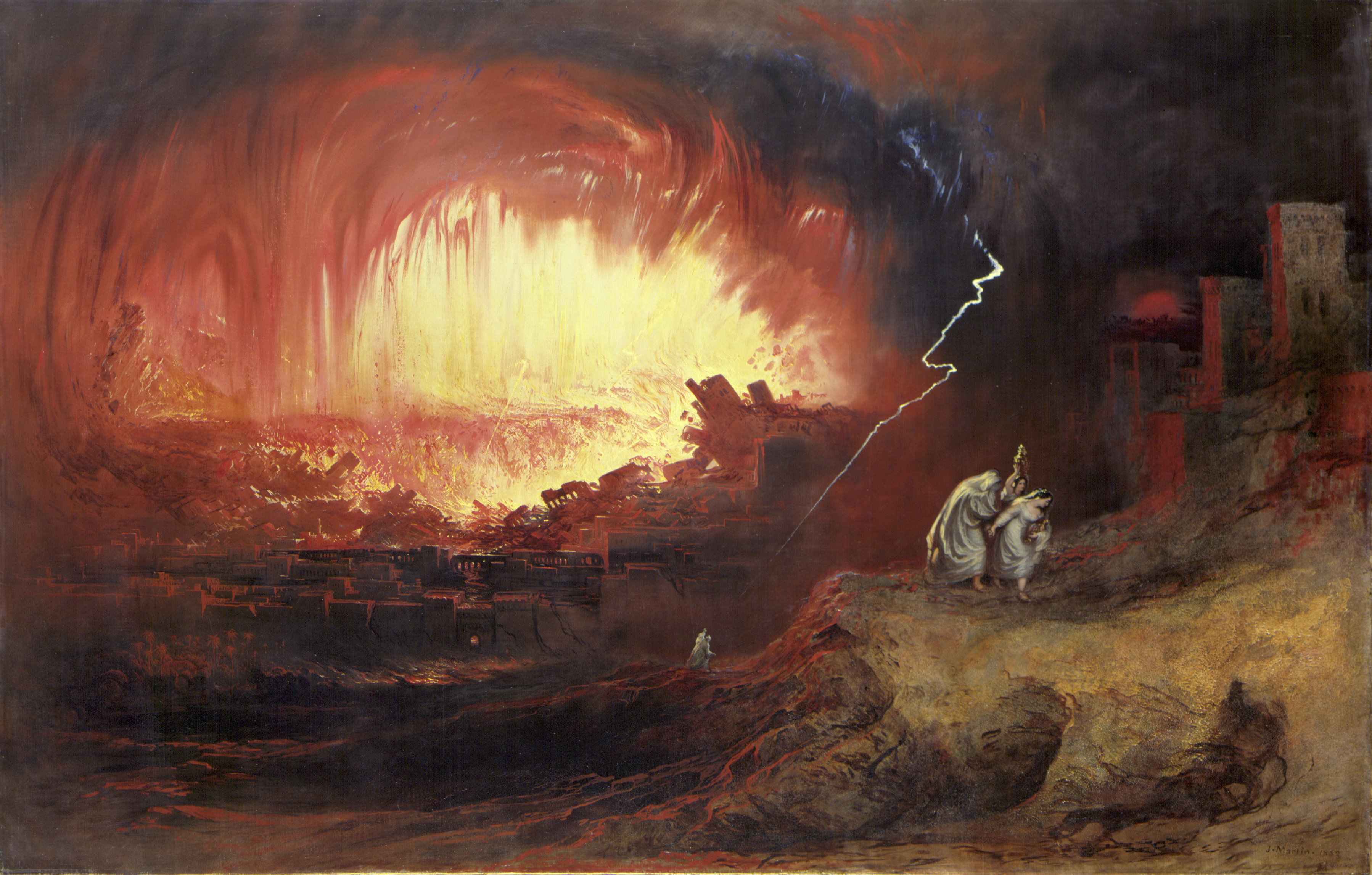
As the title of the history might be trying to suggest, there is little about Jewish history. Rather, the Jewish Bible is used to talk about Adam (I.1,3), Noah (I.3), Sodom and Gomorrah (I.5), and Joseph (I.8) and Moses (I.10) in order to discuss Egypt. Egyptian legend and Greek mythology also inform Egyptian history, and Greek mythology also informs ancient Greek and Trojan history; Orosius is better able to escape from Hesiod than John, but he cannot ignore the mythological foundations completely. At least indirectly, though, he does begin within his system. To start the narrative in Book I Chapter 1, he writes, "Since nearly all men interested in writing, among the Greeks as among the Latins, who have perpetuated in words the accomplishments of kings and peoples for a lasting record, have made the beginning of their writing with Ninus, the son of Belus, king of the Assyrians, because they wish it to be believed in their blind opinion that the origin of the world and creation of mankind were without beginning; yet they explain that kingdoms and wars began with him as if, indeed, the human race up to that time lived in the manner of beasts, and then for the first time, as if shaken and aroused, awoke to a new wisdom." He, instead, calculates that Ninus was a contemporary of Abraham, some 3,184 years after Adam, the first man; those years "have been omitted or unknown by all historians," though he is able to refer to Noah later. Two thousand and fifteen years after that, Augustus Caesar was emperor of Rome and Jesus was born. The geography in I.2 associates Assyria with the Iranian lands; at II.2, Semiramis, the wife and successor of Ninus as ruler of Assyria "restored the city of Babylon"; and VII.2 calls Babylon "a city of the Assyrians." Thus, we can see that Orosius, in calling Babylonia the important Eastern Empire in his system of history, intends to at least roughly include Assyria and Medea/Persia in the equation.

Before turning to the main subject – Rome – I just want to state my disappointment in his treatment of Classical Greece and Hellenistic history. Orosius does nothing to supplement the gap in history between the end of the first generation of the successors to Alexander the Great and the end of the 3rd century when the Hellenistic kingdoms start to appear in Roman history.
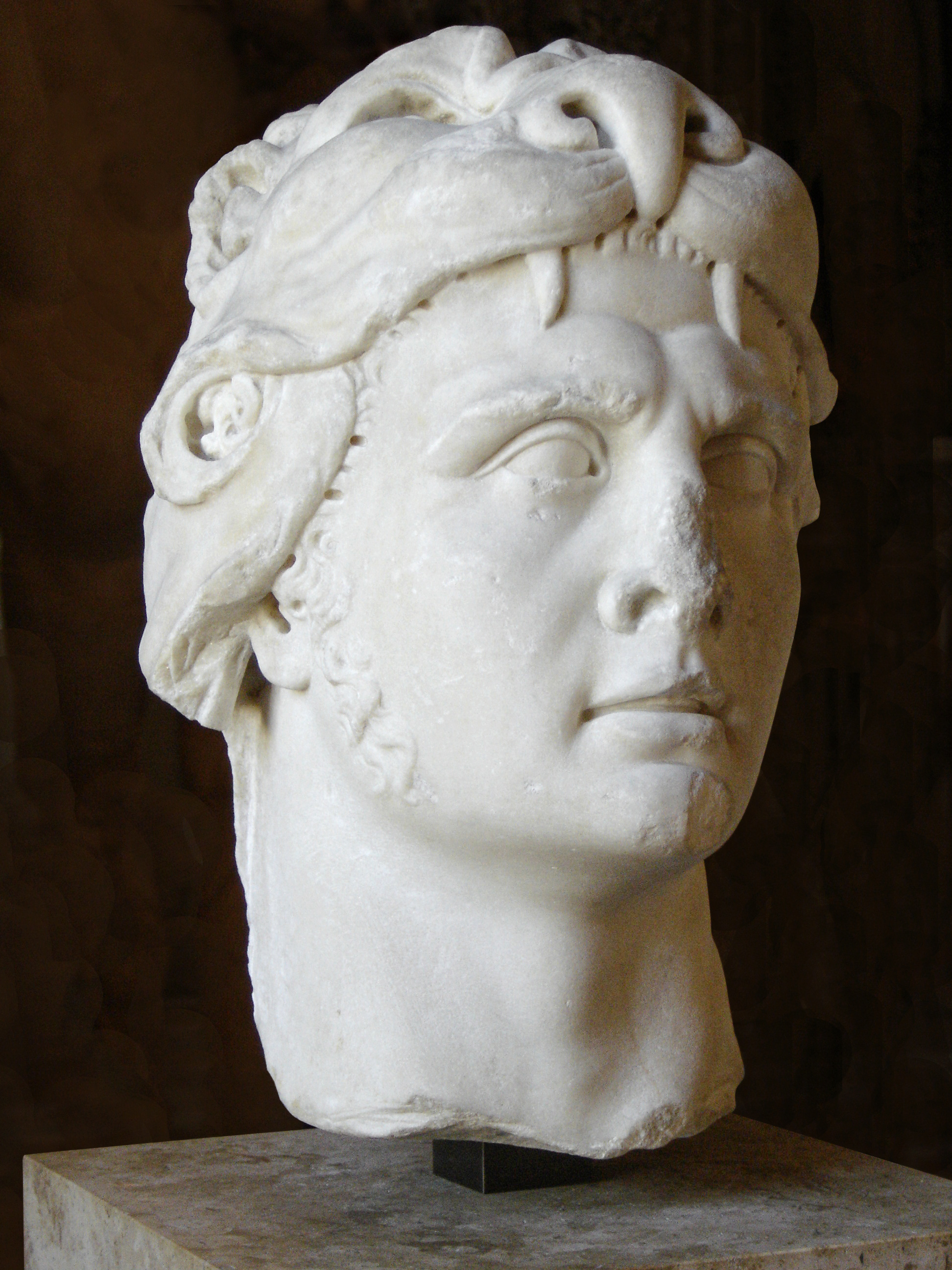
Just like the other empires, Orosius' history of the City of Rome and the Empire it won is derivative, and although it is treated more comprehensively, I will not go through the entire narrative. As elsewhere, he constantly compares the wars Rome faces with those of his own time, and prefers the latter. Yet, as he goes through a litany at the end of Book V (24th chapter) of all the wars Rome was fighting simultaneously early in the first century before the common era – civil wars, wars against slaves, against Mithridates, wars in Spain, in Macedonia, in Dalmatia, in Pamphylia – one can't help but feeling how impressive and vast Rome's military resources were to not only fight in so many places at the same time, but win. Unwittingly, he proves the dictum of Pyrrhus still applied two centuries later: "if I conquer again in the same manner, I shall return to Epirus without a soldier" (IV.1) – Rome's reserve of soldiers appeared inexhaustible. For all Orosius' optimism, one doesn't have the sense that it is still true in the fourth century of the Common Era.
Since I have already written more than I expected, I will save my comments on the Christian era to the next post.
A different translation is hosted by Google.
Monday, September 6, 2010
Optatus: Schism in Africa
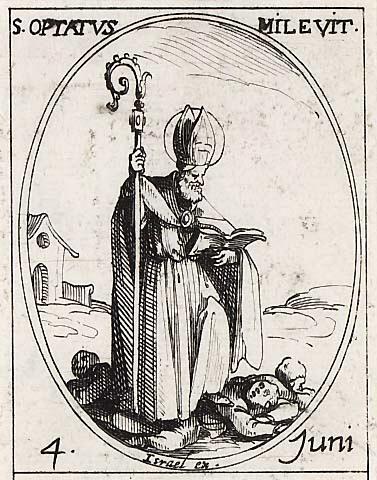
My current reading is Optatus' Against the Donatists as translated and edited by Mark Edwards for the Liverpool University Press and its Translated Texts for Historians series. Optatus was a bishop in the North African town of Milevis, now in Algeria, and an elder contemporary of the theologian Augustine (though the notes occasionally point out instances of disagreement). He wrote in the mid-380's about a controversy between the Catholics and a separatist group of Christians known as the Donatists.
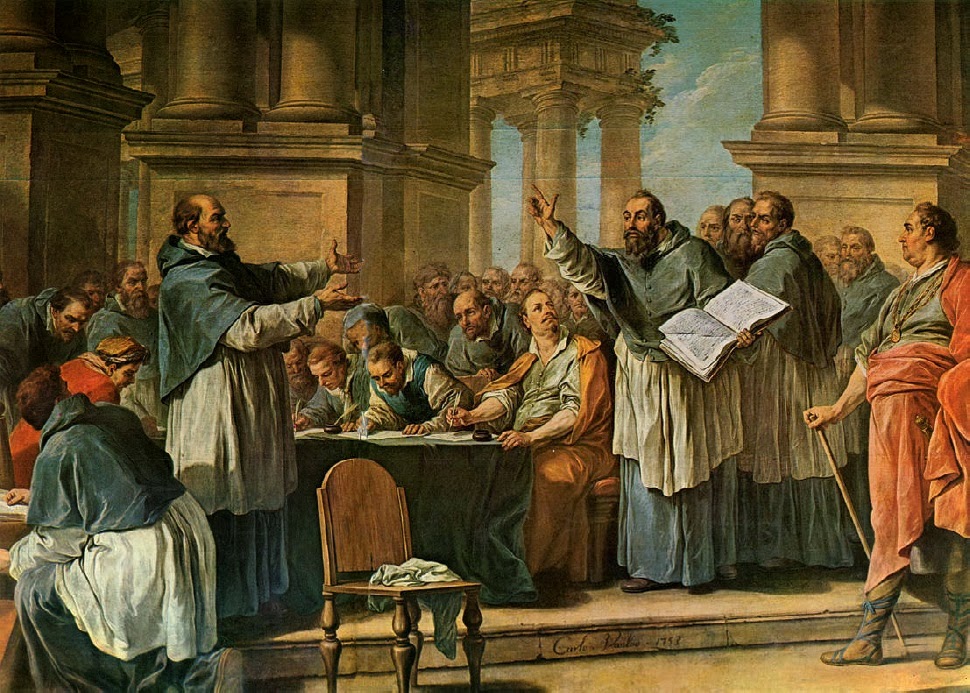
At the beginning of the fourth century, the harshest official, imperial persecution of Christians was decreed by the Emperor Diocletian and his colleagues (later Christians sometimes exempted Constantius as Caesar from carrying out the persecution in his territories of Gaul and Britain due to his paternity of Constantine). From 303-305 the government tried to limit the practice and spread of the still new and very much minority Christian religion. Apparently, in Carthage and other nearby towns of North Africa, some clergy collaborated with the government authorities, for instance by giving over sacred texts. The group which eventually came under the leadership of a man named Donatus claimed that the existing church hierarchy had sinned in this manner and so formed a parallel church, known for their re-baptism of Christians who had originally been baptized by the tainted priests.
Optatus retried these charges using documentary evidence from the beginning of the century. As no similar group broke away from the catholic church in any other part of the empire (although the Novatians in Rome and elsewhere had very similar ideas stemming from an earlier era), Constantine and the imperial retinue, as well as the bishops of the other provinces, found in favor of the Catholics and, especially, the Bishop of Carthage named Caecilian. The Catholics, however, charged that it was the Donatists themselves who had collaborated with their tormentors. Even with some Donatist writing still in existence, it is unclear to me who is telling the truth. As I said the judges were most likely biased, yet the Catholics were the more conciliatory.
Indeed, the entire argument is addressed to a certain Permenianus, a leader in the Donatist church. Throughout, Optatus uses the epithet "brother" when he addresses him. Especially in the final book, which may have been written at a later date (actually, it would be the first six that were written at an earlier date), he tries to argue why the Donatists should re-join the catholic church and end the schism. He answers the charge that if the Donatists are so bad, why would the Catholics want them anyway. His answer is that even if the early Donatists had done wrong, the current generation has not suffered such persecution and so certainly hasn't committed the same sins in themselves. Their only problem now is continuing this schism, which would be rectified by embracing anew the catholic church.
Two points of interest follow from that. First is the distinction between heresy and schism. The theological controversies in the fourth century concerning the trinity led to the Arian heresy. The orthodox and the Arians held very different beliefs about the Christian religion, where the Donatists merely complained of the actions of the catholics. To the Optatus, however, because the schismatic Donatists knew what was right in terms of theology , their sin from remaining outside the catholic church with all the greater.
The other point of interest concerns a difference in idea pointed out in a note to Book 7, Chapter 1. When showing that the current Donatists should not be paying for the evils of the first members of their denomination, Optatus mentions the innocence of Seth with regard to the sin of his father Adam. On the other hand, Augustine believed that the sin did accrue to Seth, and through him to all his progeny. Here for Optatus, so-called original sin remains at its origin.
As you can tell, this is a well-annotated work. I was struck when one note cited a piece by "Ratzinger (1954)". With the bibliography adding an first initial of "J." to this scholar, this should be a reference to the current pope, a half-century before he achieved this office.
A free online translation (different from the one I used) can be found at The Tertullian Project.
Subscribe to:
Posts (Atom)