The Valentinian dynasty had four emperors overlapping in power over nearly three decades—Theodosius married a Valentinian princess (like Gratian married a Constantian princess), but his sons were from an earlier marriage. Like Diocletian, Valentinian I divided power with his brother Valens at the beginning of his reign, rather than just leave it for his children to share, as Constantine (and later Theodosius) did. I was troubled by Zosimus' explanation for Valentinian choosing his brother: "whom he thought most likely to prove faithful to him" (Book 4, p. 66). After two and a half decades of fighting and squabbles among the sons and nephews of Constantine I, all of which Zosimus had just been writing about, I should have no expectation of imperial fraternal affection. Yet, even despite their religious differences, Valentinian proved corrected enough in his choice.
Valentinian I died of apoplexy (Ammianus Marcellinus XXX.6 is the best source), which I take to be a natural cause even if there might be environmental and emotional factors of significance.
When Valens died at the battle of Adrianople, Gratian appointed Theodosius to become emperor of the East, and he had some quick success in battle against the Goths, securing his borders, and most importantly Constantinople, against the Goths (Orosius VII.34, Zosimus p. 76-81, Jordanes 27). Theodosius followed this up with some well executed diplomacy with the Gothic king Athanaric (Orosius VII.34, Zosimus p. 81, Jordanes 28).
When Gratian was killed by the usurper Maximus (and Valentinian II exiled), Theodosius mustered his forces to—eventually—fight back to remove Maximus from power and restore Valentinian II.
When Valentinian II was killed by Arbogastes and Eugenius came to power, Theodosius again prepared for war and crossed the Alps to fight against illegitimate power. In the battle, Eugenius was taken and killed, while Arbogastes fled to the mountain wilderness in fear and committed suicide. Theodosius marched in triumph to Rome, and died soon after in his journey back to Constantinople according to Zosimus, or while in Milan according to Orosius.
From the death of Valentinian in a de jure sense, and from Eugenius' death in a de facto sense, Theodosius held dominion over the entire Roman Empire. He was the last. He died almost exactly 400 years after the mid-point of Augustus' principate, and it is surprising how well Theodosius's power compares to Augustus':
- The borders of the empire were nearly identical. The Rhine, Danube, and Mesopotamia were fluid. Theodosius' claim on southern Britain (now England and Wales) was much stronger. Certainly the fighting with the Germanic peoples was more defensive for Theodosius than Augustus, but he is hard to call less successful.
- Both gained power over the whole empire following multiple civil wars. Theodosius' wars were smaller, which I suppose could just mean that all the Roman armies were weaker in the fourth century than in Augustus' (then Octavian) time, but they were also less destructive.
- Augustus was very concerned with succession, and often disappointed as his favorites died (having no sons himself), until he was finally left with his step-son Tiberius. Theodosius had two sons to whom he left the empire.
Of course, the time of Augustus was similar to the previous generation or three, that I commented on from Orosius. Rome was much more dangerous to itself in those days; by Theodosius' time, its external enemies were much stronger (or maybe just more motivated by fear of a third entity like the Huns). On the other hand, provinces like Gaul, Syria, and Egypt were probably much better integrated after another 400 years-again like Orosius commented.
I will write more about the religious developments of the time period in my next post.
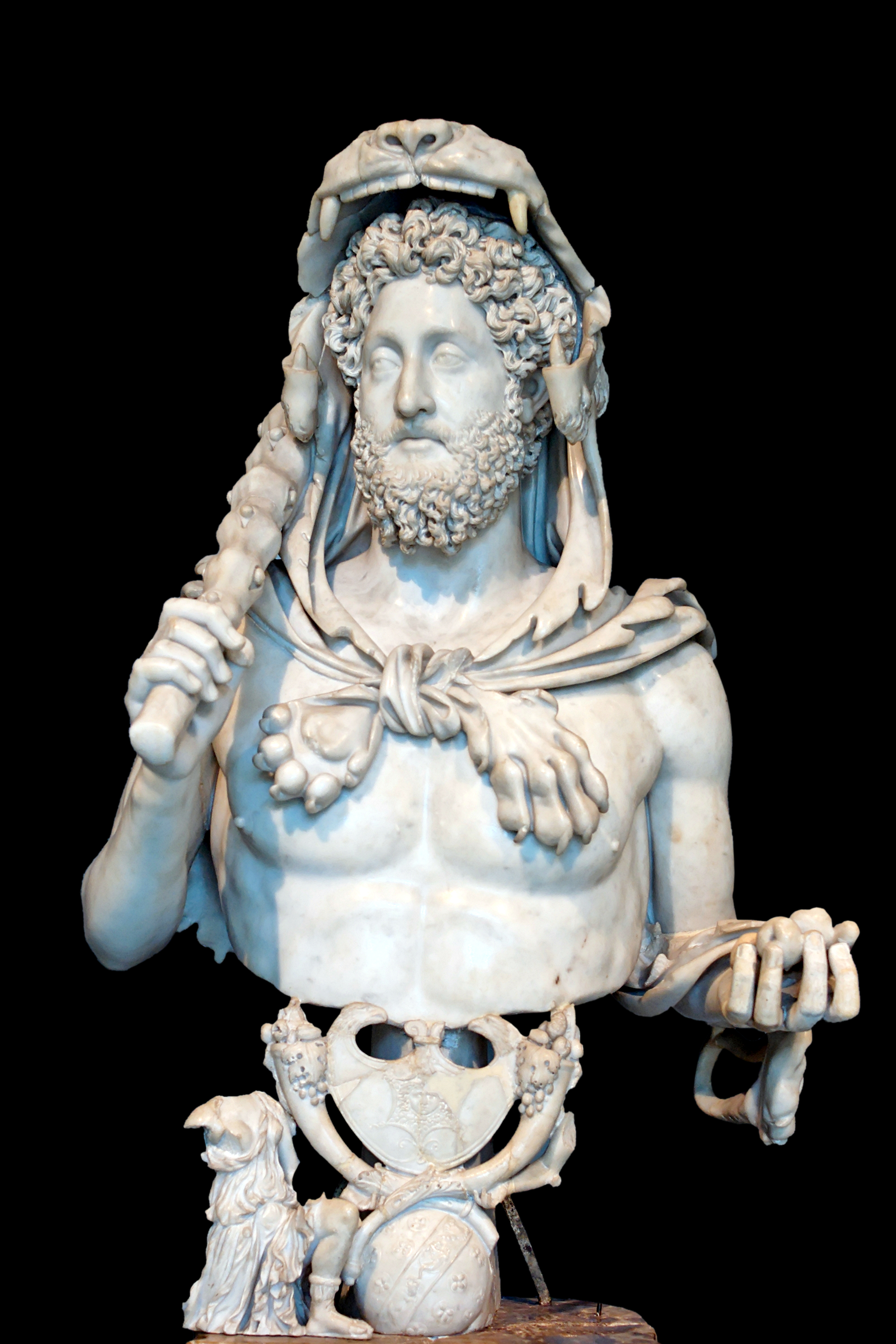
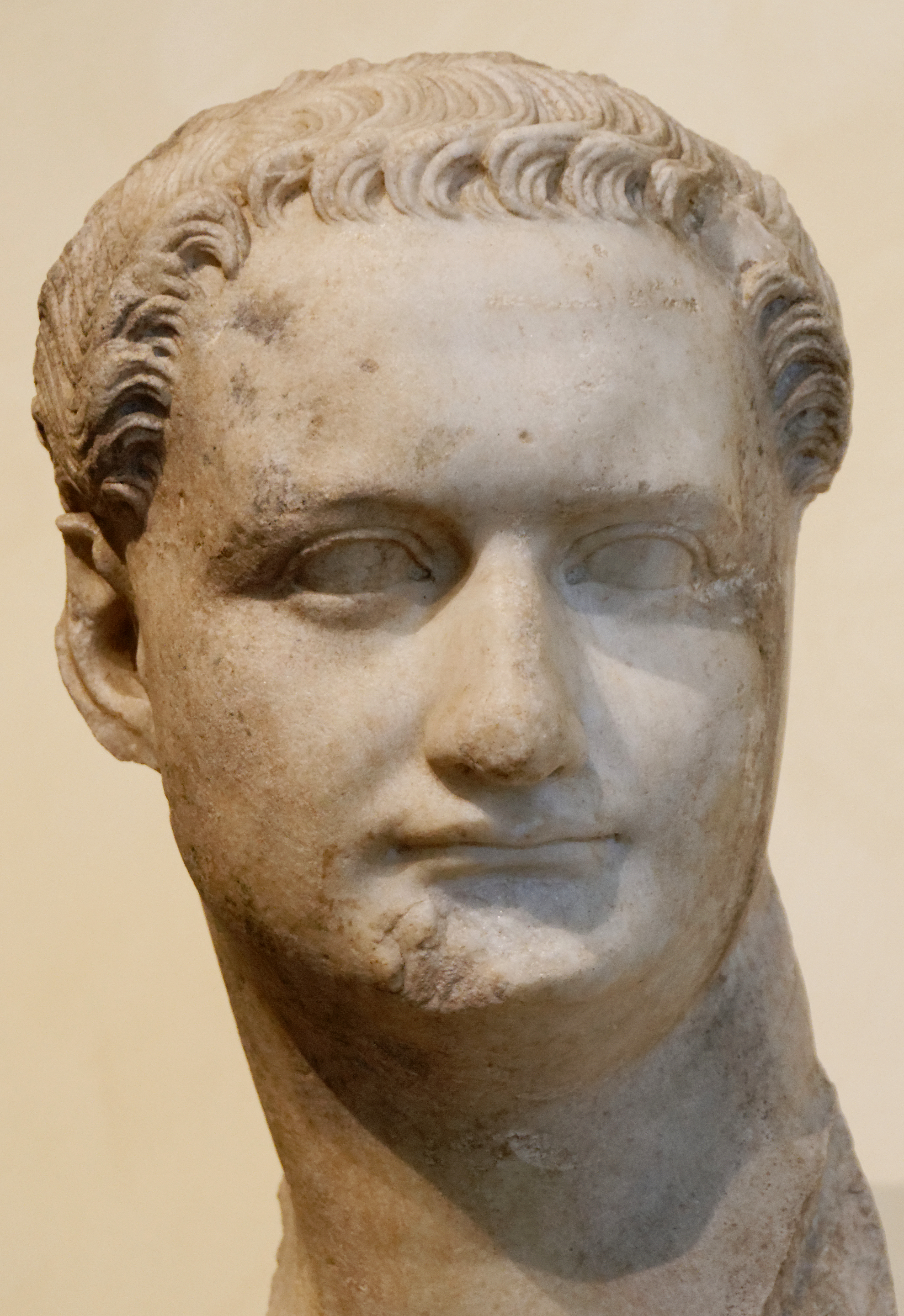
Valentinian II was one of the very few Roman emperors who were born the son of a Roman emperor; as far as I can tell Commodus and the sons of Constantine were his only predecessors. One might also compare him to Domitian or Geta, who also succeeded their fathers and succeeded or shared power with their older brother (Constantius might be looked at like this, too). Among four centuries and over fifty men legitimately called "Augustus," this shows how rare Valentinian's situation was. He was also someone who didn't give others a great reason to like him. While young—and he was very young when his father died—he was brought up in the Arianism of his mother, Justina, who attempted to use her influence to further that heresy in Italy. After his restoration, he deferred in religion to the orthodox Theodosius—the latter also greatly weakened the pagan cause at this time. Thus, he was a hero to no faith.
Valentinian was also, obviously, very weak as an emperor. He was always junior to his brother Gratian or his brother-in-law Theodosius. The usurper Maximus forced him into exile. Four years after his return to Italy, Arbogastes—the general of Theodosius who had led the forces against Maximus—made a coup and killed Valentinian in Gaul. Being a Frank, Arbogastes installed the sophist Eugenius in power; there having been non-Italians (to speak broadly of literal non-Romans) as emperor since the end of the first century and many if not most of the emperors since the end of the second century had been from the fringes of the empire, so I don't exactly understand why Arbogastes felt himself ethnically unqualified.
And yet, opinion of Valentinian II is rather positive. I have the sense that if he had attained the purple at age 34 or 44 instead of just 4, he actually could have been quite effective. Sozomen (7.22) says, "It is said that the boy was noble in person, and excellent in royal manners; and that, had he lived to the age of manhood, he would have shown himself worthy of holding the reins of empire, and would have surpassed his father in magnanimity and justice." Some, such as Philostorgius (11.1), suggest that he was prone to anger that despite being emperor his life was very controlled and he felt little freedom of action, and that this contributed to his death. Even were this accusation true, it would seem a consequence of youth.
There are always competing priorities in a monarchy concerning the monarch's qualifications. Going back to the expulsion of the Tarquins and the end of the original kings of Rome in the sixth century BCE, the Romans were much more suspicious of primogeniture for legitimacy than most other nations. Augustus didn't have a son, which created the new precedent. The Romans also had a complex system of adoption, allowing the emperors to choose a successor of the greatest merit. Augustus did this for Tiberius—already his step-son and son-in-law—after all his previous choices had died. Nerva did this for Trajan, and Hadrian planned two generations in Antoninus Pius and Marcus Aurelius. Diocletian's system was similar. Several times interregnums were filled with mature men of accomplishment: Galba, Nerva, Pertinax, Jovian. Yet, in two of those cases a younger man of lesser merit was able to rouse the army against the new emperor, bringing Otho and Didius Julianus to power. Unsurprisingly, these types couldn't last long either. Vespasian and Septimius Severus represent military leaders at the height of their power who were able to establish a lasting reign on the back of civil war. Against these qualities or experiences, Valentinian had a royal education. He wasn't evil like Domitian, unsuited to power like Commodus, fratricidal like Constantius and his brothers, or the victim of fratricide like Geta.
Valentinian II was just young. And even this might not have been a problem, except the Romans were not used to this. An emperor was not a figurehead. Consider that Louis XIV was also four years old when he became king, but this didn't faze the French because his father had been just nine. Indeed, Valentinian probably would have fared better as a king, even an absolute one, than emperor. Perhaps it was he and not his murderer who was the real foreshadowing of Teutonic power.
See my previous post for my general sources.
Having written about the high politics during the period between the deaths of Gratian and Maximus, I would like to focus a little more on the three personalities I called "private views" in that post. Except I suppose for the "modern histories" area, my choice here involves more discretion than those areas that are consciously written as histories. In the notes to some of the better annotated books, or in Gibbon, I often see references to other writers of the era, who might just as well have been a part of my reading. By this point in time, many letters and sermons by churchmen are still extent, including Ambrose. For the time being at least, the two Christian leaders I am reading are Jerome and Augustine; again they too have numerous writings, and I would have liked to read Jerome's historical writings if they were more easily available, but I am focusing on the two works I have already mentioned. The other writer I am reading is Libanius, who was a pagan teacher in Antioch, Syria. A. F. Norman translated the Autobiography and Selected Letters in two volumes and Selected Orations in another two volumes for the Loeb Classical Library. The legal code of Theodosius (which seems to have begun before his reign) is heavily referenced in the notes to Libanius, and in Gibbon, because it provides dates for a lot of events.
The years specifically under discussion here are the ones when Augustine converted from the profession of sophist, like Libanius, to a Christian thinker (and future saint of the church), like Jerome. While Augustine later had correspondence with Jerome—including through Orosius—I don't think he ever communicated with Libanius. Despite my criticism of Jerome's words on Syriac, he clearly had facility with several languages, while Augustine and Libanius were not very comfortable with the other's tongue (Latin for Augustine and Greek for Libanius).
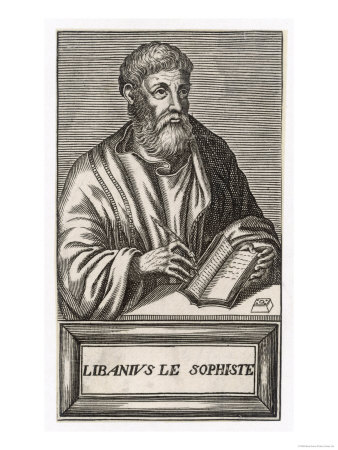
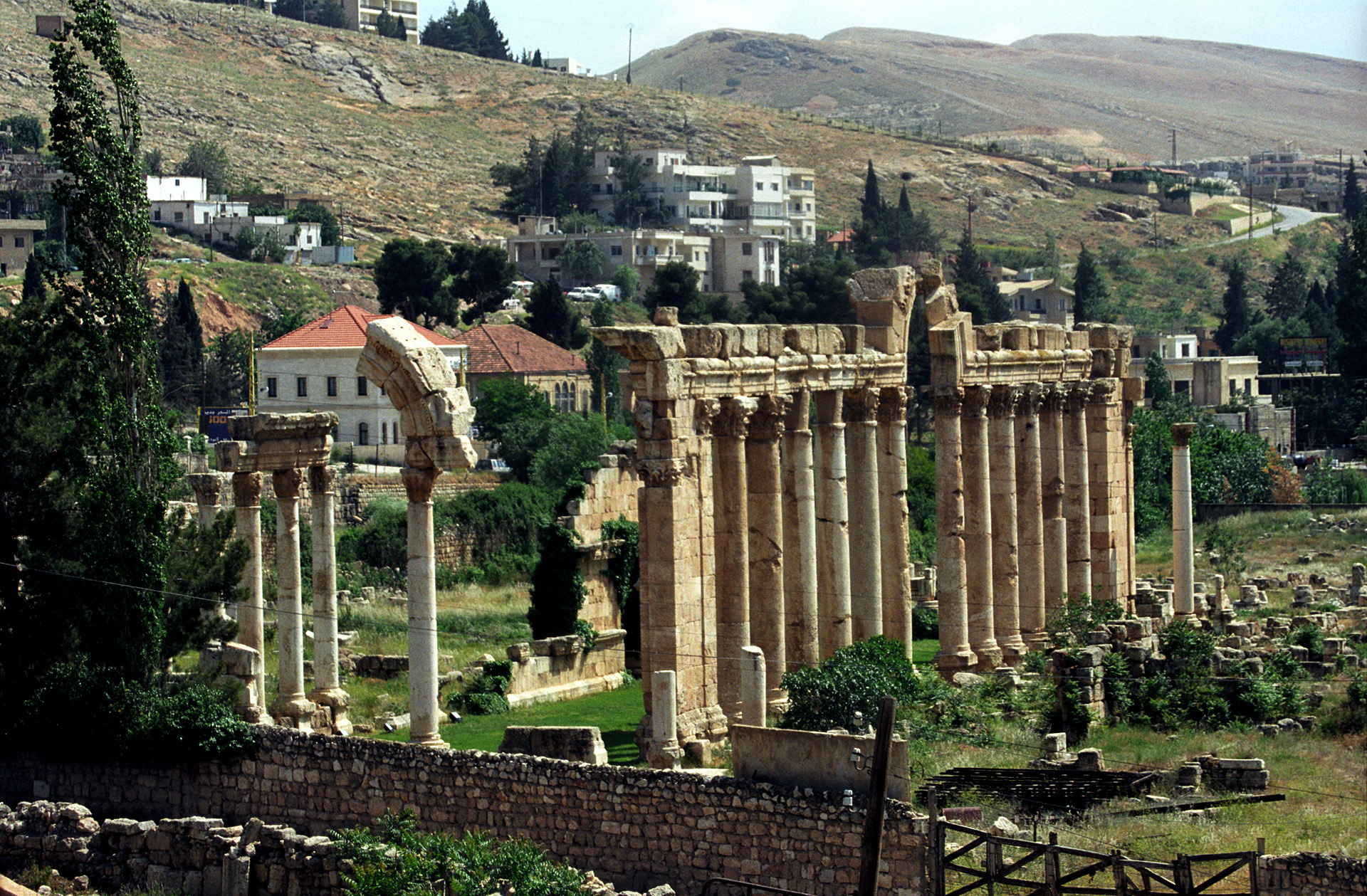
Antioch had been the capital of the Hellenistic-Seleucid Kingdom of Syria, and once fully absorbed into the Roman Empire in the 60s BCE, was a leading city of the eastern half of the empire. From the 50s BCE, under Crassus, and on through Julian more than 400 years later, the city maintained its importance as a kind of staging ground for the army before campaigning against Parthia or Persia, although its power was eclipsed once Constantinople become the second capital. Libanius came from an established family of the city, and after some experience teaching in some other Greek cities, had become the official sophist of Antioch by this time. Like the sophists Plato had Socrates rail against some seven or eight centuries earlier, sophists taught rhetoric, and were more concerned with persuasion—or manipulation—than truth. The position doesn't have an exact modern equivalent, but the closest analogy would be a superstar law professor, who also regularly had monologues on radio or television. In addition, he was something of an official spokesman for the city. Emperors from Constantius II to Theodosius paid attention to him; unsurprisingly, his best relationship was with Julian. By the 380s, he was an old man weighed down with migraines and gout, and his main concerns were the security of his illegitimate son, the welfare of the people and city of Antioch, and the protection of the rites of traditional (pagan) religion. His writing gives an interesting perspective of what life was like outside the imperial presence; as a judge of the major figures of his time, though, he consistently shows himself obsequious when they're in power, but much more critical when they're time has passed.
I should note that Antioch had been suffering from drought conditions—near famine if they had been isolated—since the summer of 381 or 382, and continued throughout the years under consideration here. Libanius' 50th oration was written about 384, and is entitled "For the Peasantry, About Forced Labor." I quite enjoyed this oration's message, in which Libanius complained that magistrates were impressing privately owned animals into carrying material without compensation. He is quite passionate about the importance of rule of law and private property—that if officials were allowed to do this for the government's service, nothing is stopping them from imposing even more onerous burdens—as well as a rather sophisticated idea of economic costs: even if these animals weren't carrying anything for their owners at the time, the animals are still weakened for future use. Like many of his speeches, it is written as an appeal to the emperor, though he almost certainly hoped that by using his name the closer officials would listen and make things right themselves. Oration 30, written about 386, is entitled "Pro Templis" and is a request that the emperor protect the ancient pagan temples. He holds a traditional view that worship of the g-ds had led to the greatness of the Roman Empire, the view against which Orosius argued. Thus, allowing harm to come to the temples would go against the emperor's political interests—even though Theodosius was a Christian and thus didn't believe in those g-ds—and, in addition, the temples were imperial property and should be preserved as art even if not for religion's sake. The threat was coming not so much from legal means—although the law was ever more constricting the scope of pagan religious freedom—but from the enthusiastic violence of monks.
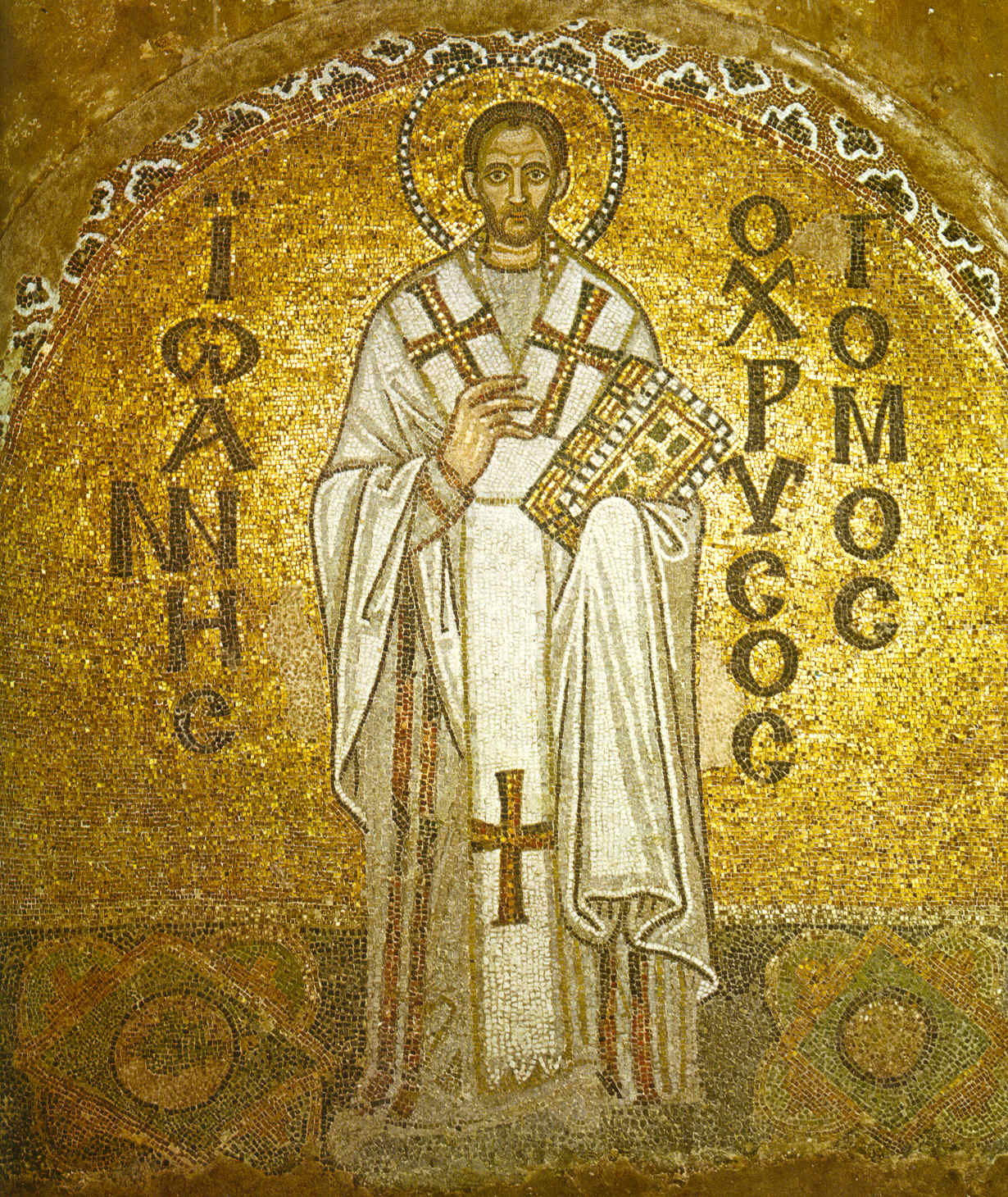
Orations 19 to 23 (the 23rd is actually the earliest) describe an event in Antiochene history important enough that Zosimus was confused by it, and Gibbon synthesizes a portrait meant to characterize the clemency (at least in this case) of Theodosius. In 387, Antioch was still suffering from the near famine conditions, but the imperial taxes were increasing due in part to the coming 10th anniversary of Theodosius becoming emperor (when he would be expected to give liberally to his soldiers), and also likely the preparations for the war against Maximus. Some men of Antioch, in frustration, had defaced statues in the city of the imperial family, an act akin to treason. As punishment, the emperor stripped Antioch of many of its privileges; fearing worse, many of the men and women of the city fled. Libanius chided the exiles for their pessimism, while appealing to Theodosius for rescinding the punishment. Along with John Chrysostom—at this time a Christian priest in the city whose sermons from the time survive, and later archbishop of Constantinople—his pleas were successful.
A very limited selection from Libanius' works are linked to at Wikipedia.
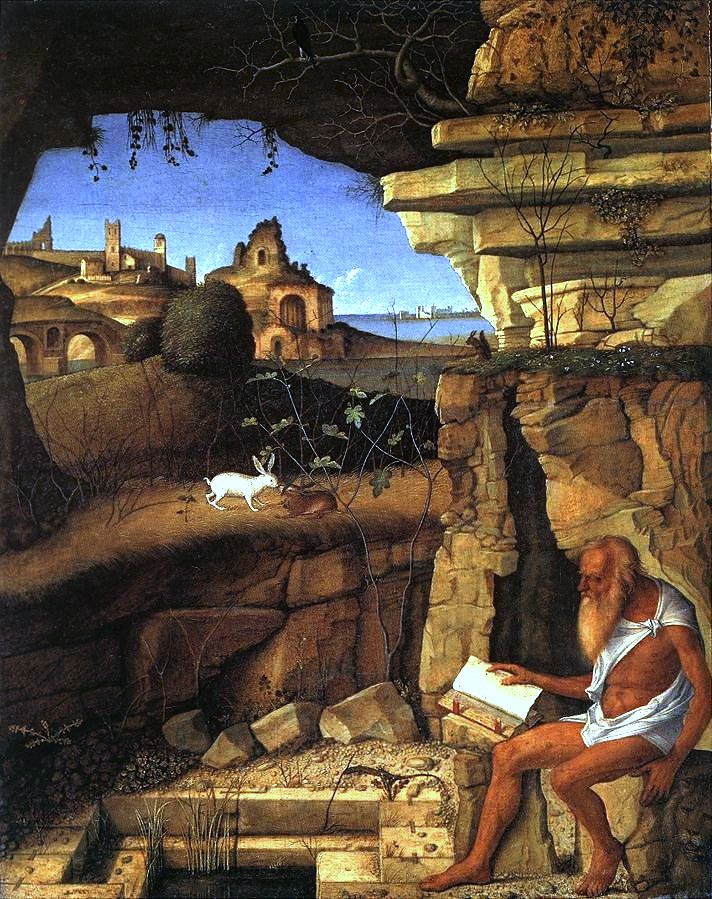
Jerome paints a far different picture of Christian zeal. The main idea he writes about in the letters I read from the mid-380s, especially in the very long Letter 22 to Eustochium, is asceticism, primarily through celibacy. Indeed, all the letters of the period in this Loeb collection are to women: he believes virginity superior to marriage, and widowhood superior to remarriage. In Letter 38 to Marcella, he commends reading constantly as a way to drive out sensual desires. In Letter 22, Jerome describes the rules that then existed for (male) monks, either as hermits or in groups, but the development of cloisters or convents for women happened later.
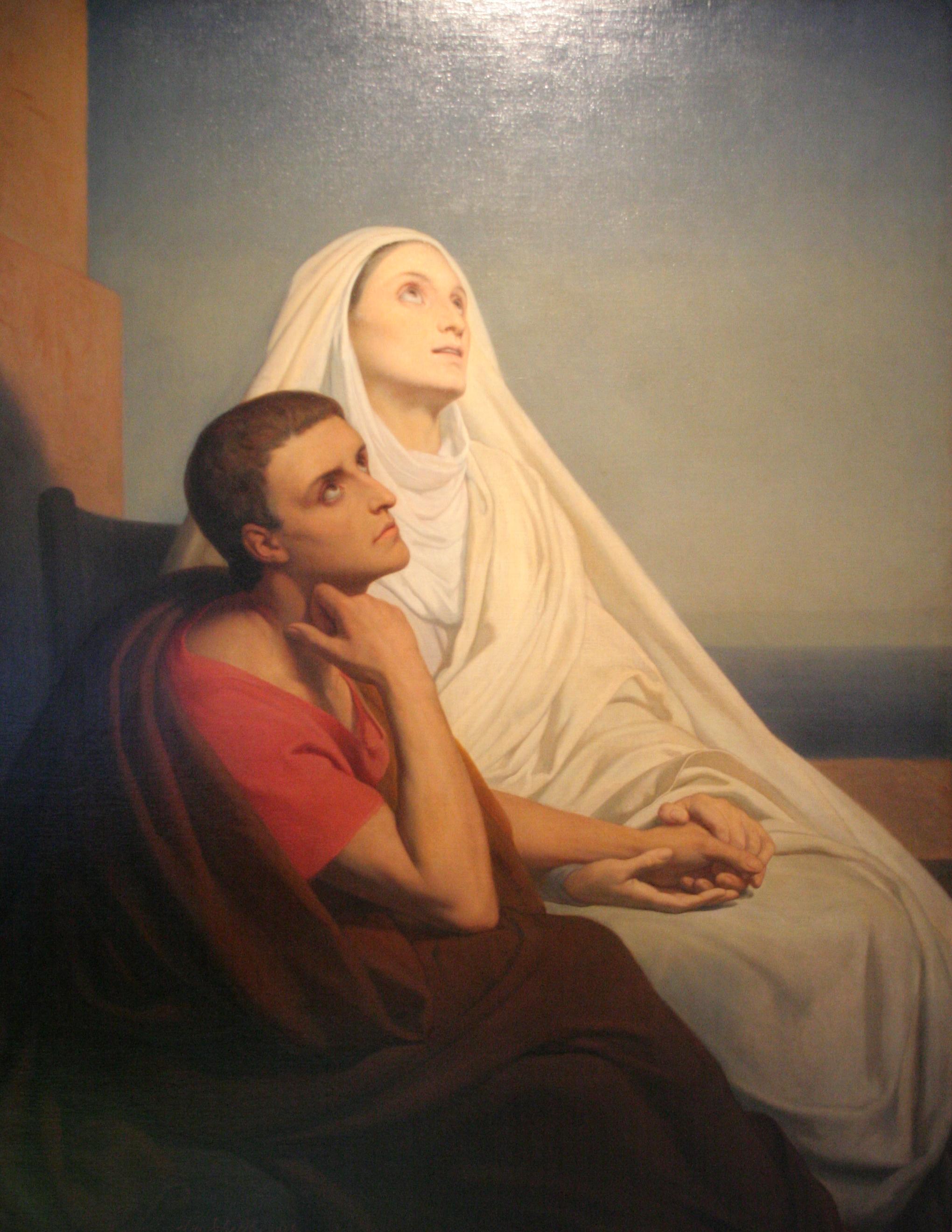
Augustine was, along with Paul and Constantine, the most significant of converts to Christianity. Like Paul, he furthered the development of Christian theology for future generations. Like Constantine, he had a Christian mother, Monica. However, unlike the other two, he did not claim a miraculous moment of epiphany that inspired his conversion. Instead, he describes his mental process over many years from Manichaeism to Neo-Platonism to Christianity. In addition, Augustine had been educated for and was now practicing as a teacher of rhetoric; also like Libanius, he had an illegitimate son—unlike Libanius, he believes this holds him back from his great temporal ambitions. In 384, he moved from Rome to Milan, which was arguably a step up because, as we saw in the post below, Emperor Valentinian II was staying at Milan. Soon, Monica arrived there from her home in North Africa, as well. It is she who emerges as the real hero of this portion of the Confessions, constantly praying for her son. Yet, even as Augustine admits to a changing understanding of Christian ideas, as he moved from being a Manichee "hearer" to a Neo-Platonist around the time he moved to Milan, he maintains an idea that to be Christian he must be an ascetic, like Jerome prescribes, and because of his lusts he cannot do that. It is hard to reconcile that need, however, because of the great importance of his mother, whose influence was through fertility not chastity. I cannot help thinking that rather than his eventual conversion suppressing his ambitions, as he wants us to think, they merely transferred them to a spiritual nature; Jerome, following Paul, had allowed that one needn't be celibate to be Christian, but Augustine knew that celibacy did make it a lot easier to be a saint. Eventually, he came to a state of mind that he no longer had the same sexual needs and had intellectual approval of Christianity—though still through a very Neo-Platonic lens—and Ambrose baptized him on Easter Day, 387. He resigned from his teaching post, where he had to tell lies, and soon after his mother passed away.
Now that I have read my next segment in history, I am not entirely sure how I will blog it, especially considering my use of 16 different authors – mostly those listed in my previous rotation, plus those I have brought "into the mix." I will start by explaining how the works can be divided:
- Primary narrative histories: Orosius (Book 7, Chapter 34-35) and Zosimus (Book 4, p. 82-88)
- Chronicles and foreign histories: Chronicon Paschale (years 383-389), John of Nikiu (Chapter 83, Section 15-36), al-Tabari (p. 68-69), Jordanes (Chapter 28, Section 145), Gregory of Tours (Book 1, Chapter 43), Bede's Ecclesiastical History of the English People (Book 1, Chapter 9) and Greater Chronicle (years 4338-4349), and Anglo-Saxon Chronicle (year A.D. 381)
- Ecclesiastical histories: Socrates (Book 5, Chapter 11-14), Sozomen (Book 7, Chapter 13-14), Theodoret (Book 5, Chapter 12-15), and Philostorgius (Book 10, Chapter 6-8)
- Private views: Libanius' Autobiography (Sections 212-274), Letters (146-153), and Orations (50, 30, 45, 33, 23, 19, 20, 21, & 22); Jerome (Letters 22, 38, 40, 43, 44, &45); and Augustine's Confessions (Book 5, Chapter 9, Section 16 to Book 9)
- Modern histories: Montesquieu (Chapter 19) and Gibbon (Chapter 26-27)
My usual practice is to base how long a piece of history I will read on the primary histories – Orosius and Zosimus in this case. When Gratian was killed, Theodosius remained emperor in the East, Valentinian II in Italy, and Maximus had usurped control in Gaul, Britain, and the Iberian Peninsula. Thus, depending on the details they would give, I would have considered reading until the death of any of the three of these rulers. As it happens, I decided that the downfall and death of Maximus and his associates was the right stopping point, occurring about five years after his agent had assassinated Gratian. As is often the case, some judgment is necessary for what to include and how to navigate works that don't follow the same chronology, or in themselves or their editing don't clearly synch to the major political events.
I wrote briefly of Gratian's death following the British army's proclamation of Maximus Magnus as Augustus, as well as the incorrect version in the Chronicon Paschale attributing it to the Empress Justina. That Maximus was chosen by an army is not unusual—Valentinian I (Gratian's father) and his predecessor Jovian had both been elevated by that method—but because the choice had been made during the reign of a legitimate emperor rather than an interregnum, Maximus could only be a usurper. Nevertheless, the general picture of Maximus was that he was a mature leader, worthy of the office more than the method of attaining it. While some of the works condense the history, it seems that he was content with northern Europe for some years, and that Valentinian II (led by his mother Justina) out of weakness and Theodosius out of attention needed elsewhere, were willing to confirm his as emperor by treaty for a time at least. Many write that Maximus was a British native, but Zosimus explains that he was a Spaniard like Theodosius, and that they had served together as soldiers.
There is some controversy as to Maximus' religion. Orosius thinks that the only area where he was weaker than Theodosius, but Theodosius was the first orthodox emperor of the East since Constantine I (the Great), so that doesn't necessarily make Maximus a heretic or pagan. Zosimus, a pagan, doesn't say, but implies that he was an agent of retribution against Gratian for the latter's novel refusal to accept the traditional Roman priestly role of the emperors. John calls him an Arian. Gregory highlights his audience with a catholic saint. While Theodoret is the most direct about it, the other orthodox ecclesiastical historians and Bede agree that Maximus was either a self-appointed or Providential instrument of punishment for Justina's persecution of Ambrose, the bishop of Milan, as after three or four years he threatened to cross the Alps into Valentinian's territory, forcing the young emperor and his mother into exile at Thessalonica as suppliants to Theodosius. The weight of the evidence, to me, suggests Maximus was orthodox.
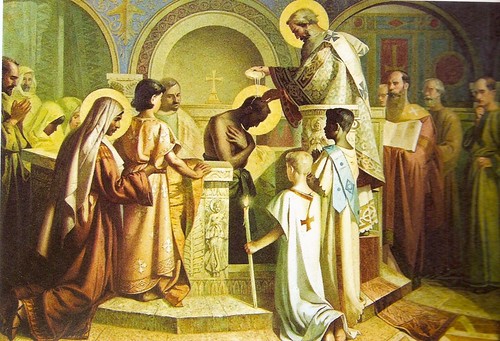
To back up a bit before following the imperial family to Macedonia, I want to say a bit about the issue of Ambrose. During this period, Ambrose was probably the most important bishop in the catholic and orthodox church, as Milan was one of the leading cities of the empire and the Eastern cities were still in some turmoil with Arianism—Ambrose had been a teacher to Gratian, as well. Justina wished to introduce that turmoil in Milan, under a request for toleration of Arianism and the ability to use a church in the city. Ambrose refused, and the Milanese people supported him. Not yet a Christian (although moving in that direction), Augustine was in Milan during these years as a teacher of rhetoric. He witnessed the events that came to a head on Easter in 386; the next Easter he was baptized by Ambrose.
Zosimus—for whom they're all infidels, so the religious aspect mattered not—provides the best narrative of what happened in Thessalonica. Theodosius' wife—and mother of his sons—had recently died, so Justina arranged for her daughter, the princess Galla to—seduce is probably too strong a word, but then again it might not be—attain Theodosius' interest. Being young and pretty, she was successful, and once she had his interest she said she would only marry him after he restored her brother as emperor of the West. Theodosius led his legions into Italy, and was able to achieve a victory over Maximus with as little violence and as targeted in killing as Maximus had been against Gratian, allowing Valentinian II and his mother to return in triumph. The Chronicon Paschale—for whom the whole issue of Maximus was unknown—says that Galla was the first wife, likely because it was distasteful to think that the orthodox hero had married an Arian after having been wed to an orthodox woman.
Theodosius gained much by these actions. Gratian had appointed him emperor, so his eventual execution of revenge against the usurper was a fulfillment of his duty to his benefactor. By marrying Galla, he created a dynastic tie to her father Valentinian I, thus adding to his own legitimacy. And finally, he secured his status as senior emperor over Valentinian II—although he was much older, he had been appointed by Gratian at a time when Valentinian was (at least in name) already Augustus.
Thus, during the five years after Gratian was murdered, his true death was avenged by Theodosius against the rebel Maximus, and his religion and fictional death were avenged by the steadfastness of Ambrose against the Arian empress Justina.