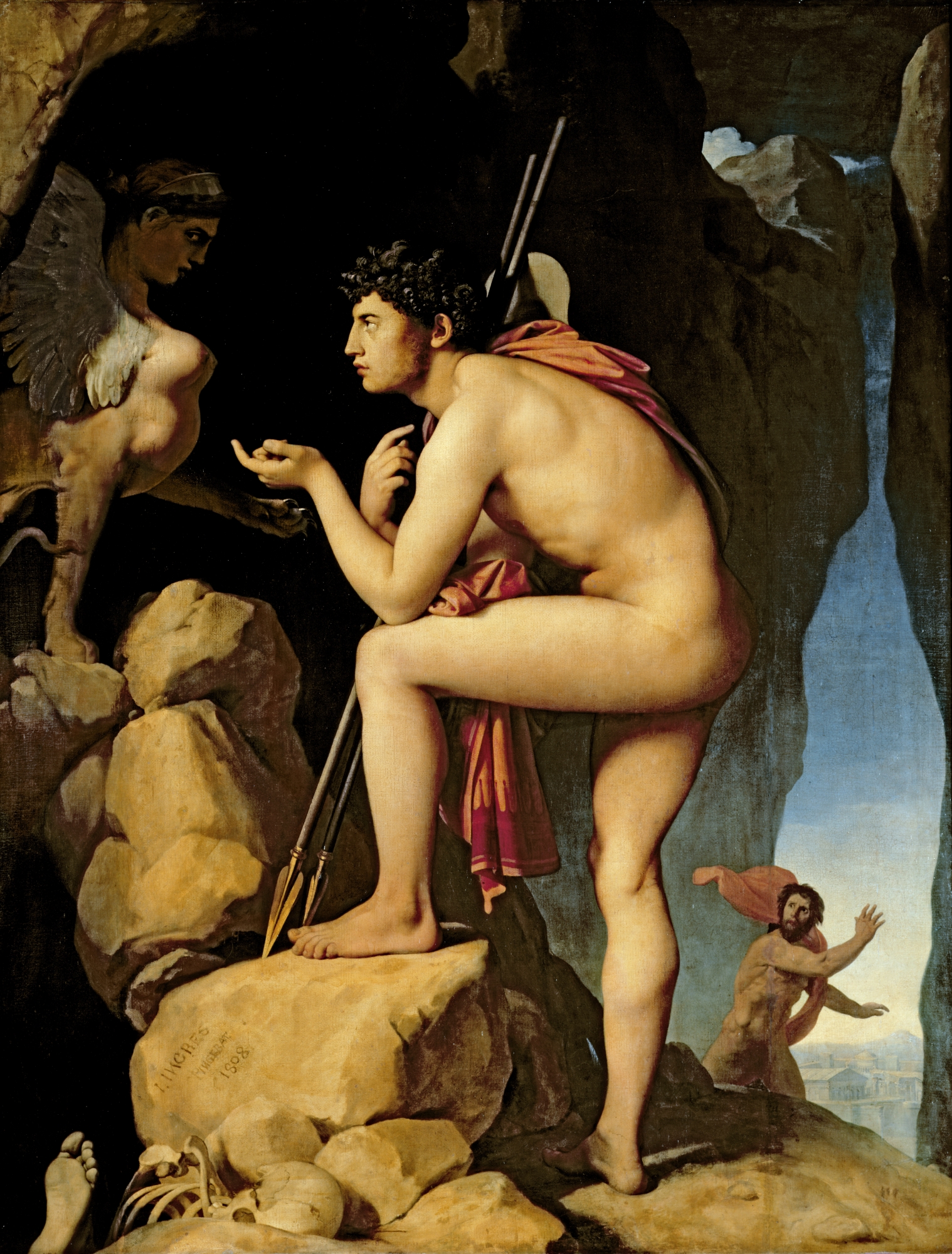
I listed my latest "rotation" in a previous post; before I move on to the next rotation, there are some histories that I am starting and reading up to the point of the Emperor Gratian's death in 383 that I reached in my reading. I have just done that now for the Ecclesiastical History of Philostorgius, or rather what is left of it. As I mentioned below, medieval Byzantine writers made summaries, called epitomes, and collections of excerpts of earlier books. Philostorgius' work only exists today in these forms: a detailed summary by Photius, and some extracts by Suidas. I am reading the translation by Edward Walford for Bohn's Ecclesiastical Library.
Philostorgius is now the fourth church historian I am reading for this period. Like Sozomen, Socrates, and Theodoret, he wrote in the middle of the fifth century as a conscious continuation of the History of Eusebius, the acknowledged father of history for the Christian Church. Even without the fullness of his text, it is clear that Philostorgius utilized the same characteristics of the genre: major imperial affairs and political involvement in the church, succession in major bishoprics, important regional and universal councils, short lives of holy men and women including their miracles and missionary activity, and the waxing and waning of heresies and schisms. (Unlike the Latin-speaking Optatus, the historians all wrote in Greek, and so generally focused more of their attentions in the East, thus make little to no mention of Donatism.)
Philostorgius, however, has an important difference from the other authors. Whereas as those three were all orthodox Christians, defenders of the Nicene creed, and for whom the oft-exiled Athanasius, bishop of Alexandria, was the hero of the era, Philostorgius was an adherent of the Arian heresy. Arius, a fellow Alexandrian and arch-rival of Athanasius, objected to what was becoming – and was codified at Nicaea – the orthodox understanding of the metaphysics of the Trinity in the early fourth century. Athanasius and his allies took the position of "consubstantiality," or homoousian in Greek; basically, this means that all three "Persons" of the Trinity were of the same "substance." More importantly, it places Jesus in a position of equality with G-d the Father when it comes to creation. Arius and his followers denied this sameness. Following his death, the Arian heresy split further between homoiousians (sometimes called semi-Arians) who believed the Son was of "similar" substance to the Father, and heteroousians who claimed their substances were completely different. Philostorgius was a heteroousian.
This controversy is archetypal for why metaphysics has a bad name. G-d has no part in physicality, so I don't know how to conceive of a non-physical substance, let alone the possibility of multiple non-physical substances.
Photius (a leader in the Byzantine church) and Walford (a man of the Victorian era) also don't like what Philostorgius has to say on these matters, but for a different reason. Whereas Optatus argued with Parmenianus but stilled called him "brother," Photius is full of insults for Philostorgius as he summarizes his work, chapter by chapter. Starting in the third chapter of the first book, Photius calls him "impious," and then again many times thereafter. I suppose that with the historian long dead, Photius saw no need for charity. Walford, in his notes, always compares Philostorgius unfavorably to the three orthodox historians, and uses the notes for some apologetics of his own.
While discussing some missionary activity in Book III, Philostorgius goes into some geography. This brings up some fantastic beasts he had seen, which had been brought back to the Rome or Constantinople, where he had seen them. Though some of this is clearly made-up, considering his inclusion of a unicorn, one animal brings with it an interesting story. He claims, in the eleventh chapter of the book, that an Indian (it's unclear whether he actually means India, as there seems to be confusion between that country and Ethiopia) king had sent the Emperor Constantine the Great a kind of ape, which was preserved after its death. He says,
"It seems to me that the Greeks must once upon a time have seen this monster, and, amazed at the strangeness of its appearance, adopted it as a god, in accordance with their ordinary practice of making a god out of everything strange and wonderful...The sphinx, too, is a kind of ape, as I myself can testify from what I have seen. The rest of the body of the sphinx is covered with hair, just as all other apes, but from its head to its breast it is free from hair, and has the breasts of a woman. Where its body is bare, it has a raised portion of red, like millet, running round it, which elegantly harmonizes with the fleshy colour in the middle, and improves it. Its face is tolerably round, and inclining to the form of a woman. Its voice is very like the human voice, though not articulate; it most nearly approximates that of a woman uttering her words in a hurried and indistinct manner under the influence of anger and grief, and it is rather flat than sharp; the beast moreover is very savage and cunning, and cannot be tamed without difficulty."
He then rationalizes the myth of Oedipus and the Sphinx at Thebes. This monkey, he supposes, had somehow reached the city and was terrorizing the residents with its wild, aggressive, and violent behavior. Having a nearly human voice, the legend turned its wordless noises into the famous enigma. Oedipus was able to kill it, and the rest was legendizing. This seems to me to be a good illustration of how educated Christians understood Greek mythology, without either turning everything into demons or claiming the whole thing is made up.
Following the death of Constantine I in 337, through the death of Valens in 378, Constantius II and Valens had power in the Eastern Empire for all but a couple of years. Both of these Augusti were, at times, sympathetic to or active partisans for the Arian heresy. Thus, despite the so-called orthodoxy of the followers of the Nicene faith, they were often out of power and influence. These were years of fast growth for the Christian religion, as with the exception of Julian, it seems that each Christian emperor was more and more fully Christian and less and less pagan; the laity being full of new converts were probably easily swayed to believe as the reigning bishops taught, despite their divergence from what had been agreed to at Nicaea. The Western Emperors, very much including the brothers of Constantius and Valens, were steadier with the consubstantial party.
Both sides proved quick to use the coercive power of the state against both intra- and inter-faith enemies, so soon after the persecutions by the pagans. Perhaps this justifies, in some small degree, the desire for revenge by the pagans when Julian came to power as their last hope. I would not, at this point, call it bloody, but I also wouldn't quite call it clean. There was somewhat more liberty than under the magisterial confessionalization system of post-Reformation Europe, but maybe only because the different religions, within Christianity and without, were harder to reconcile. It is also clear from Nicene, Arian, and pagan writers that everyone took a providential view of events in the declining days of the Empire. Political leaders of all stripes, to say the least, each made their share of mistakes.
An internet version of the same translation I used can be found at the Tertullian Project.