Now that I have read my next segment in history, I am not entirely sure how I will blog it, especially considering my use of 16 different authors – mostly those listed in my previous rotation, plus those I have brought "into the mix." I will start by explaining how the works can be divided:
- Primary narrative histories: Orosius (Book 7, Chapter 34-35) and Zosimus (Book 4, p. 82-88)
- Chronicles and foreign histories: Chronicon Paschale (years 383-389), John of Nikiu (Chapter 83, Section 15-36), al-Tabari (p. 68-69), Jordanes (Chapter 28, Section 145), Gregory of Tours (Book 1, Chapter 43), Bede's Ecclesiastical History of the English People (Book 1, Chapter 9) and Greater Chronicle (years 4338-4349), and Anglo-Saxon Chronicle (year A.D. 381)
- Ecclesiastical histories: Socrates (Book 5, Chapter 11-14), Sozomen (Book 7, Chapter 13-14), Theodoret (Book 5, Chapter 12-15), and Philostorgius (Book 10, Chapter 6-8)
- Private views: Libanius' Autobiography (Sections 212-274), Letters (146-153), and Orations (50, 30, 45, 33, 23, 19, 20, 21, & 22); Jerome (Letters 22, 38, 40, 43, 44, &45); and Augustine's Confessions (Book 5, Chapter 9, Section 16 to Book 9)
- Modern histories: Montesquieu (Chapter 19) and Gibbon (Chapter 26-27)
My usual practice is to base how long a piece of history I will read on the primary histories – Orosius and Zosimus in this case. When Gratian was killed, Theodosius remained emperor in the East, Valentinian II in Italy, and Maximus had usurped control in Gaul, Britain, and the Iberian Peninsula. Thus, depending on the details they would give, I would have considered reading until the death of any of the three of these rulers. As it happens, I decided that the downfall and death of Maximus and his associates was the right stopping point, occurring about five years after his agent had assassinated Gratian. As is often the case, some judgment is necessary for what to include and how to navigate works that don't follow the same chronology, or in themselves or their editing don't clearly synch to the major political events.
I wrote briefly of Gratian's death following the British army's proclamation of Maximus Magnus as Augustus, as well as the incorrect version in the Chronicon Paschale attributing it to the Empress Justina. That Maximus was chosen by an army is not unusual—Valentinian I (Gratian's father) and his predecessor Jovian had both been elevated by that method—but because the choice had been made during the reign of a legitimate emperor rather than an interregnum, Maximus could only be a usurper. Nevertheless, the general picture of Maximus was that he was a mature leader, worthy of the office more than the method of attaining it. While some of the works condense the history, it seems that he was content with northern Europe for some years, and that Valentinian II (led by his mother Justina) out of weakness and Theodosius out of attention needed elsewhere, were willing to confirm his as emperor by treaty for a time at least. Many write that Maximus was a British native, but Zosimus explains that he was a Spaniard like Theodosius, and that they had served together as soldiers.
There is some controversy as to Maximus' religion. Orosius thinks that the only area where he was weaker than Theodosius, but Theodosius was the first orthodox emperor of the East since Constantine I (the Great), so that doesn't necessarily make Maximus a heretic or pagan. Zosimus, a pagan, doesn't say, but implies that he was an agent of retribution against Gratian for the latter's novel refusal to accept the traditional Roman priestly role of the emperors. John calls him an Arian. Gregory highlights his audience with a catholic saint. While Theodoret is the most direct about it, the other orthodox ecclesiastical historians and Bede agree that Maximus was either a self-appointed or Providential instrument of punishment for Justina's persecution of Ambrose, the bishop of Milan, as after three or four years he threatened to cross the Alps into Valentinian's territory, forcing the young emperor and his mother into exile at Thessalonica as suppliants to Theodosius. The weight of the evidence, to me, suggests Maximus was orthodox.
To back up a bit before following the imperial family to Macedonia, I want to say a bit about the issue of Ambrose. During this period, Ambrose was probably the most important bishop in the catholic and orthodox church, as Milan was one of the leading cities of the empire and the Eastern cities were still in some turmoil with Arianism—Ambrose had been a teacher to Gratian, as well. Justina wished to introduce that turmoil in Milan, under a request for toleration of Arianism and the ability to use a church in the city. Ambrose refused, and the Milanese people supported him. Not yet a Christian (although moving in that direction), Augustine was in Milan during these years as a teacher of rhetoric. He witnessed the events that came to a head on Easter in 386; the next Easter he was baptized by Ambrose.
Zosimus—for whom they're all infidels, so the religious aspect mattered not—provides the best narrative of what happened in Thessalonica. Theodosius' wife—and mother of his sons—had recently died, so Justina arranged for her daughter, the princess Galla to—seduce is probably too strong a word, but then again it might not be—attain Theodosius' interest. Being young and pretty, she was successful, and once she had his interest she said she would only marry him after he restored her brother as emperor of the West. Theodosius led his legions into Italy, and was able to achieve a victory over Maximus with as little violence and as targeted in killing as Maximus had been against Gratian, allowing Valentinian II and his mother to return in triumph. The Chronicon Paschale—for whom the whole issue of Maximus was unknown—says that Galla was the first wife, likely because it was distasteful to think that the orthodox hero had married an Arian after having been wed to an orthodox woman.
Theodosius gained much by these actions. Gratian had appointed him emperor, so his eventual execution of revenge against the usurper was a fulfillment of his duty to his benefactor. By marrying Galla, he created a dynastic tie to her father Valentinian I, thus adding to his own legitimacy. And finally, he secured his status as senior emperor over Valentinian II—although he was much older, he had been appointed by Gratian at a time when Valentinian was (at least in name) already Augustus.
Thus, during the five years after Gratian was murdered, his true death was avenged by Theodosius against the rebel Maximus, and his religion and fictional death were avenged by the steadfastness of Ambrose against the Arian empress Justina.
For Orosius, being a Roman was nearly as integral a part of his identity as being a Christian. After all the wars – foreign and domestic – of the first century BCE (not to mention those of previous centuries), "in that year in which, by the ordination of G[-]d, Caesar achieved the strongest and truest peace, Christ was born, upon whose coming that peace waited" (VI.22). Augustus was finally able to achieve unity and peace for the Empire, and this gives birth to Jesus (on December 25 (VII.2), I might add with some surprise). That Jesus was specifically a Roman is proved by being registered at the census from birth. In turn, Jesus gave Rome the "pinnacle of power, prosper[ity,] and protect[ion]" (VI.22), and peace (VII.3-4). His birth is also a mirror of Abraham's: one born in the 43rd year of Ninus, first king of Assyria/Babylonia, except maybe his father Belus, the other born in the 42nd – by a week – year of Augustus, first emperor of Rome, except maybe his adoptive father Julius Caesar (the point is certainly enhanced by beginning the reign of Augustus with the death of Julius Caesar, when his officially becoming the princeps or receiving the title Augustus came several years later). Later, he makes the – not unique, but likely spurious – association of the emperor Philip the Arab, reigning 244-249 CE, as a Christian, just to show that Providence desired the 1,000 year celebration for the city to occur under a Christian emperor (VII.20).
The development of Christianity in the Empire is seen more by its troubles than its successes for the first three centuries. Even here, Orosius sees vindication, finding a parallel between the ten imperial persecutions he identifies with the Ten Plagues preceding the Exodus from Egypt (VII.26-27). I will go through the ten:
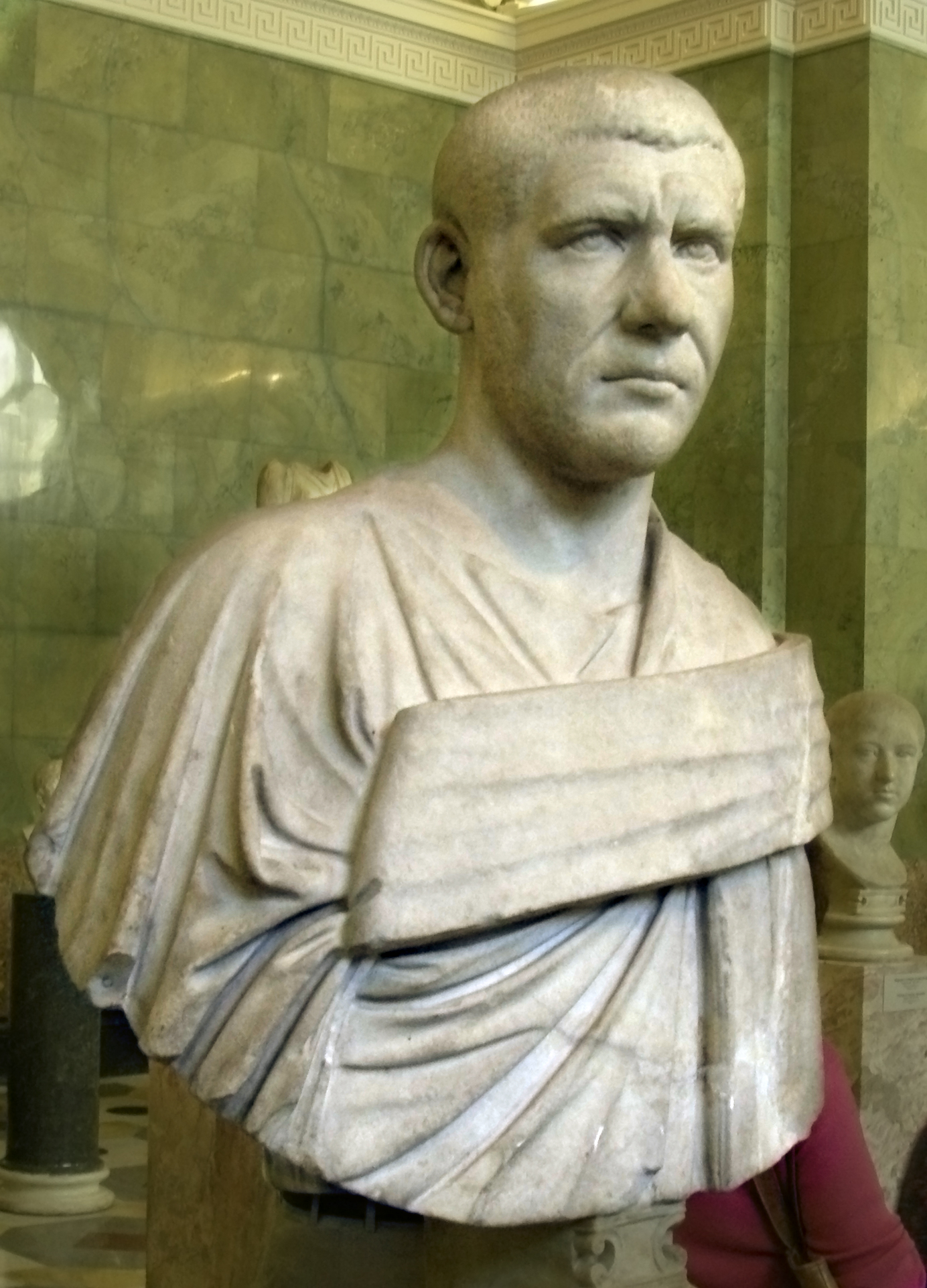
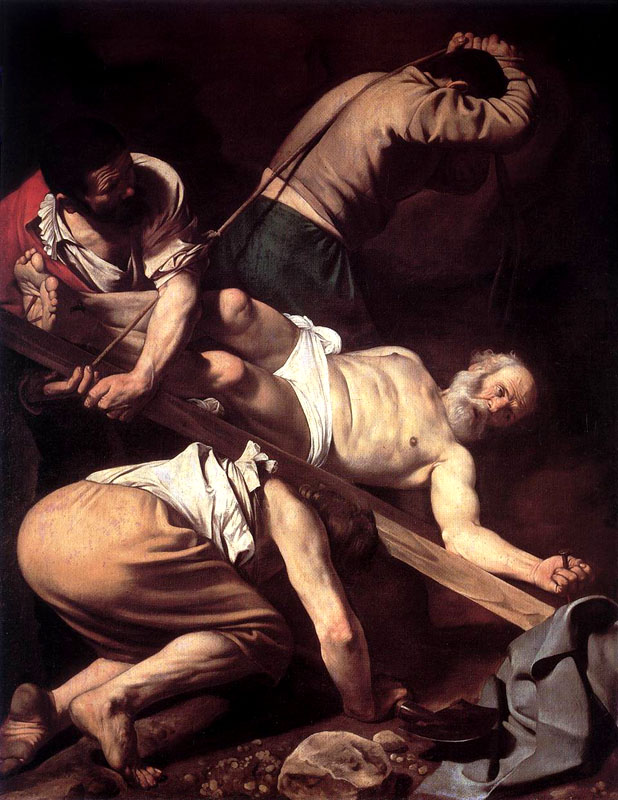
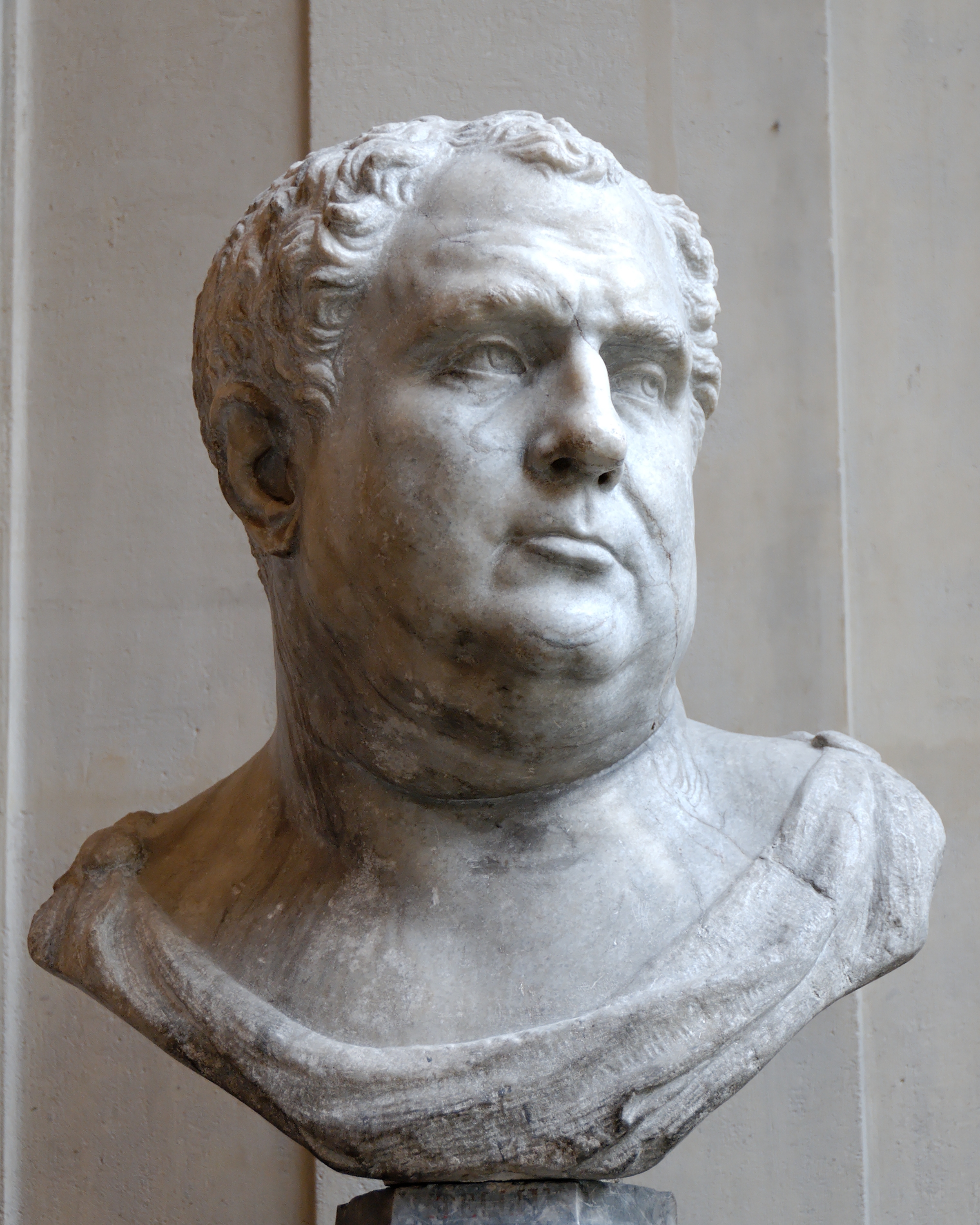
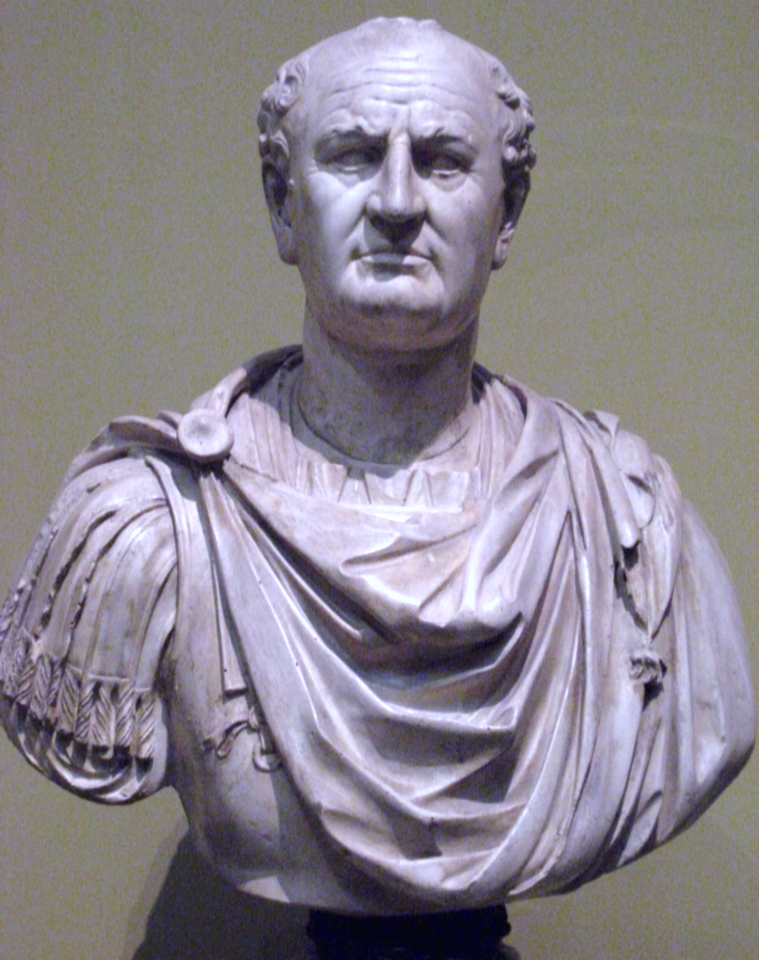
- In Egypt, the first plague was the Nile turning to blood. The first persecution, by Nero, led to bloodshed in war or from disease. Nero, reigning 54-68, killed Christians in Rome, including the apostles Peter and Paul, and throughout the empire. Then 30,000 died due to "pestilence" in Rome, and armies or cities were lost in war in Britain and Armenia (VII.7). In the year following Nero's overthrow, Galba was assassinated, Vitellius made civil war on Otho, and Vespasian made civil war on Vitellius (VII.8).
- In Egypt, there were frogs. Following Domitian's persecution, the Roman pagans were terrorized by the emperor's tyranny. Throughout Domitian's reign, from 81 to 96, attempted to end Christian worship out of megalomania that he deserved it himself, and the apostle John was exiled. At the same time, many of the leading men in Rome were killed at the emperor's order, and disastrous wars were fought in northern Europe (VII.10).
- In Egypt, there were flies. Following Trajan's persecution, there were Jewish rebellions in many provinces. Trajan, reigned 98 to 117, ordered Christians to make offerings to idols on pain of death, then Jews began fighting Libyans, Cyrenaeans, Egyptians, Alexandrians, Mesopotamians, and Cyprians, destroying a city on that island (VII.12).
- In Egypt, there were "dog flies, truly the offspring of putrefaction and the mother of worms." Following Marcus Aurelius' persecution, disease led to "death…putrefaction and worms." Marcus ruled 161-180; in the 170s Christians were "martyr[ed]" in Gaul and Asia. A plague killed so many in the country and the army, necessitating a 3-year levy of new soldiers (VII.15).
- In Egypt, there was the death of livestock. Following Septimius Severus' persecution, soldiers and civilians in the provinces were destroyed in many civil wars. During Severus' reign 193-211, "a great many saints received the crown of martyrdom." In 196, Clodius Albinus' army proclaimed him Augustus in Gaul, leading to civil war in that province followed by rebellions in Britain (VII.17).
- In Egypt, there were sores and ulcers. Following Maximin's executions of the clergy, "seething anger and hatred" led to "the wounding and killing of the chief and powerful men." Maximin became emperor on the death of Alexander Severus in 235; Orosius claims that Alexander's mother Mamea was Christian – almost certainly a false claim considering that she was the aunt of her son's predecessor Elagabalus, who was a great enthusiast for the worship of the Syrian idol Baal (the sun) for which their family had traditionally been priests – and so Maximin went after the clergy, especially Origen, Mamea's supposed teacher. Very soon, Maximin, himself, was killed in 238 (VII.18-19).
- In Egypt, there was hail. Following Decius' persecution, the air was poisoned under Gallus and Volusianus. Orosius supposes Decius undid and killed Philip the Arab out of hatred of Christianity in 249, and then expanded the persecution as emperor. While Gallus and his son Volusianus reigned 251-253, "a pestilence of incredible disease extended…" to practically every "house" throughout the Empire (VII.21).
- In Egypt, there were locusts. The Roman Empire was invaded by foreign armies. Decius himself, along with his son, were "killed in the very midst of the barbarians" in 251 (VII.21). Valerian, emperor from 253 to 260, also commanded Christians to worship idols by force, leading to torture and death, and was captured by the Persians in 260. Under his son Gallienus, who reigned until 268, the Germans crossed the Alps into Italy, Alemanni invaded Gaul, Goths invaded Greece and Asia Minor, territory beyond the Danube was lost, "further Germans" took Spain, and the Persians captured Mesopotamia and harassed Syria (VII.22).
- In Egypt, there was darkness. Following Aurelian's persecution, three emperors were killed in six months. Aurelian was emperor 270-275; soon after his persecution "he was killed while on a journey" (VII.23), then both the Emperors Tacitus and Florian were killed as well before twelve months had passed (VII.24).
- In Egypt, there was the death of the first born. Following Diocletian's persecution "was the destruction of the idols." I've already
discussed the persecutions of Diocletian and his colleagues in 303-305. Clearly, Orosius sees a direct link between that and the religious program of Constantine that eventually – although many generations later, and after Orosius' death – led to the end of idolatry.
Pharaoh finally relented and let the Jewish people "go free"; the Augustus became Constantine and he let the Christian people "be free." Certainly there are some contrivances in this system. John, for example, had correctly exonerated Marcus Aurelius of official persecution, and the idea that Philip was Christian was probably more a consequence of Decius' persecutions than the reason.
Orosius is also less anti-Jewish at places than many of his Christian contemporaries and followers. The continuity between the two religions is highlighted, as in the plague idea above, but he uses language about the Jewish experience that is typical of his own times rather than Biblical times – using the word "synagogue" for example. Unlike John, he doesn't tell the story of Julian allowing the Temple to be rebuilt in Jerusalem; rather, he thinks that Julian built an amphitheater in the city to show Christians being attacked by beasts (VII.30). I checked back to see if the Temple story had existed in the Latin historical tradition, and found that while Ammianus Marcellinus does include it, Eutropius does not – those two historians were both about a generation older than Orosius, but it seems likely that Orosius only knew Eutropius.
What's more striking is how cosmopolitan Orosius sees the experience of being part of the Roman Empire, even in its decline. Remember, he was constrained to move from what's now Portugal to what's now Tunisia or Algeria because of invasions against his native land, but it doesn't change his fundamental Roman identity. Book V, coming at a point after the Punic Wars have ended and Rome has, if not assumed sovereignty, at least proven hegemony over the entire Mediterranean, begins by making this point. In his time, "everywhere there is native land, everywhere my law and my relgion…this Africa has received me to her open peace" (V.2), unlike the past when xenophobia led to the death of foreigners in both mythical times and all the way to the historic Pompey (V.1). He is very strongly identifying, even claiming, Roman imperial unity with Christianity. At the same time, he is not myopically Roman in history, recognizing that Rome's military successes had come at the expense of other people – mainly other people who are now Romans themselves. This, too, is to show that the pagan g-ds could only benefit one nation, but cause problems for others; Christianity allows for the brotherhood of all. Apparently, literal Christian brothers like the emperors Constans and Constantine II – neither of whom I've seen ever accused of heresy by any orthodox writer – can actually make war on each other, leading to a fratricide (VII.29), even in this state of blessing.
The final history I have read to catch up to 383 is that by Paulus Orosius, called The Seven Books of History Against the Pagans (translated by Roy J. Deferrari for the Catholic University of America Press). Of those seven books, I read about six and three-quarters, but I will be considering him my lead source for the final portions of the book, which occurred during his lifetime. As the introduction explains, Orosius was born sometime during the decade of the 380s, in what is now either Portugal or Spain (xv). His homeland was invaded by the Barbarians when he was a young adult, and already ordained a priest, he left – whether it was intentional or not, he arrived at Hippo in North Africa to learn from Augustine (xv-xvi), who we have already seen in my post on Optatus. A year or two later, in 415, he wished to learn from Jerome as well, who was then near Jerusalem; Augustine trusted him with some of his own correspondence as well as a recommendation (xvi-xvii). While in the Holy Land, Orosius took part in the Council of 415 at Jerusalem, on which he wrote the Liber apologeticus, then returned to Augustine with responses from Jerome; his departure from Hippo was cut short due to continuing turmoil in the Iberian peninsula (xviii). Augustine accepted him back, and commissioned him to write the History to flesh out some of the arguments he was working on in his own City of G-d (xviii-xix and Prologue to Book I, page 3-5). As I have mentioned, some writing by both Augustine and Jerome – two of the most important theologians in the history of the Latin church – also make a part of my reading project.
The basic problem that Orosius is using his History to solve for the church is to refute the pagan belief that "present times [are] most unusually beset, as it were, by evils because there is belief in Christ and worship of G[-]d, and increasingly less worship of idols" (Prologue to Book I). While the (Western) Empire had not yet fallen by the time he wrote the book, and at least up to the narrative through Gratian's death he doesn't seem to think it inevitable, he's basically trying to preempt people from blaming Christianity for the fall of the Roman Empire. Toward the end of the 5th century, the pagan and Byzantine historian Zosimus believed just that; modern historians, such as Henry Adams, have made a similar claim. Of course, Orosius and Zosimus were looking at the issue providentially – "my deity is stronger than your deity" and all that – while the modern argument is more cultural – to wit, the religious conversion in the Empire accompanied a cultural transformation that undermined the values and institutions vital to Rome's military greatness. His method is to show how war and other disasters existed in every period, and also to an extent to minimize the problems of his own time. Secondarily, he attempts to explain the ways that history shows positive proof of Christianity.
The first of these is the bulk of the work, but is utterly derivative at least until the point that Eutropius ends during the reign of Valens, for which reason I have not found it necessary to get the book until now. With the end, he is putting his own knowledge into the narrative. The sources he names are not any different from the ones available to us, and for the most part those I have already read. He uses both pagan and ecclesiastical historians, including at least one Greek (Polybius), though the citation may itself be derivative (or through translation). As the special index for it attests, the number of direct quotations from Scripture is rather low, and I assume he had access to Jerome's Vulgate, rather than any of the earlier translations of the Bible into Latin that were considered quite inferior. Thus, Orosius' History's survival and influence (in the Middle Ages, at least) is due not to his originality or quality, but Saint Augustine's imprimatur.
Augustine focused on the city of G-d; for Orosius, the "City" (I.1, passim) is Rome. He is writing a full history, abbreviated as it is compared to his ultimate sources like Livy, not a chronicle. Still, his dating system by Roman years, before or after the founding of the city, is instructive compared to John's Biblical and imperial system and the Chronicon Paschale's consular years and years from creation. Even amid the beginning of the breakup of the Western Roman Empire, Orosius sees it as the goal toward which history has been driving. Nevertheless, his project is a full world history.
Rather than using mythology to display geology as John of Nikiu did, Orosius actually elaborates a full description of the known world's regions to begin his narrative in Book I Chapter 2. Although the Romans had some limited contact with China, Orosius doesn't extend beyond India to the east.
At II.1 and VII.2, he explains that he conceptualizes history as beginning with the Babylonian Empire and ending with the Roman Empire. He finds parallels between these empires of East and West, some in year counts, others that Babylon fell as Rome rose. As lesser empires, he also finds a place for Macedonia/Greece in the North and Africa/Carthage in the South. The last is a bit out of place, both from the Biblical idea (e.g. Daniel) that would have the fourth (second chronologically) empire as Persia/Medea. Carthage is also out of place due to the information Orosius gives on it. He on discusses Carthage in context of the Punic Wars, which cover the bulk of the fourth book; even the foundation story of Dido doesn't come until IV.6, rather than other events before the beginning of Rome. While he makes clear that Carthaginian power had come to extend over much of North Africa, the Iberian Peninsula, Sicily, and other islands by the time the First Punic War began in 264 BCE, he does very little to vitiate the paucity of historical knowledge on Carthage at its apex, compared to the other empires, either in his own narrative or by pointing to another, as he does at times.
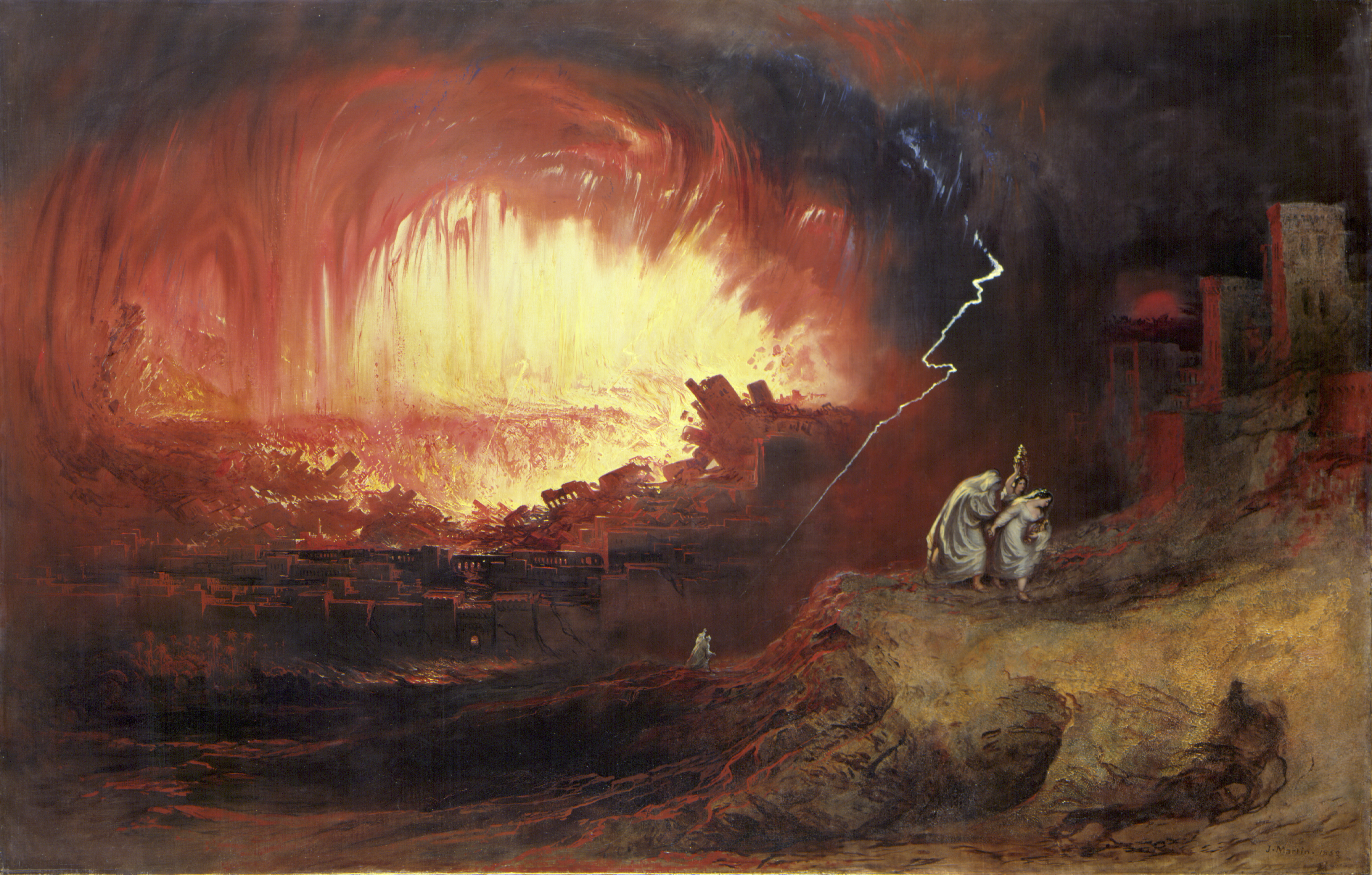
As the title of the history might be trying to suggest, there is little about Jewish history. Rather, the Jewish Bible is used to talk about Adam (I.1,3), Noah (I.3), Sodom and Gomorrah (I.5), and Joseph (I.8) and Moses (I.10) in order to discuss Egypt. Egyptian legend and Greek mythology also inform Egyptian history, and Greek mythology also informs ancient Greek and Trojan history; Orosius is better able to escape from Hesiod than John, but he cannot ignore the mythological foundations completely. At least indirectly, though, he does begin within his system. To start the narrative in Book I Chapter 1, he writes, "Since nearly all men interested in writing, among the Greeks as among the Latins, who have perpetuated in words the accomplishments of kings and peoples for a lasting record, have made the beginning of their writing with Ninus, the son of Belus, king of the Assyrians, because they wish it to be believed in their blind opinion that the origin of the world and creation of mankind were without beginning; yet they explain that kingdoms and wars began with him as if, indeed, the human race up to that time lived in the manner of beasts, and then for the first time, as if shaken and aroused, awoke to a new wisdom." He, instead, calculates that Ninus was a contemporary of Abraham, some 3,184 years after Adam, the first man; those years "have been omitted or unknown by all historians," though he is able to refer to Noah later. Two thousand and fifteen years after that, Augustus Caesar was emperor of Rome and Jesus was born. The geography in I.2 associates Assyria with the Iranian lands; at II.2, Semiramis, the wife and successor of Ninus as ruler of Assyria "restored the city of Babylon"; and VII.2 calls Babylon "a city of the Assyrians." Thus, we can see that Orosius, in calling Babylonia the important Eastern Empire in his system of history, intends to at least roughly include Assyria and Medea/Persia in the equation.
Before turning to the main subject – Rome – I just want to state my disappointment in his treatment of Classical Greece and Hellenistic history. Orosius does nothing to supplement the gap in history between the end of the first generation of the successors to Alexander the Great and the end of the 3rd century when the Hellenistic kingdoms start to appear in Roman history.
Just like the other empires, Orosius' history of the City of Rome and the Empire it won is derivative, and although it is treated more comprehensively, I will not go through the entire narrative. As elsewhere, he constantly compares the wars Rome faces with those of his own time, and prefers the latter. Yet, as he goes through a litany at the end of Book V (24th chapter) of all the wars Rome was fighting simultaneously early in the first century before the common era – civil wars, wars against slaves, against Mithridates, wars in Spain, in Macedonia, in Dalmatia, in Pamphylia – one can't help but feeling how impressive and vast Rome's military resources were to not only fight in so many places at the same time, but win. Unwittingly, he proves the dictum of Pyrrhus still applied two centuries later: "if I conquer again in the same manner, I shall return to Epirus without a soldier" (IV.1) – Rome's reserve of soldiers appeared inexhaustible. For all Orosius' optimism, one doesn't have the sense that it is still true in the fourth century of the Common Era.
Since I have already written more than I expected, I will save my comments on the Christian era to the next post.
A different translation is hosted by Google.