The Valentinian dynasty had four emperors overlapping in power over nearly three decades—Theodosius married a Valentinian princess (like Gratian married a Constantian princess), but his sons were from an earlier marriage. Like Diocletian, Valentinian I divided power with his brother Valens at the beginning of his reign, rather than just leave it for his children to share, as Constantine (and later Theodosius) did. I was troubled by Zosimus' explanation for Valentinian choosing his brother: "whom he thought most likely to prove faithful to him" (Book 4, p. 66). After two and a half decades of fighting and squabbles among the sons and nephews of Constantine I, all of which Zosimus had just been writing about, I should have no expectation of imperial fraternal affection. Yet, even despite their religious differences, Valentinian proved corrected enough in his choice.
Valentinian I died of apoplexy (Ammianus Marcellinus XXX.6 is the best source), which I take to be a natural cause even if there might be environmental and emotional factors of significance.
When Valens died at the battle of Adrianople, Gratian appointed Theodosius to become emperor of the East, and he had some quick success in battle against the Goths, securing his borders, and most importantly Constantinople, against the Goths (Orosius VII.34, Zosimus p. 76-81, Jordanes 27). Theodosius followed this up with some well executed diplomacy with the Gothic king Athanaric (Orosius VII.34, Zosimus p. 81, Jordanes 28).
When Gratian was killed by the usurper Maximus (and Valentinian II exiled), Theodosius mustered his forces to—eventually—fight back to remove Maximus from power and restore Valentinian II.
When Valentinian II was killed by Arbogastes and Eugenius came to power, Theodosius again prepared for war and crossed the Alps to fight against illegitimate power. In the battle, Eugenius was taken and killed, while Arbogastes fled to the mountain wilderness in fear and committed suicide. Theodosius marched in triumph to Rome, and died soon after in his journey back to Constantinople according to Zosimus, or while in Milan according to Orosius.
From the death of Valentinian in a de jure sense, and from Eugenius' death in a de facto sense, Theodosius held dominion over the entire Roman Empire. He was the last. He died almost exactly 400 years after the mid-point of Augustus' principate, and it is surprising how well Theodosius's power compares to Augustus':
- The borders of the empire were nearly identical. The Rhine, Danube, and Mesopotamia were fluid. Theodosius' claim on southern Britain (now England and Wales) was much stronger. Certainly the fighting with the Germanic peoples was more defensive for Theodosius than Augustus, but he is hard to call less successful.
- Both gained power over the whole empire following multiple civil wars. Theodosius' wars were smaller, which I suppose could just mean that all the Roman armies were weaker in the fourth century than in Augustus' (then Octavian) time, but they were also less destructive.
- Augustus was very concerned with succession, and often disappointed as his favorites died (having no sons himself), until he was finally left with his step-son Tiberius. Theodosius had two sons to whom he left the empire.
Of course, the time of Augustus was similar to the previous generation or three, that I commented on from Orosius. Rome was much more dangerous to itself in those days; by Theodosius' time, its external enemies were much stronger (or maybe just more motivated by fear of a third entity like the Huns). On the other hand, provinces like Gaul, Syria, and Egypt were probably much better integrated after another 400 years-again like Orosius commented.
I will write more about the religious developments of the time period in my next post.
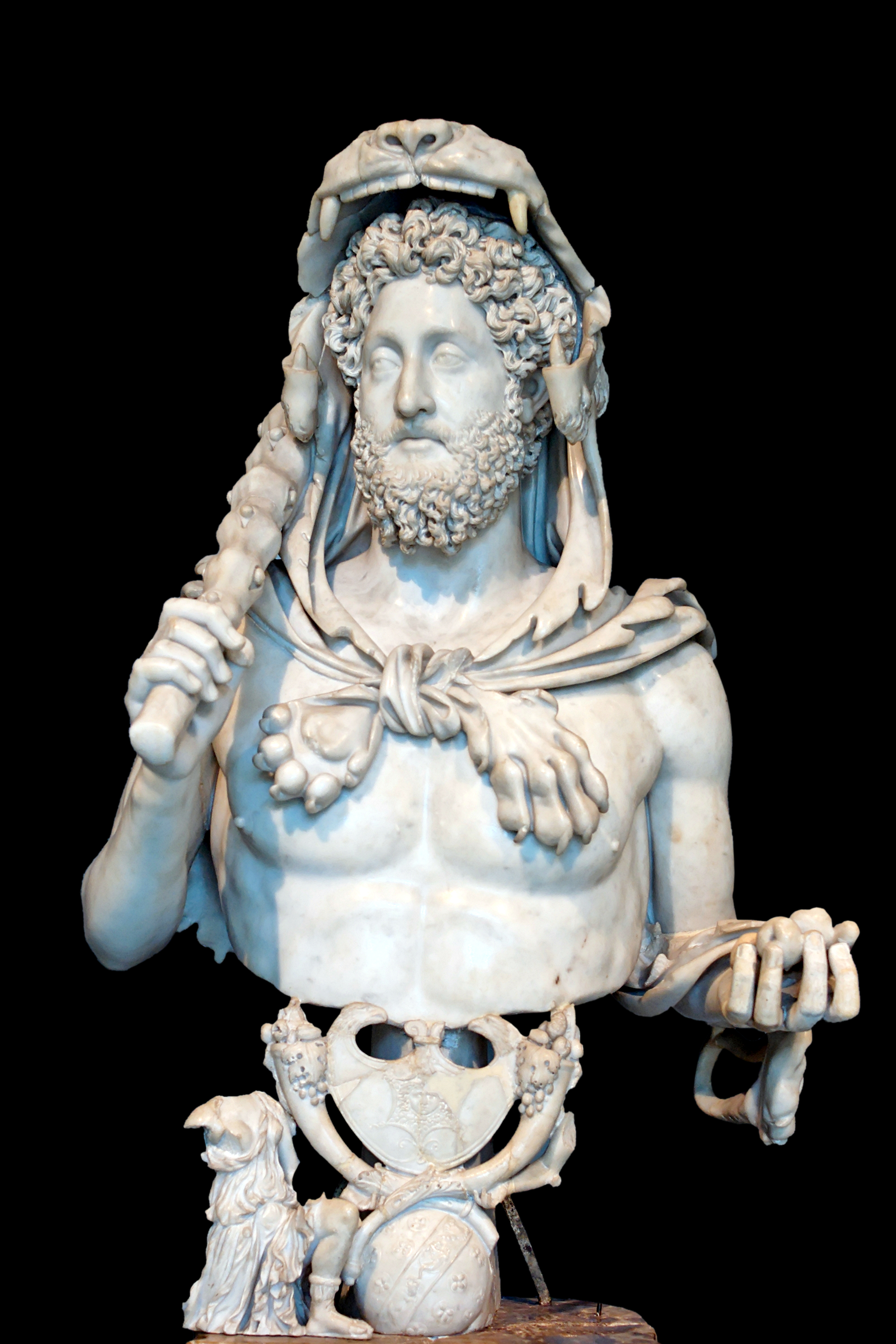
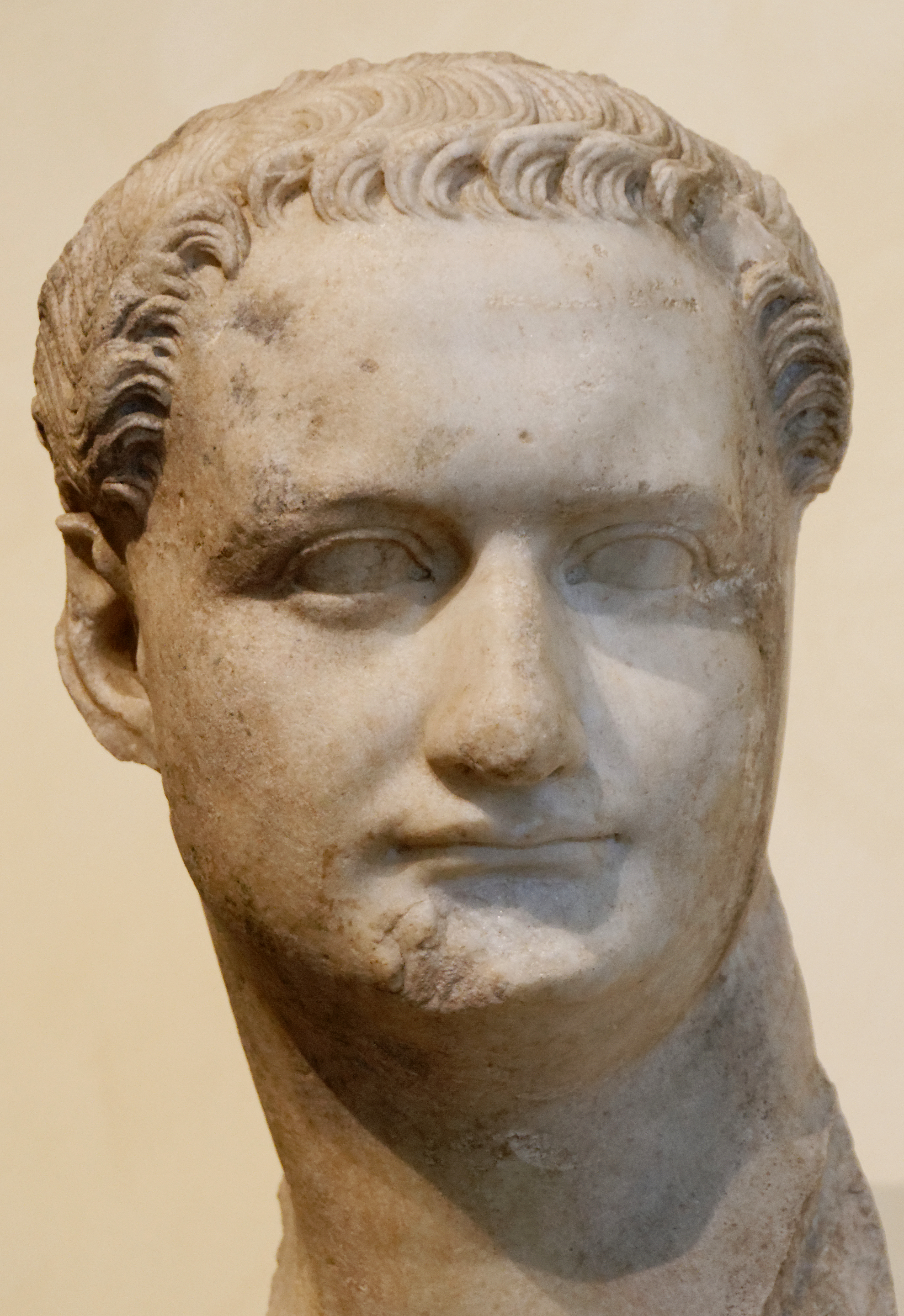
Valentinian II was one of the very few Roman emperors who were born the son of a Roman emperor; as far as I can tell Commodus and the sons of Constantine were his only predecessors. One might also compare him to Domitian or Geta, who also succeeded their fathers and succeeded or shared power with their older brother (Constantius might be looked at like this, too). Among four centuries and over fifty men legitimately called "Augustus," this shows how rare Valentinian's situation was. He was also someone who didn't give others a great reason to like him. While young—and he was very young when his father died—he was brought up in the Arianism of his mother, Justina, who attempted to use her influence to further that heresy in Italy. After his restoration, he deferred in religion to the orthodox Theodosius—the latter also greatly weakened the pagan cause at this time. Thus, he was a hero to no faith.
Valentinian was also, obviously, very weak as an emperor. He was always junior to his brother Gratian or his brother-in-law Theodosius. The usurper Maximus forced him into exile. Four years after his return to Italy, Arbogastes—the general of Theodosius who had led the forces against Maximus—made a coup and killed Valentinian in Gaul. Being a Frank, Arbogastes installed the sophist Eugenius in power; there having been non-Italians (to speak broadly of literal non-Romans) as emperor since the end of the first century and many if not most of the emperors since the end of the second century had been from the fringes of the empire, so I don't exactly understand why Arbogastes felt himself ethnically unqualified.
And yet, opinion of Valentinian II is rather positive. I have the sense that if he had attained the purple at age 34 or 44 instead of just 4, he actually could have been quite effective. Sozomen (7.22) says, "It is said that the boy was noble in person, and excellent in royal manners; and that, had he lived to the age of manhood, he would have shown himself worthy of holding the reins of empire, and would have surpassed his father in magnanimity and justice." Some, such as Philostorgius (11.1), suggest that he was prone to anger that despite being emperor his life was very controlled and he felt little freedom of action, and that this contributed to his death. Even were this accusation true, it would seem a consequence of youth.
There are always competing priorities in a monarchy concerning the monarch's qualifications. Going back to the expulsion of the Tarquins and the end of the original kings of Rome in the sixth century BCE, the Romans were much more suspicious of primogeniture for legitimacy than most other nations. Augustus didn't have a son, which created the new precedent. The Romans also had a complex system of adoption, allowing the emperors to choose a successor of the greatest merit. Augustus did this for Tiberius—already his step-son and son-in-law—after all his previous choices had died. Nerva did this for Trajan, and Hadrian planned two generations in Antoninus Pius and Marcus Aurelius. Diocletian's system was similar. Several times interregnums were filled with mature men of accomplishment: Galba, Nerva, Pertinax, Jovian. Yet, in two of those cases a younger man of lesser merit was able to rouse the army against the new emperor, bringing Otho and Didius Julianus to power. Unsurprisingly, these types couldn't last long either. Vespasian and Septimius Severus represent military leaders at the height of their power who were able to establish a lasting reign on the back of civil war. Against these qualities or experiences, Valentinian had a royal education. He wasn't evil like Domitian, unsuited to power like Commodus, fratricidal like Constantius and his brothers, or the victim of fratricide like Geta.
Valentinian II was just young. And even this might not have been a problem, except the Romans were not used to this. An emperor was not a figurehead. Consider that Louis XIV was also four years old when he became king, but this didn't faze the French because his father had been just nine. Indeed, Valentinian probably would have fared better as a king, even an absolute one, than emperor. Perhaps it was he and not his murderer who was the real foreshadowing of Teutonic power.
See my previous post for my general sources.
Orosius biased me toward reading through to the death of Theodosius in early 395, because he moved quickly from the restoration of Valentinian II to that monarch's death in 392. In the interim was the usurpation of Eugenius, who ruled in the West from 392 to 394. This is what I read to learn about this period of history:
- Primary narrative histories: Orosius (Book 7, Chapter 35), C. D. Gordon's Age of Attila (to page 8, p. 16-18), and Zosimus (Book 4, p. 88-94)
- Chronicles and foreign histories: Chronicon Paschale (years 390-394), John of Nikiu (Chapter 83, Section 37-65), al-Tabari (p. 69-70), Jordanes (Chapter 28, Section 145), and Gregory of Tours (Book 1, Chapter 44-47) [Bede and the Anglo-Saxon Chronicle have nothing to report]
- Ecclesiastical histories: Socrates (Book 5, Chapter 15-26), Sozomen (Book 7, Chapter 15-29), Theodoret (Book 5, Chapter 16-25), and Philostorgius (Book 10, Chapter 9-Book 11, Chapter 2)
- Private views: Libanius' Autobiography (Section 275-285), Letters (154-193), and Orations (47-49); Jerome (Letters 52 & 54); Augustine (Book 10-11); and Claudian's Panegyric on the Consuls Probinus and Olybrius
- Modern histories: Montesquieu (Chapter 19) and Gibbon (Chapter 26-28)
I have added two new works for this segment. C. D. Gordon is a twentieth-century history. His book is of value, however, because he translates verbatim the literary fragments of the major historians of the fifth century: Olympiodorus, Candidus, Priscus, and Malchus. He also makes use of the later Byzantine historian Joannes Antiochenus. Like Philostorgius, these excerpts are preserved by Photius, in large part, and other compilers of medieval Constantinople. Because these works are not fully extent, Gordon provides his own narrative to connect the fragments. The book was originally published by University of Michigan Press, republished by Barnes & Noble.
The other new work is of a much different flavor. Claudius Claudianus was an Egyptian-born Latin poet. Much of his work is political, with subject matter not all that different from Libanius'. Similarly, he was a pagan, although he did more to try to blend in with Christians than Libanius did. His first long poem is very flowery and of little substance as the brothers Probinus and Olybrius became the consuls for whom the year would be named at the beginning of 395. Theodosius died only a couple weeks later, but I assume that the poem was written while he was still alive; line 113 in the translation names Theodosius, but he is absent from the Latin. Since Claudian's career only lasted about a decade, I don't think this will be much of an issue going forward, but because the poems are backward looking, I may have missed out on some other pieces of useful information from the poetry he wrote after Theodosius' death—Gibbon references two such later poems in Chapter 27. In the introduction, his quality of language is compared with Silver Age (late first century CE) poets like Statius, even as his content is criticized. The introduction begins by saying he "may be called the last poet of classical Rome" (vii); there are a lot of lasts in this time period (although I remember Tacitus was considered a "last" almost 300 years earlier), and it is kind of sad—it may be easier to relate to the end of a literary period, whose work still exists, than a civilization, which does not. I am reading Maurice Platnauer's translation for the Loeb Classical Library.
Platnauer's translation is available online at LacusCurtius.